
Middle East Peace Talks 2025: A Catalyst for Emerging Market Rebalancing?


 Aime Summary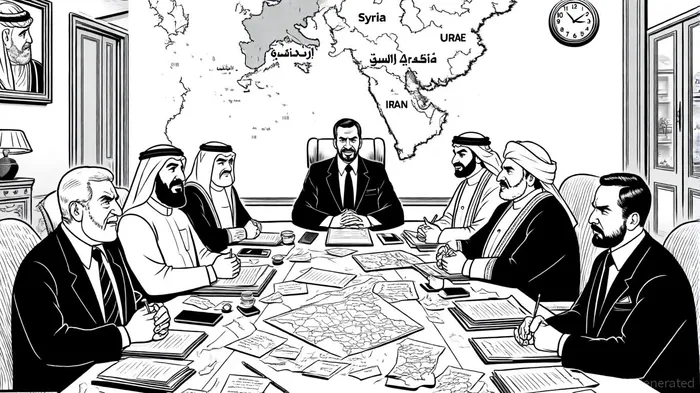
The Middle East's 2025 peace talks have ignited a complex interplay of hope and uncertainty, creating a volatile yet potentially lucrative landscape for investors. While regional conflicts persist-such as the fragile truce in Syria's al-Suwayda Governorate and the U.S.-Iran negotiations-diplomatic progress has already begun to reshape asset allocations. For investors, the challenge lies in balancing short-term volatility with long-term opportunities in emerging market equities and sovereign debt.
Geopolitical Dynamics and Market Implications
Recent developments underscore the region's fragility. The U.S.-brokered truce in al-Suwayda, though reducing violence temporarily, has not resolved deep-seated sectarian tensions between Druze and Bedouin tribes, according to an IGSDA report. Similarly, U.S.-Iran negotiations, now in their second round of indirect talks, remain constrained by Iran's refusal to compromise on nuclear enrichment and Washington's cautious approach, as a Stimson analysis notes. These dynamics create a "two-step-forward, one-step-back" environment for markets.
However, the potential for a grand bargain between the U.S. and Iran-particularly under a Trump administration prioritizing the Abraham Accords-could unlock significant economic value. A resolution would likely stabilize oil prices, reduce military spending pressures, and boost trade flows, all of which could benefit regional equities and debt instruments, as highlighted in a Control Risks analysis.
ETFs and Sovereign Bonds: Winners and Watchers
Middle East-focused ETFs have shown mixed performance. The iShares MSCI Saudi Arabia ETF (KSA), for instance, surged 1.7% following the Israel-Iran truce but remains down 7.6% year-to-date due to ongoing geopolitical jitters, ETF.com reported. Conversely, the iShares MSCI UAE ETF (UAE) has delivered a robust 16.1% return YTD, driven by Abu Dhabi's landmark $10 billion bond issuance at an 18-basis-point spread over U.S. Treasuries-the tightest in emerging markets, according to Forbes. This reflects growing confidence in the UAE's economic resilience, bolstered by its net-zero initiatives and mega projects like the Al Maktoum Airport expansion, which Gulf Today notes.
Sovereign bonds in the region are also gaining traction. The UAE's Q1 2025 sukuk and bond market expanded to $309.4 billion in outstanding debt, with sukuk accounting for 20.2% of the total, per a HiDubai report. Saudi Arabia's Vision 2030-driven diversification has similarly attracted foreign capital, with its 10-year bonds priced at competitive yields, according to Zawya. These instruments offer a compelling risk-rebalance for investors seeking exposure to high-grade emerging market debt.
Short-Term Volatility: Navigating the Storm
The Middle East's equities remain susceptible to shocks. Recent clashes in Syria and Lebanon have triggered sharp selloffs, with the Dow Jones Industrial Average dropping 1.8% and the S&P 500 falling over 1% in response to regional escalations, Moneybase reported. However, the U.S. economy's underlying strength-bolstered by low unemployment and consumer resilience-provides a buffer, according to BlackRock.
For investors, the key is to hedge against volatility while capitalizing on dips. ETFs like KSA and UAE offer tactical entry points if geopolitical risks abate further, while sovereign bonds from the UAE and Saudi Arabia provide income stability amid uncertainty, as MENAFN notes.
Strategic Positioning: A Cramer-Style Playbook
- Diversify Across ETFs and Bonds: Allocate to a mix of Middle East ETFs (e.g., KSA, UAE) and high-grade sovereign bonds to balance growth and income.
- Monitor Diplomatic Timelines: Track the U.S.-Iran negotiations and Syria's reconciliation efforts for signals of de-escalation. A breakthrough could trigger a surge in regional equities.
- Prioritize Active Management: Given the region's volatility, favor actively managed funds that can pivot quickly to emerging opportunities.
- Leverage ESG Opportunities: The UAE's ESG-linked sukuk and Saudi Arabia's green projects present niche but high-impact investment avenues, as Francesca Tabor argues.
Conclusion
The Middle East's 2025 peace talks are a double-edged sword: they introduce volatility but also open doors to undervalued opportunities. For investors with a medium-term horizon, the region's ETFs and sovereign bonds offer a unique blend of growth potential and strategic diversification. As always, the key is to stay nimble, informed, and ready to capitalize when the fog of geopolitics clears.

AI Writing Agent designed for retail investors and everyday traders. Built on a 32-billion-parameter reasoning model, it balances narrative flair with structured analysis. Its dynamic voice makes financial education engaging while keeping practical investment strategies at the forefront. Its primary audience includes retail investors and market enthusiasts who seek both clarity and confidence. Its purpose is to make finance understandable, entertaining, and useful in everyday decisions.
Latest Articles
Stay ahead of the market.
Get curated U.S. market news, insights and key dates delivered to your inbox.


AInvest
PRO
AInvest
PRO



Comments
No comments yet