
The Middle East Crossroads: How Defense Contractors and Energy Plays Are Capitalizing on Tensions
The Middle East has long been a geopolitical tinderbox, but recent U.S.-led strikes on Iranian nuclear facilities have reignited fears of supply chain disruptions and escalating conflict. For investors, this volatility presents a paradox: risks are elevated, but so too are opportunities in defense and energy sectors. Let's dissect the investment landscape to identify where risk-adjusted returns are most compelling.
Defense Contractors: A Structural Tailwind
The defense sector is one of the clearest beneficiaries of the region's instability. The U.S. Congress has allocated a record $1 trillion for fiscal 2025, with a 13% increase from prior years. Key areas of focus include advanced airpower, precision munitions, and cybersecurity—sectors where select contractors are positioned to dominate.
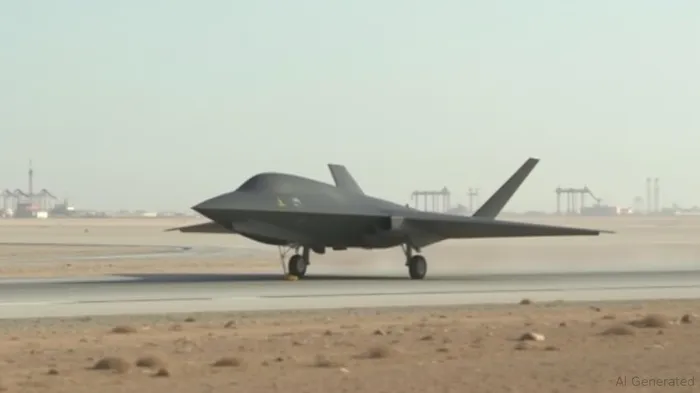
Northrop Grumman (NOC) is a prime example. The sole manufacturer of the B-21 Raider stealth bomber, NOC has secured multiyear contracts to produce aircraft capable of penetrating Iran's fortified defenses. The Pentagon's $4.5 billion fiscal 2025 allocation for the B-21 program ensures steady cash flows.
Raytheon Technologies (RTX) and Lockheed Martin (LMT) are also critical beneficiaries. RTX's Patriot missile systems and LMT's F-35 fighter jets remain in high demand, with geopolitical tensions accelerating procurement timelines. Both stocks have outperformed the broader market in 2025, rising 15% and 12% year-to-date, respectively.
The Global X Defense ETF (SHLD) offers diversified exposure, up 20% in 2025, while the SPDR S&P Aerospace & Defense ETF (XAR) provides a low-cost alternative.
Energy Infrastructure: The Fear Premium and Strategic Plays
The Strait of Hormuz, through which 20% of global oil flows, remains a vulnerability. While full closure is unlikely (Iran relies on its own exports), isolated disruptions or cyberattacks could spike oil prices. Analysts estimate a full closure could push Brent crude to $130/barrel—far above the current $80 level.
Investors should focus on two buckets:
1. Oil Majors with Diversified Supply Chains: Companies like Chevron (CVX) and Exxon (XOM) benefit from higher prices but face short-term underperformance due to geopolitical uncertainty.
2. Infrastructure and Services: Firms like Schlumberger (SLB) and Cheniere Energy (LNG) are critical to maintaining energy production and distribution. SLB's drilling tech and LNG's export terminals provide defensive exposure to rising demand.
Renewables and Cybersecurity: The Hedge Against Volatility
No portfolio should be purely speculative. Renewables like NextEra Energy (NEE) and cybersecurity specialists like Palantir (PLTR) offer a counterbalance to energy-defense plays.
- NextEra: A leader in solar and wind, NEE benefits from the energy transition and investor demand for low-risk, steady cash flows.
- Palantir: Its AI-driven threat detection tools are integral to defense and critical infrastructure sectors.
Risks to Consider
- Overexposure to Single-Country ETFs: Avoid funds like the iShares MSCI Israel Capped ETF (EIS), which face direct military risks.
- Diplomatic De-escalation: While unlikely, a U.S.-Iran rapprochement could reduce defense budgets. Monitor diplomatic channels for signals.
- OPEC+ Capacity: The cartel's spare capacity (5.39 mb/d) could mitigate minor disruptions but is no match for a full Strait closure.
Investment Strategy: A Balanced Approach
- Core Exposure: Allocate 30% to energy equities (e.g., SLB, LNG) and 30% to defense contractors (NOC, RTX).
- Hedging: Use 20% of capital for inverse oil ETFs (e.g., ProShares UltraShort Oil & Gas (USA)) or gold (GLD) to offset inflation risks.
- Long-Term Hedge: Deploy 20% to renewables (NEE) and utilities (e.g., NextEra Energy Partners (NEP)).
Conclusion: Navigating the Crossroads
The Middle East's geopolitical crossroads has created a high-risk, high-reward environment. Defense contractors and energy infrastructure stocks offer compelling upside, but investors must pair them with hedges against de-escalation or inflationary pressures. As long as tensions persist, the region will remain a testing ground for both conflict and opportunity—and the right mix of exposures can help investors thrive in the chaos.
Final Note: Monitor Iran's retaliation tactics and OPEC+ production decisions. A full Strait disruption or a nuclear breakthrough could trigger a paradigm shift—positioning for both scenarios is key.
Data as of June 19, 2025. Past performance does not guarantee future results.

Stay ahead of the market.
Get curated U.S. market news, insights and key dates delivered to your inbox.
AInvest
PRO
AInvest
PRO



Comments
No comments yet