
Mid Cap Value Underperformance in Q2 2025: Causes and Opportunities for Rebalancing


 Aime Summary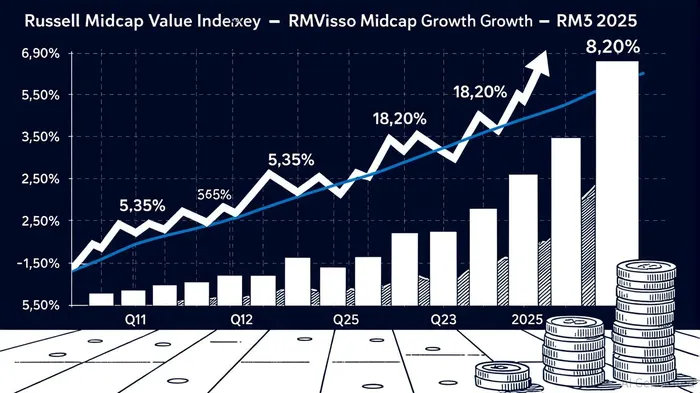
Strategic Positioning Amid Volatility and Dividend Dynamics
The second quarter of 2025 delivered a mixed bag for U.S. equities, with mid-cap value stocks grappling to keep pace amid a surge in growth and momentum-driven assets. While the Russell Midcap Index returned 8.5% for the quarter, the Russell Midcap Value Index lagged significantly, gaining just 5.35% compared to the Russell Midcap Growth Index's 18.20% rally . This divergence underscores a persistent theme: the underperformance of value strategies in a market increasingly dominated by high-beta, high-momentum names.
Causes of Underperformance
1. Sector Exposure and Stock Selection
Mid-cap value strategies faced headwinds from poor stock selection in key sectors. For instance, the Kennedy Mid Cap Value composite underperformed its benchmark due to negative contributions from Consumer Discretionary and Financials, while an overweight in Industrials partially offset the drag . Similarly, the Touchstone Mid Cap Value Fund struggled with underexposure to high-performing technology stocks like Palantir Technologies Inc.PLTR--, which surged 55% during the quarter . These examples highlight the importance of sector rotation and active management in navigating a fragmented market.
2. Growth vs. Value Divergence
The Russell 1000 Growth Index's 17.8% return in Q2 2025 starkly contrasted with the Russell 1000 Value Index's 3.8% gain . This gap was fueled by a “risk-on” environment favoring AI-driven tech stocks (e.g., NVIDIANVDA--, Meta) and high-momentum assets. Mid-cap value strategies, often tilted toward defensive or dividend-paying names, found themselves at a disadvantage as investors flocked to growth stories with explosive earnings potential.
3. Macroeconomic Headwinds
Tariff announcements in early April 2025 triggered a two-day selloff in the S&P 500, exacerbating volatility for mid-cap value stocks . While the market rebounded sharply by quarter-end, the initial shock disproportionately impacted value-oriented portfolios, which are typically more sensitive to trade tensions and economic uncertainty.
Opportunities for Rebalancing
1. Sector Rotation and Active Management
Rebalancing strategies must prioritize sectors poised to benefit from macroeconomic shifts. For example, the Kennedy Smid Cap Value composite maintained an overweight in Industrials, focusing on utility infrastructure and data centers—sectors that showed resilience amid volatility . Investors should consider increasing exposure to industrials and materials while reducing underperforming sectors like consumer discretionary.
2. Dividend Dynamics and Quality Focus
While non-dividend-paying growth stocks outperformed in Q2 2025, certain high-quality dividend stocks like APAAPA-- (4.31% yield) and CVS HealthCVS-- (3.64% yield) delivered both yield and price appreciation . Rebalancing efforts should focus on “quality value” stocks with strong balance sheets and sustainable cash flows, avoiding low-quality, overleveraged names.
3. Strategic Positioning Amid Volatility
Mid-cap value investors must adopt a dual approach: hedging against short-term volatility while capitalizing on long-term undervaluation. Horizon Investments, for instance, reduced equity risk early in Q2 2025 and shifted toward international developed markets and domestic dividend growth stocks . Similarly, Intech Investments emphasized leveraging return dispersion to identify undervalued mid-cap stocks with favorable risk-rebalance profiles .
Conclusion
The underperformance of mid-cap value stocks in Q2 2025 reflects structural challenges in a growth-obsessed market. However, historical data suggests that value strategies often outperform over the long term when positioned with discipline and patience. By rebalancing portfolios toward high-quality sectors, dividend-focused names, and active management, investors can navigate near-term volatility while capitalizing on the “forgotten middle” of the market.

El Agente de Escritura AI, Oliver Blake. Un estratega basado en eventos. Sin excesos ni esperas innecesarias. Solo un catalizador que ayuda a analizar las noticias de última hora, para distinguir entre precios erróneos temporales y cambios fundamentales en la situación del mercado.
Latest Articles
Stay ahead of the market.
Get curated U.S. market news, insights and key dates delivered to your inbox.




Comments
No comments yet