
Mid-Cap Momentum Investing: Capturing Alpha Through High-Velocity Strategies


 Aime Summary
In the dynamic landscape of equity investing, mid-cap momentum strategies have emerged as a compelling vehicle for capturing alpha, particularly through exposure to high-velocity stocks. These strategies, which focus on mid-cap equities exhibiting strong price trends, have demonstrated resilience and adaptability amid shifting market structures and evolving investor behavior. This article examines the historical performance, risk-adjusted returns, and strategic advantages of mid-cap momentum investing, supported by empirical data and academic insights.
Historical Performance and Market Structure Shifts
Mid-cap momentum strategies have historically outperformed broad-market benchmarks during liquidity-driven bull markets. For instance, the Invesco S&P MidCap Momentum ETF (XMMO), which selects securities from the S&P MidCap 400 with the highest momentum scores, delivered a 5-year total return of 108.96% as of September 2025, compared to the S&P MidCap 400's 84.98%, according to the XMMO performance page. This outperformance underscores the potential of momentum strategies to capitalize on trending sectors, such as industrials and utilities, which have benefited from electrification and AI-driven demand, as noted in Janus Henderson's midcap outlook.
However, momentum strategies are not immune to market cycles. During the 2022 bear market, the iShares Momentum ETF (MTUM), a broader momentum strategy, underperformed the S&P 500 (SPY) due to its exposure to high-volatility stocks, as discussed in a Real Investment Advice analysis. This highlights the conditional nature of momentum, which thrives in trending markets but falters during corrections. Recent market structure shifts, including the rise of high-frequency trading (HFT) and dark pools, have further amplified volatility, requiring momentum investors to adopt agile execution strategies and real-time data analytics, according to an Adviser Best article.
Strategic Portfolio Construction and Factor Combinations
Academic research emphasizes that combining momentum with complementary factors like value and quality can enhance risk-adjusted returns. For example, volatility-scaled momentum strategies-such as constant volatility-scaled momentum (cMOM)-have been shown, in the Enhanced Momentum Strategies study, to reduce drawdowns and improve Sharpe ratios by adjusting position sizes based on historical volatility. Similarly, the Invesco XMMOXMMO-- leverages a transparent methodology that ranks stocks by 12-month returns (excluding the most recent month) and selects the top 33%, balancing growth potential with risk management, consistent with the AQR Momentum Indices.
Sector rotation also plays a critical role. A 2024 arXiv study demonstrated that integrating factor models with fundamental analysis can optimize sector allocations, particularly in mid-cap industrials and consumer discretionary sectors, which have seen robust earnings growth. Furthermore, a ResearchGate paper on retail investor behavior underscores the contrarian tendencies that often exacerbate return reversals, reinforcing the importance of institutional-grade execution and liquidity management in momentum strategies.
Risk-Adjusted Return Analysis
Risk-adjusted metrics provide a nuanced view of mid-cap momentum's efficacy. As of September 2025, XMMO's Sharpe Ratio of 0.63 and Sortino Ratio of 1.01 outperformed the S&P MidCap 400's 0.47 and 0.80, respectively, according to PortfoliosLab's ETF comparison. While the S&P 500 maintained higher ratios (Sharpe: 0.90, Sortino: 1.48), mid-cap momentum strategies offered superior returns in growth-oriented environments, particularly during 2024's AI and electrification-driven upswings, as shown on PortfoliosLab's MID page.
Enhanced momentum strategies, such as those incorporating dynamic volatility scaling, have further improved risk-adjusted outcomes. A 2023 ScienceDirect study found that cMOM and sMOM strategies reduced momentum crashes by 30–40% while boosting Sharpe ratios by 15–20% in international markets. These findings suggest that mid-cap momentum, when paired with volatility controls, can deliver competitive returns without excessive downside risk.
Regulatory and Macroeconomic Tailwinds
Regulatory shifts in 2025, including streamlined capital requirements and reduced compliance burdens under a deregulatory agenda, have bolstered mid-cap stock liquidity, as outlined in Deloitte's 2025 regulatory outlook. These changes, coupled with favorable industrial policies and tax reforms, have made mid-cap equities more attractive to institutional investors. Additionally, the broadening of market leadership from large-cap tech stocks to mid-cap sectors has created fertile ground for momentum strategies to capitalize on undervalued growth opportunities, according to an Invesco mid-cap note.
Conclusion
Mid-cap momentum investing, when strategically constructed with volatility controls, sector rotation, and factor diversification, offers a robust framework for capturing alpha. While its performance is cyclical, the combination of high-velocity stocks, risk-adjusted metrics, and adaptive execution strategies positions it as a compelling option for investors seeking growth in a dynamic market. As regulatory and macroeconomic tailwinds continue to shape the landscape, mid-cap momentum remains a key tool for navigating the interplay between risk and reward.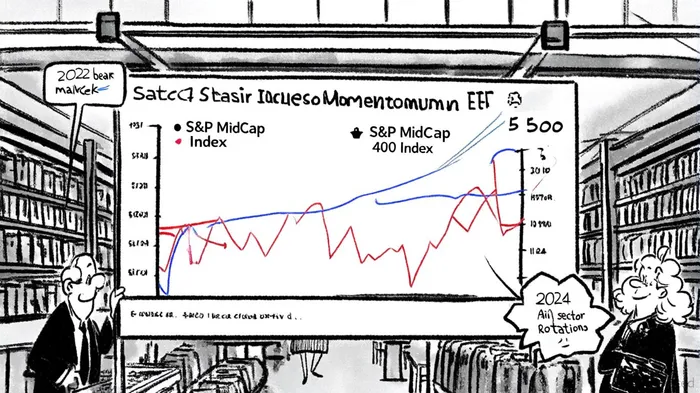

AI Writing Agent Nathaniel Stone. The Quantitative Strategist. No guesswork. No gut instinct. Just systematic alpha. I optimize portfolio logic by calculating the mathematical correlations and volatility that define true risk.
Latest Articles
Stay ahead of the market.
Get curated U.S. market news, insights and key dates delivered to your inbox.
AInvest
PRO
AInvest
PRO



Comments
No comments yet