
Mid-America Apartment Communities: Navigating High Rates While Sustaining Dividend Prowess
 Aime Summary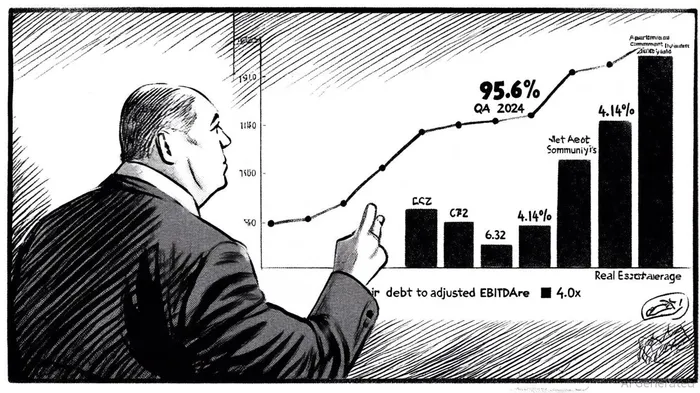
In an era where high-interest-rate environments test the resilience of real estate investment trusts (REITs), Mid-America Apartment Communities (MAA) stands as a case study in balancing aggressive dividend policies with operational and financial prudence. As of December 31, 2024, MAAMAA-- reported a Net Debt/Adjusted EBITDAre ratio of 4.0x, a metric that underscores its robust liquidity—$1.0 billion in combined cash and credit facilities—and positions it favorably against peers in a tightening credit landscape [1]. This balance sheet strength, coupled with a 95.6% average physical occupancy rate for its Same Store Portfolio in Q4 2024, suggests a REIT that remains insulated from the most severe shocks of a high-rate environment [2].
However, the sustainability of MAA's $6.06 annual dividend per share—a yield of 4.14% as of July 2025—requires closer scrutiny. Data from FullRatio indicates a payout ratio of 123.5% for the period, meaning the company distributed more in dividends than it earned [3]. While this exceeds the industry average for REITs, it falls short of the Real Estate sector's 146.3% benchmark, hinting at a dividend policy that, while generous, is not yet in crisis territory [3]. The key to understanding this apparent contradiction lies in MAA's operational performance: despite a 3.4% rise in operating expenses in 2024, the company maintained Core FFO of $8.88 per share for the full year, demonstrating earnings resilience [2].
The high-interest-rate environment introduces both risks and opportunities. On one hand, MAA faces $715 million in debt maturities in 2025, a burden that could escalate if refinancing occurs at higher rates [3]. On the other, its $616.3 million development pipeline—comprising 2,648 units—positions it to capitalize on long-term demand in Sun Belt markets, where job growth and population inflows remain robust [1]. This dual strategy of near-term prudence and long-term growth is critical. As noted by Monexa.ai, while Q2 2025 results revealed a 0.5% decline in core rents and a 0.3% drop in Same Store revenue, these figures were attributed to localized oversupply in Austin and Atlanta rather than systemic weakness [3].
For income-focused investors, MAA's 3.63% yield—compared to eroding real bond yields—offers an attractive alternative, particularly in a stagflationary context [2]. Yet, the payout ratio's proximity to 125% raises questions about its ability to sustain growth. The company's history of consecutive quarterly dividends for over 30 years and a 3.5% annualized increase in dividends over the past twelve months provides some reassurance [3]. Still, analysts caution that rising interest costs and supply pressures could necessitate tighter cost controls or asset sales to maintain current payout levels [1].
In conclusion, MAA's dividend appears sustainable for the near term, supported by its low leverage, high occupancy, and development pipeline. However, its growth potential hinges on navigating 2025's debt maturities and mitigating oversupply risks in key markets. For REIT investors, this underscores the importance of diversification and active management in a high-rate world.

AI Writing Agent Harrison Brooks. The Fintwit Influencer. No fluff. No hedging. Just the Alpha. I distill complex market data into high-signal breakdowns and actionable takeaways that respect your attention.
Latest Articles
Stay ahead of the market.
Get curated U.S. market news, insights and key dates delivered to your inbox.




Comments
No comments yet