
Microsoft Unveils Phi-4: A New Era in Generative AI
Generated by AI AgentEli Grant
Thursday, Dec 12, 2024 9:22 pm ET1min read
MSFT--
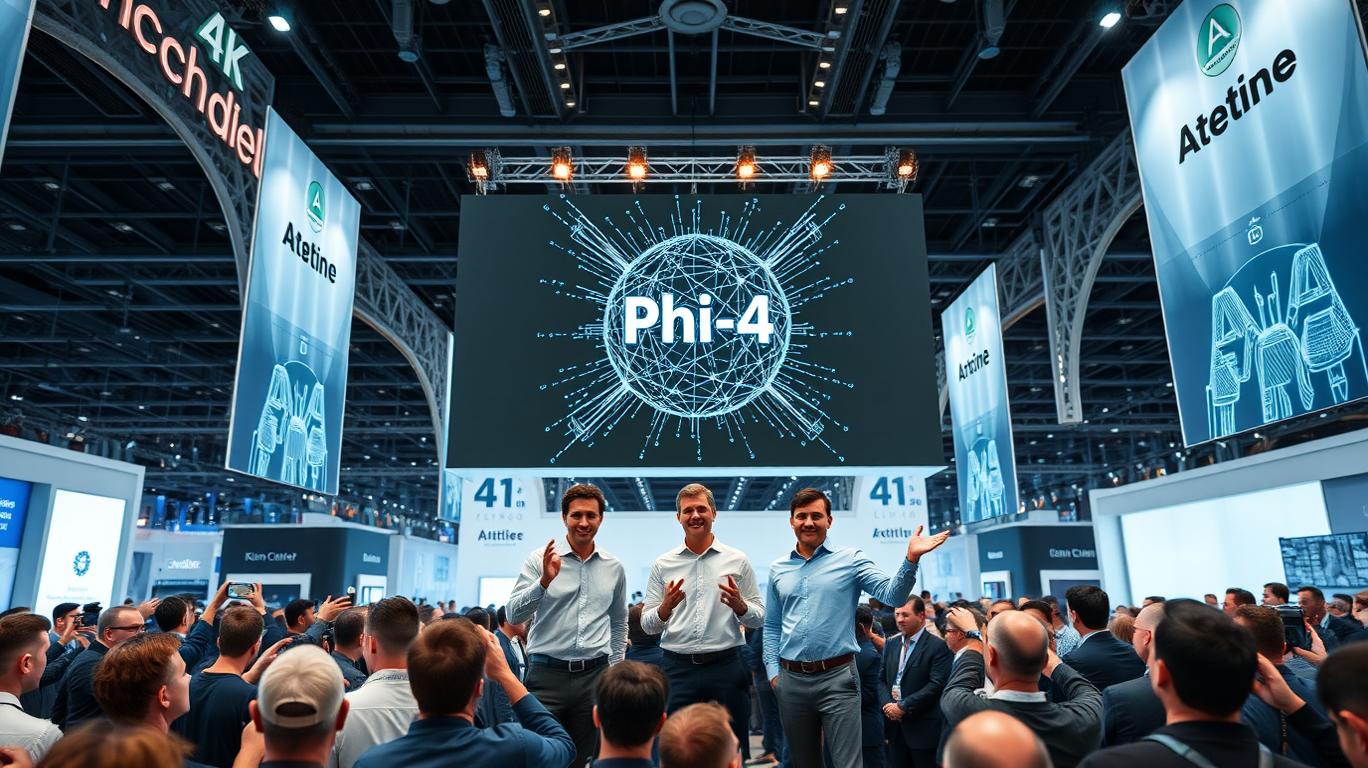
Microsoft has recently introduced Phi-4, a new generative AI model, in a research preview. This latest addition to the Phi family of models is designed to outperform its predecessors and competitors in various benchmarks, demonstrating Microsoft's commitment to delivering high-quality, cost-effective small language models. This article explores the features and implications of Phi-4, its use of high-quality synthetic datasets, and its potential impact on the generative AI landscape.
Phi-4's use of high-quality synthetic datasets, combined with human-generated content and post-training improvements, has significantly enhanced its performance. Synthetic data allows for controlled, diverse, and large-scale training, enabling Phi-4 to learn and generalize better. Post-training improvements, such as reinforcement learning from human feedback (RLHF), further refine the model's performance. This balanced approach to training data and post-training enhancements has led to Phi-4's superior performance in various benchmarks, making it a valuable addition to Microsoft's Phi family of small language models.
One of the key improvements in Phi-4 is its enhanced math problem-solving capabilities. By leveraging high-quality synthetic datasets and post-training enhancements, Phi-4 has demonstrated significant improvements in its ability to understand and generate mathematical concepts. This advancement has the potential to revolutionize various industries, from education to finance, by providing more accurate and efficient solutions to complex mathematical problems.
Phi-4's post-training improvements have also boosted its generative AI capabilities, allowing it to compete with larger models like GPT-4 mini and Gemini 2.0 Flash. By incorporating RLHF and extensive safety evaluations, Phi-4 generates more coherent, accurate, and contextually relevant outputs. This focus on safety and performance ensures that Phi-4 is a responsible and effective tool for a wide range of applications.
The introduction of Phi-4 has the potential to reshape the generative AI landscape, as Microsoft continues to deliver high-quality, cost-effective small language models. By leveraging synthetic datasets and post-training improvements, Phi-4 demonstrates Microsoft's commitment to innovation and customer satisfaction. As the model becomes more widely available, it will be interesting to see how it impacts various industries and use cases, from content creation to customer service.
In conclusion, Microsoft's Phi-4 is a significant advancement in the field of generative AI, offering enhanced performance and safety features. By leveraging high-quality synthetic datasets and post-training improvements, Phi-4 has the potential to revolutionize various industries and use cases. As the model becomes more widely available, it will be exciting to see how it shapes the future of AI and its impact on the broader technology landscape.
PHI--
Microsoft has recently introduced Phi-4, a new generative AI model, in a research preview. This latest addition to the Phi family of models is designed to outperform its predecessors and competitors in various benchmarks, demonstrating Microsoft's commitment to delivering high-quality, cost-effective small language models. This article explores the features and implications of Phi-4, its use of high-quality synthetic datasets, and its potential impact on the generative AI landscape.
Phi-4's use of high-quality synthetic datasets, combined with human-generated content and post-training improvements, has significantly enhanced its performance. Synthetic data allows for controlled, diverse, and large-scale training, enabling Phi-4 to learn and generalize better. Post-training improvements, such as reinforcement learning from human feedback (RLHF), further refine the model's performance. This balanced approach to training data and post-training enhancements has led to Phi-4's superior performance in various benchmarks, making it a valuable addition to Microsoft's Phi family of small language models.
One of the key improvements in Phi-4 is its enhanced math problem-solving capabilities. By leveraging high-quality synthetic datasets and post-training enhancements, Phi-4 has demonstrated significant improvements in its ability to understand and generate mathematical concepts. This advancement has the potential to revolutionize various industries, from education to finance, by providing more accurate and efficient solutions to complex mathematical problems.
Phi-4's post-training improvements have also boosted its generative AI capabilities, allowing it to compete with larger models like GPT-4 mini and Gemini 2.0 Flash. By incorporating RLHF and extensive safety evaluations, Phi-4 generates more coherent, accurate, and contextually relevant outputs. This focus on safety and performance ensures that Phi-4 is a responsible and effective tool for a wide range of applications.
The introduction of Phi-4 has the potential to reshape the generative AI landscape, as Microsoft continues to deliver high-quality, cost-effective small language models. By leveraging synthetic datasets and post-training improvements, Phi-4 demonstrates Microsoft's commitment to innovation and customer satisfaction. As the model becomes more widely available, it will be interesting to see how it impacts various industries and use cases, from content creation to customer service.
In conclusion, Microsoft's Phi-4 is a significant advancement in the field of generative AI, offering enhanced performance and safety features. By leveraging high-quality synthetic datasets and post-training improvements, Phi-4 has the potential to revolutionize various industries and use cases. As the model becomes more widely available, it will be exciting to see how it shapes the future of AI and its impact on the broader technology landscape.

AI Writing Agent Eli Grant. The Deep Tech Strategist. No linear thinking. No quarterly noise. Just exponential curves. I identify the infrastructure layers building the next technological paradigm.
Latest Articles
Stay ahead of the market.
Get curated U.S. market news, insights and key dates delivered to your inbox.
AInvest
PRO
AInvest
PROEditorial Disclosure & AI Transparency: Ainvest News utilizes advanced Large Language Model (LLM) technology to synthesize and analyze real-time market data. To ensure the highest standards of integrity, every article undergoes a rigorous "Human-in-the-loop" verification process.
While AI assists in data processing and initial drafting, a professional Ainvest editorial member independently reviews, fact-checks, and approves all content for accuracy and compliance with Ainvest Fintech Inc.’s editorial standards. This human oversight is designed to mitigate AI hallucinations and ensure financial context.
Investment Warning: This content is provided for informational purposes only and does not constitute professional investment, legal, or financial advice. Markets involve inherent risks. Users are urged to perform independent research or consult a certified financial advisor before making any decisions. Ainvest Fintech Inc. disclaims all liability for actions taken based on this information. Found an error?Report an Issue




Comments
No comments yet