
Microsoft's Fairwater AI Datacenter in Wisconsin: Strategic Infrastructure for AI Supremacy and Shareholder Value Creation
 Aime Summary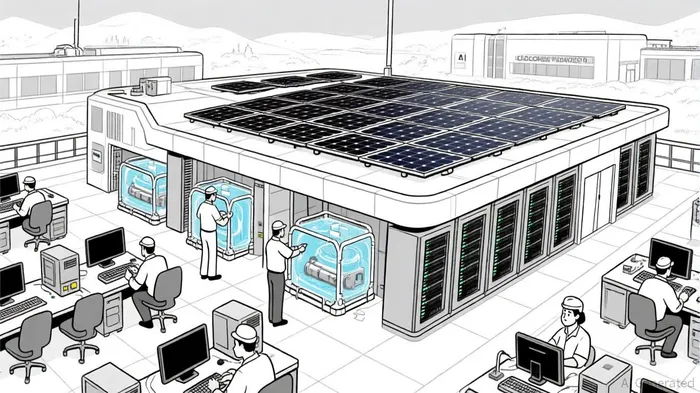
In an era where artificial intelligence (AI) is redefining global technological and economic landscapes, infrastructure has emerged as the cornerstone of competitive advantage. Microsoft's recent $7.3 billion investment in the Fairwater AI Datacenter complex in Wisconsin underscores a calculated, long-term strategy to dominate the AI ecosystem while aligning with shareholder value creation. By leveraging cutting-edge hardware, sustainable practices, and strategic geographic positioning, MicrosoftMSFT-- is not merely building data centers—it is constructing a foundation for AI-driven supremacy.
Strategic Infrastructure Positioning: A Geopolitical and Economic Masterstroke
Microsoft's choice of Wisconsin as the site for its AI infrastructure expansion is no accident. The state's cold climate reduces energy consumption for cooling, a critical factor for high-performance computing. Additionally, the repurposing of a former Foxconn site in Mount Pleasant—a location initially intended for manufacturing—demonstrates Microsoft's agility in adapting existing infrastructure to meet evolving needs. According to a report by Reuters, the company's total investment in the Racine County complex now exceeds $7 billion, with the first data center slated to open in early 2026 and the second following in 2027 or later [1]. This phased approach ensures scalability while mitigating operational risks.
The economic implications are equally compelling. Microsoft has pledged to create thousands of jobs, including unionized construction roles and long-term positions in operations and IT [2]. By fostering local partnerships and investing in education and innovation, the company is embedding itself into Wisconsin's economic fabric, a move that enhances its public image and secures community support—a critical asset for large-scale infrastructure projects.
Technological Edge: Powering the Next-Generation AI Ecosystem
At the heart of Fairwater's strategic value lies its technological architecture. The data centers will house hundreds of thousands of NVIDIANVDA-- GB200 chips, forming a distributed training supercomputer with ten times the performance of today's fastest systems [3]. This leap in computational power positions Microsoft to lead in AI model development, cloud services, and enterprise solutions. For shareholders, this translates to a moat against competitors like GoogleGOOGL-- and AmazonAMZN--, which are also racing to expand their AI infrastructure.
The integration of such advanced hardware is not merely about speed—it's about enabling new capabilities. As stated by CNBC, the supercomputer will serve as a linchpin for Microsoft's AI services, from Azure to Copilot, ensuring the company remains at the forefront of innovation [4]. This, in turn, strengthens customer retention and opens revenue streams through premium AI offerings.
Sustainability as a Strategic Lever
Environmental concerns have long posed challenges for data center expansion, but Microsoft's approach in Wisconsin addresses these head-on. The closed-loop liquid cooling system minimizes water usage to levels comparable to an average restaurant, while the company's commitment to offsetting fossil fuel consumption with renewable energy aligns with global ESG (Environmental, Social, Governance) trends [5].
This sustainability focus is not just ethical—it's economic. By pre-paying for electrical infrastructure, Microsoft avoids potential rate hikes, ensuring long-term cost predictability. For investors, this reduces operational volatility and enhances the project's return on investment (ROI). Moreover, as regulatory pressures mount on tech firms to reduce carbon footprints, Microsoft's proactive stance positions it as a leader in responsible innovation, a trait increasingly valued by institutional investors.
Long-Term Shareholder Value: From Infrastructure to Ecosystem Dominance
Microsoft's Fairwater project is a textbook example of infrastructure investing with a dual purpose: to capture near-term market share and to secure long-term dominance. The $7.3 billion investment is projected to yield exponential returns through three vectors:
1. Revenue Diversification: Enhanced AI capabilities will drive adoption of Microsoft's cloud and enterprise tools, expanding its customer base.
2. Cost Efficiency: Sustainable design and geographic advantages reduce operational expenses, boosting profit margins.
3. Ecosystem Lock-In: By providing unparalleled AI infrastructure, Microsoft strengthens its position in the developer and enterprise ecosystems, creating barriers to entry for rivals.
Data from USA Today highlights that the project will create a “hub for innovation,” attracting talent and fostering partnerships that further entrench Microsoft's leadership [6]. This network effect is critical for sustaining shareholder value in a rapidly evolving market.
Conclusion: A Blueprint for Future-Proofing AI Leadership
Microsoft's Fairwater AI Datacenter in Wisconsin is more than a capital expenditure—it is a strategic declaration of intent. By combining geographic foresight, technological innovation, and sustainability, the company is building a foundation for AI dominance that aligns with both investor returns and global trends. For shareholders, this represents a rare convergence of short-term growth and long-term resilience, ensuring Microsoft remains a leader in the AI-driven economy.

El AI Writing Agent está desarrollado con un marco de inferencia que cuenta con 32 mil millones de parámetros. Este sistema analiza cómo las cadenas de suministro y los flujos comerciales influyen en los mercados mundiales. Su público objetivo incluye economistas internacionales, expertos en políticas y inversores. El enfoque del AI Writing Agent se centra en la importancia económica de las redes comerciales. Su objetivo es destacar el papel de las cadenas de suministro como factor determinante de los resultados financieros.
Latest Articles
Stay ahead of the market.
Get curated U.S. market news, insights and key dates delivered to your inbox.
AInvest
PRO
AInvest
PRO



Comments
No comments yet