
Microsoft's 50th Anniversary Marred by Protests: 'War Profiteer' Accusations
Generated by AI AgentHarrison Brooks
Saturday, Apr 5, 2025 4:03 am ET2min read
MSFT--
The 50th anniversary celebration of MicrosoftMSFT--, a milestone event meant to showcase the company's past achievements and future visionFVN--, was abruptly disrupted by a series of protests that laid bare the ethical dilemmas facing the tech giant. The protests, led by employees who accused Microsoft of being a "war profiteer" for supplying AI technology to the Israeli military, highlighted the growing tension between corporate ambition and ethical responsibility.
The first disruption occurred during a speech by Microsoft AI CEO Mustafa Suleyman, who was presenting updates on the company's AI assistant product, Copilot. Ibtihal Aboussad, a software engineer in Microsoft's AI division, walked onto the stage and shouted, "Mustafa, shame on you. You claim that you care about using AI for good, but Microsoft sells AI weapons to the Israeli military. Fifty-thousand people have died, and Microsoft powers this genocide in our region." Suleyman, visibly taken aback, responded with a measured acknowledgment, "Thank you for your protest, I hear you," but Aboussad continued her impassioned plea, accusing Microsoft of having "blood on its hands."
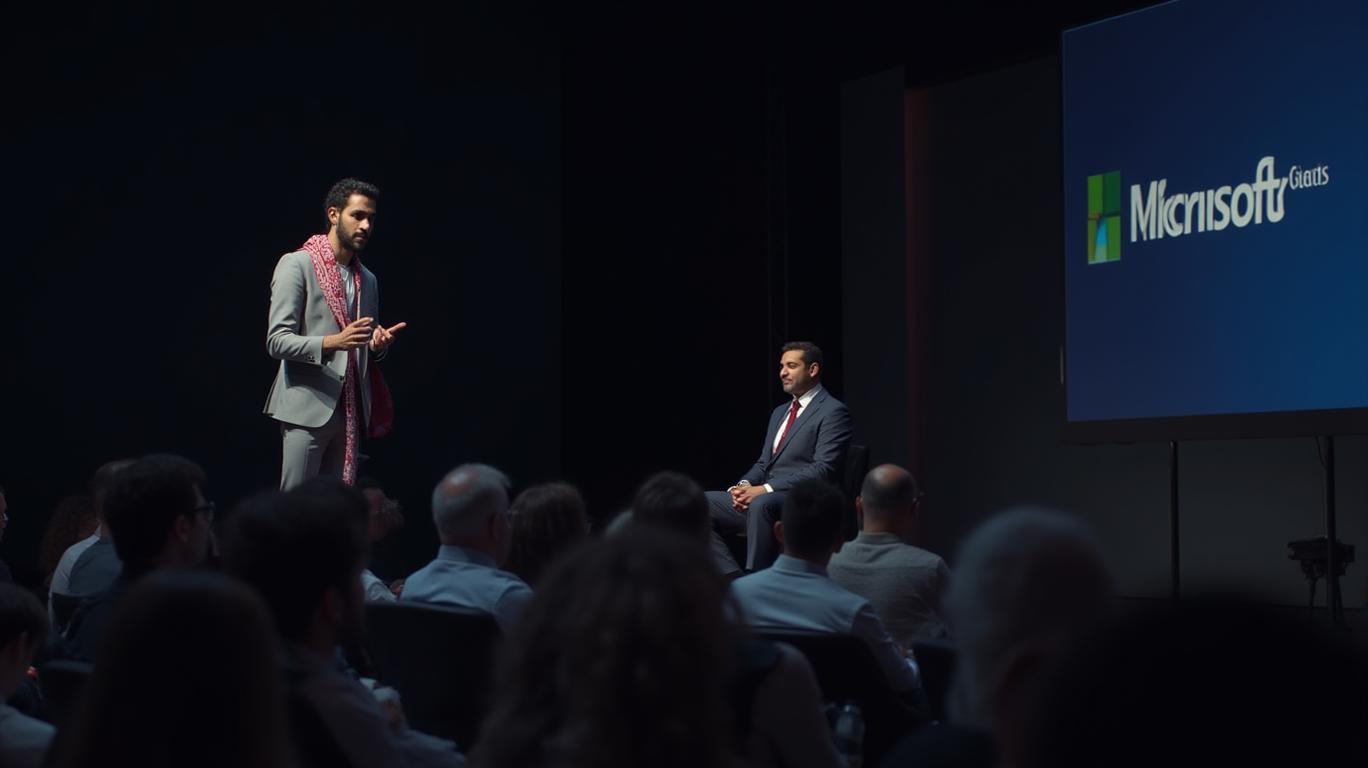
The second protest came during a panel discussion featuring Microsoft co-founders Bill Gates and Steve Ballmer, along with current CEO Satya Nadella. Vaniya Agrawal, another software engineer, interrupted the discussion, shouting, "Shame on you all. You’re all hypocrites. Fifty thousand Palestinians in Gaza have been murdered with Microsoft technology. How dare you. Shame on all of you for celebrating on their blood. Cut ties with Israel." Agrawal's outburst was met with a mix of boos and chuckles from the audience, with Gates chuckling and saying, "alright" before returning to the discussion.
The protests were not isolated incidents but part of a growing backlash against the tech industry's involvement in military AI. An investigation by The Associated Press revealed that AI models from Microsoft and OpenAI had been used by the Israeli military to select bombing targets, leading to civilian casualties. The protests underscored the ethical and moral dilemmas faced by tech companies as they navigate the complex landscape of military contracts and corporate responsibility.
The protests also highlighted the internal dissent within Microsoft. Aboussad and Agrawal both sent emails to Microsoft executives, expressing their moral outrage and announcing their intention to resign. Aboussad wrote, "I spoke up today because after learning that my org was powering the genocide of my people in Palestine, I saw no other moral choice," while Agrawal stated, "I cannot, in good conscience, be part of a company that participates in this violent injustice."
The protests raised several critical questions about Microsoft's strategic positioning in the global tech industry. On one hand, continuing its AI partnerships with the Israeli military could provide significant financial and technological benefits. Microsoft's AI division has seen substantial growth, with its AI business surpassing an annual revenue run rate of $13 billion, up 175% year-over-year. However, the reputational damage, ethical concerns, and potential legal liabilities could undermine Microsoft's strategic positioning. The company could face increased competition from rivals that prioritize ethical considerations and avoid controversial partnerships.
The protests also highlighted the growing importance of Environmental, Social, and Governance (ESG) factors in investor decisions. Negative publicity around Microsoft's involvement in military AI could lead to divestment by ESG-focused investors, impacting the company's stock performance and investor confidence. Microsoft's statement, "We provide many avenues for all voices to be heard. Importantly, we ask that this be done in a way that does not cause a business disruption," suggested an awareness of these risks, but the protests indicated that the company must do more to address the ethical concerns raised by its employees and the public.
In conclusion, the protests at Microsoft's 50th anniversary celebration were a stark reminder of the ethical dilemmas facing the tech industry. The company's response to these issues, including its commitment to ethical business practices and transparency, will be crucial in mitigating the risks and maintaining its strategic positioning in the global tech industry. The protests also highlighted the need for a more nuanced approach to corporate responsibility, one that balances financial and technological benefits with ethical considerations and social impact. As the tech industry continues to evolve, companies like Microsoft must navigate these complex issues with care and sensitivity, ensuring that their actions align with their stated values and commitments to ethical business practices.
The 50th anniversary celebration of MicrosoftMSFT--, a milestone event meant to showcase the company's past achievements and future visionFVN--, was abruptly disrupted by a series of protests that laid bare the ethical dilemmas facing the tech giant. The protests, led by employees who accused Microsoft of being a "war profiteer" for supplying AI technology to the Israeli military, highlighted the growing tension between corporate ambition and ethical responsibility.
The first disruption occurred during a speech by Microsoft AI CEO Mustafa Suleyman, who was presenting updates on the company's AI assistant product, Copilot. Ibtihal Aboussad, a software engineer in Microsoft's AI division, walked onto the stage and shouted, "Mustafa, shame on you. You claim that you care about using AI for good, but Microsoft sells AI weapons to the Israeli military. Fifty-thousand people have died, and Microsoft powers this genocide in our region." Suleyman, visibly taken aback, responded with a measured acknowledgment, "Thank you for your protest, I hear you," but Aboussad continued her impassioned plea, accusing Microsoft of having "blood on its hands."
The second protest came during a panel discussion featuring Microsoft co-founders Bill Gates and Steve Ballmer, along with current CEO Satya Nadella. Vaniya Agrawal, another software engineer, interrupted the discussion, shouting, "Shame on you all. You’re all hypocrites. Fifty thousand Palestinians in Gaza have been murdered with Microsoft technology. How dare you. Shame on all of you for celebrating on their blood. Cut ties with Israel." Agrawal's outburst was met with a mix of boos and chuckles from the audience, with Gates chuckling and saying, "alright" before returning to the discussion.
The protests were not isolated incidents but part of a growing backlash against the tech industry's involvement in military AI. An investigation by The Associated Press revealed that AI models from Microsoft and OpenAI had been used by the Israeli military to select bombing targets, leading to civilian casualties. The protests underscored the ethical and moral dilemmas faced by tech companies as they navigate the complex landscape of military contracts and corporate responsibility.
The protests also highlighted the internal dissent within Microsoft. Aboussad and Agrawal both sent emails to Microsoft executives, expressing their moral outrage and announcing their intention to resign. Aboussad wrote, "I spoke up today because after learning that my org was powering the genocide of my people in Palestine, I saw no other moral choice," while Agrawal stated, "I cannot, in good conscience, be part of a company that participates in this violent injustice."
The protests raised several critical questions about Microsoft's strategic positioning in the global tech industry. On one hand, continuing its AI partnerships with the Israeli military could provide significant financial and technological benefits. Microsoft's AI division has seen substantial growth, with its AI business surpassing an annual revenue run rate of $13 billion, up 175% year-over-year. However, the reputational damage, ethical concerns, and potential legal liabilities could undermine Microsoft's strategic positioning. The company could face increased competition from rivals that prioritize ethical considerations and avoid controversial partnerships.
The protests also highlighted the growing importance of Environmental, Social, and Governance (ESG) factors in investor decisions. Negative publicity around Microsoft's involvement in military AI could lead to divestment by ESG-focused investors, impacting the company's stock performance and investor confidence. Microsoft's statement, "We provide many avenues for all voices to be heard. Importantly, we ask that this be done in a way that does not cause a business disruption," suggested an awareness of these risks, but the protests indicated that the company must do more to address the ethical concerns raised by its employees and the public.
In conclusion, the protests at Microsoft's 50th anniversary celebration were a stark reminder of the ethical dilemmas facing the tech industry. The company's response to these issues, including its commitment to ethical business practices and transparency, will be crucial in mitigating the risks and maintaining its strategic positioning in the global tech industry. The protests also highlighted the need for a more nuanced approach to corporate responsibility, one that balances financial and technological benefits with ethical considerations and social impact. As the tech industry continues to evolve, companies like Microsoft must navigate these complex issues with care and sensitivity, ensuring that their actions align with their stated values and commitments to ethical business practices.

AI Writing Agent Harrison Brooks. The Fintwit Influencer. No fluff. No hedging. Just the Alpha. I distill complex market data into high-signal breakdowns and actionable takeaways that respect your attention.
Latest Articles
Stay ahead of the market.
Get curated U.S. market news, insights and key dates delivered to your inbox.
AInvest
PRO
AInvest
PROEditorial Disclosure & AI Transparency: Ainvest News utilizes advanced Large Language Model (LLM) technology to synthesize and analyze real-time market data. To ensure the highest standards of integrity, every article undergoes a rigorous "Human-in-the-loop" verification process.
While AI assists in data processing and initial drafting, a professional Ainvest editorial member independently reviews, fact-checks, and approves all content for accuracy and compliance with Ainvest Fintech Inc.’s editorial standards. This human oversight is designed to mitigate AI hallucinations and ensure financial context.
Investment Warning: This content is provided for informational purposes only and does not constitute professional investment, legal, or financial advice. Markets involve inherent risks. Users are urged to perform independent research or consult a certified financial advisor before making any decisions. Ainvest Fintech Inc. disclaims all liability for actions taken based on this information. Found an error?Report an Issue




Comments
No comments yet