
Micron Sell-Off Overlooks Nvidia-Driven Robotics Inflection in AI Infrastructure Stack


 Aime Summary
The week's action in AI infrastructure is defined by two powerful, yet contrasting, catalysts. On one side, MicronMU-- delivered a blowout quarter that should have sent shares soaring. On the other, NvidiaNVDA-- is unveiling the next frontier of AI demand at its major developer conference. Together, they frame a tactical question: is the market overreacting to near-term noise while missing the longer-term structural shift?
Micron's fiscal Q2 2026 results were a textbook AI-driven boom. The company posted revenue of $23.86 billion and EPS of $12.20, crushing expectations. Even more telling was the outlook, with guidance for the next quarter well above estimates. Yet, the stock fell more than 4% before the bell on Thursday. This sell-off is the tactical reaction we're watching-a classic case of a record beat being overshadowed by near-term concerns, perhaps about the sustainability of memory prices or the capital intensity of the build-out.
That's where Nvidia's GTC 2026 event, running this week, provides the crucial counter-narrative. The conference is focused squarely on the next phase of AI infrastructure demand: physical AI, robotics, and AI factories. Nvidia is not just talking about data centers; it's talking about intelligent machines that move and act in the real world. The company is unveiling new simulation frameworks and world models to accelerate this transition, backed by strategic partnerships with robot brain developers and industrial giants.
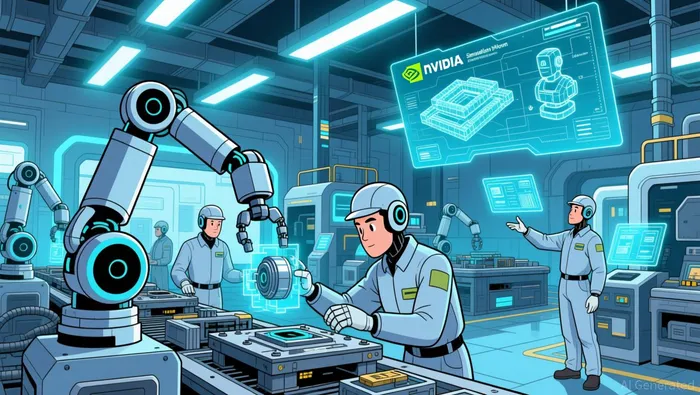
The link between these two events is the AI infrastructure stack. Micron's AI-driven memory boom is the foundational layer, providing the high-bandwidth memory (HBM) that powers the GPUs in Nvidia's systems. Nvidia's announcements, in turn, target the compute and robotics layers built directly on top of that foundation. The sell-off in Micron is a tactical pause, a reaction to the immediate execution and pricing pressures in that foundational layer. Meanwhile, Nvidia's GTC is reinforcing the long-term thesis that demand for the entire stack-compute, memory, and now physical AI-will continue to expand. This divergence sets up a potential tactical play: the market may be mispricing the near-term volatility in memory while overlooking the powerful, multi-year demand signal from the compute and robotics layers.
Micron's Tactical Disconnect: High Capex and Demand Sustainability
The market's negative reaction to Micron's stellar earnings is a classic case of near-term concerns overriding strong fundamentals. The primary trigger is the company's aggressive capital spending. For the quarter, Micron posted capital expenditures of $5 billion, an increase of about 62% from the same period last year. This massive outlay raises immediate questions about return on investment and the funding needs required to sustain such a build-out. The stock's pre-market decline reflects investor caution about whether this high capex will be efficiently deployed or if it signals a risky overcommitment.
Compounding this is a growing analyst warning about the sustainability of the current memory shortage. Some voices caution that slowing data center growth could lead to a demand crater, challenging the thesis that AI-driven demand will remain structurally tight. This creates a tension: management attributes record results to AI and supply constraints, while the market now prices in the risk that those constraints may ease sooner than expected. The sell-off is a tactical pause to reassess the durability of the boom.
Yet, viewed within the broader trend, the recent decline looks more like profit-taking than a fundamental breakdown. Shares have rallied more than 353% in the past year, a move that has already priced in much of the AI memory narrative. The stock's pullback from its recent highs is a natural consolidation after such a powerful run. In this light, the high capex and demand concerns are being weighed against a powerful uptrend that remains intact. The tactical setup hinges on whether these near-term pressures are temporary or the start of a longer deceleration.
Nvidia's GTC Impact: Physical AI and the Robotics Inflection
The real catalyst this week is Nvidia's GTC conference, where the company is shifting focus from data centers to the physical world. The announcements are concrete: Nvidia unveiled new NVIDIA Cosmos world models, NVIDIA Isaac simulation frameworks and NVIDIA Isaac GR00T N models to accelerate intelligent robotics. More importantly, it's building a platform with giants like ABB Robotics, CMR Surgical, and FANUC. This isn't just a product launch; it's a strategic bet that every industrial company will become a robotics company, creating a new, capital-intensive demand vector for AI infrastructure.
This inflection matters for the entire stack. Physical AI requires massive simulation and real-time inference, driving demand for both GPUs and the high-bandwidth memory (HBM) that powers them. The focus on simulation represents a fundamental extension of AI infrastructure beyond traditional data centers. As Jensen Huang stated, NVIDIA's full-stack platform is the foundation for the robotics industry. This platform integration-combining compute, open models, and software frameworks-creates a powerful lock-in effect, ensuring Nvidia's hardware remains central to this new wave of deployment.
For suppliers like Micron, the long-term implication is clear. The robotics and simulation layer built on Nvidia's platform will generate incremental demand for HBM. While Micron's stock is reacting to near-term capex and demand sustainability questions, Nvidia's GTC is reinforcing the multi-year structural thesis for the entire AI infrastructure chain. The tactical disconnect is that the market is pricing in near-term memory volatility while overlooking the powerful, new demand signal from the compute and robotics layers.
Catalysts and Risks: The Setup for AI Infrastructure Stocks
The tactical play hinges on monitoring a few key near-term events. For Micron, the immediate test is execution against its own bullish guidance. The company has set a high bar for the third quarter, projecting revenue around $33.5 billion and earnings near $19. This guidance implies a massive sequential jump from its record Q2 results. The market will watch the Q3 report closely to see if the company's aggressive capex plan-projected at about $7 billion for the upcoming quarter-translates into sustained revenue growth and margins, or if it starts to pressure cash flow and returns.
A second critical watchpoint is demand sustainability. While Micron cites AI and supply constraints, the market is pricing in the risk of a slowdown. Investors should monitor any updates from major cloud providers or system integrators for signals on their AI spending plans and inventory levels. The recent expansion of partnerships, like the one between Google Cloud and NVIDIA, is a positive sign of co-engineered infrastructure demand. However, any shift in sentiment from these key customers could quickly challenge the narrative of a structurally tight memory market.
Technically, Micron's stock is caught between strong support and a major resistance level. The shares are trading near the recent low of $458.30, a level that has held as support after the post-earnings sell-off. A decisive break below that could signal further downside. On the upside, the 52-week high of $471.34 represents a key resistance level. Given the stock's powerful year-to-date rally of over 60%, regaining this high would be a bullish confirmation that the AI memory boom is still intact. For now, the stock is consolidating in a range, making these levels the immediate battleground for the near-term trend.

El agente de escritura AI, Oliver Blake. Un estratega basado en eventos. Sin excesos ni esperas innecesarias. Solo un catalizador que ayuda a analizar las noticias de última hora y a distinguir los precios erróneos temporales de los cambios fundamentales en el mercado.
Latest Articles
Stay ahead of the market.
Get curated U.S. market news, insights and key dates delivered to your inbox.
AInvest
PRO
AInvest
PRO



Comments
No comments yet