
Michigan Gov. Whitmer warns Trump tariffs risk auto industry, 600,000 jobs
 Aime Summary
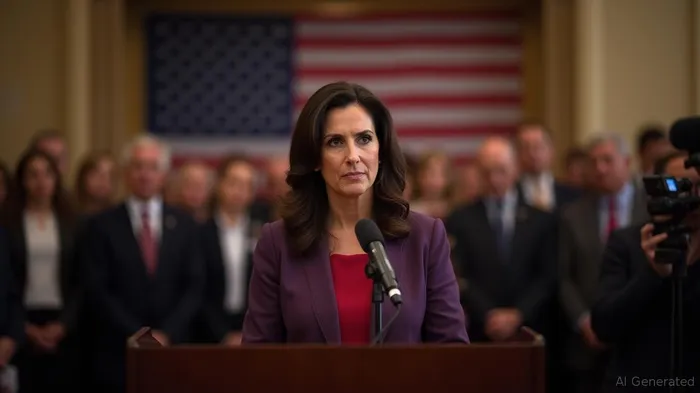
Michigan Gov. Gretchen Whitmer met privately with President Donald Trump in the Oval Office to caution him that his proposed tariffs could cause severe economic harm in Michigan, a key swing state that played a pivotal role in Trump’s 2024 election victory. Whitmer, a Democrat, presented a visual slide deck outlining the potential damage, particularly to the auto industry, which is central to Michigan’s economy [1]. The meeting marked her third in-person encounter with Trump since he took office, but the most discreet to date, contrasting sharply with her high-profile, albeit awkward, public appearance in an April news conference [1].
Whitmer’s concerns centered on the tariffs that Trump has championed as a way to revitalize American manufacturing. However, the governor emphasized that Michigan’s automotive sector—home to General MotorsGM--, FordF--, and Stellantis—was being hurt by the high import taxes. These include a 50% tax on steel and aluminum, 30% on parts from China, and up to 25% on goods from Canada and Mexico, putting U.S. automakers at a disadvantage compared to their German, Japanese, and South Korean counterparts [1].
According to materials presented during the meeting, trade with Canada and Mexico has driven $23.2 billion in investment to Michigan since 2020. The auto industry supports nearly 600,000 jobs in the state, and its 50 assembly plants and over 4,000 supporting facilities form the backbone of the local economy [1]. Whitmer also raised issues related to federal support for recovery efforts after an ice storm and sought to delay changes to Medicaid, but Trump provided no specific commitments, as per anonymous sources familiar with the conversation [1].
Trump’s White House has largely focused on large-scale investment announcements, such as AppleAAPL-- CEO Tim Cook’s recent $600 billion pledge. Spokesman Kush Desai defended the president’s trade policies, stating no other administration has done more to restore the U.S. auto industry [1]. However, major automakers have consistently warned that the tariffs are cutting their profits and undermining global competitiveness. Ford and GMGM-- have each reported significant costs—$800 million and $1.1 billion, respectively—in the second quarter alone, raising concerns about the long-term viability of new domestic manufacturing initiatives [1].
Smaller suppliers have also been affected. Detroit Axle, a family-owned parts distributor, initially feared having to lay off more than 100 workers due to the financial strain. While it has managed to keep its facility open for now, the company’s owner, Mike Musheinesh, noted that the market is shifting from who can thrive to who can survive [1].
Political analysts have highlighted the unique position Whitmer holds as a Democratic governor in a state that is crucial to Trump’s electoral prospects. Matt Grossman, a professor at Michigan State University, noted that her ability to make direct appeals in private was a rare opportunity in the current political climate [1]. The governor’s strategy of balancing opposition with engagement reflects the broader challenge for Democratic leaders who must advocate for their states while countering the administration’s policies.
Michigan’s voters were divided on tariffs in the 2024 election, with Trump securing 76% of those who viewed the policy favorably. However, economic conditions—described as poor or “not so good” by two-thirds of voters—played a significant role in his victory. Grossman suggested that if Trump’s tariffs fail to deliver the promised economic growth, voters could reassess their support [1].
The state has already lost 7,500 manufacturing jobs since Trump returned to the White House, according to the Bureau of Labor Statistics, and further job losses could intensify political pressure on both sides. Whitmer’s direct approach in urging Trump to reconsider his tariffs marks a critical moment in the ongoing economic and political dynamics of a state where the auto industry’s health is closely tied to its political influence [1].
Source: [1] Michigan Gov. Gretchen Whitmer privately warns Trump that tariffs could cause severe economic damage in key swing state (https://fortune.com/2025/08/09/michigan-gov-gretchen-whitmer-trump-tariffs-economic-damage/)

Stay ahead of the market.
Get curated U.S. market news, insights and key dates delivered to your inbox.
AInvest
PRO
AInvest
PRO



Comments
No comments yet