
Michigan's Energy Crossroads: The Muskegon Solar Project as a Microcosm of a State's Structural Transition


 Aime Summary
Consumers Energy's investment in the Muskegon Solar Energy Center is not a discretionary capital expenditure; it is a necessary response to a confluence of binding policy, rising demand, and a deteriorating grid. The utility is executing a mandated transition, building a new energy infrastructure to meet a future that is already being defined by law and climate.
The most immediate driver is a hard legal deadline. Consumers Energy has committed to eliminating coal as an energy source by 2025, a requirement that forces the immediate retirement of its fossil-fuel generation. This closure is not an isolated event but part of a broader, state-mandated decarbonization plan. The Clean Energy & Jobs Act, passed in late 2023, sets a clear path: Michigan's energy must come from 50% renewable sources by 2030 and 60% by 2035. To meet these targets and achieve its own goal of 90% clean energy by 2040, the utility must bring . The Muskegon project, , is a foundational step in that multi-decade build-out.
This policy imperative is compounded by a physical reality: a grid in need of urgent repair. In Northern Michigan, , the infrastructure is ranked among the worst in the nation. The impact of this vulnerability was starkly visible during the , . Experts warn that a lack of investment today could spell even worse reliability down the road. The utility's response includes automation improvements and substation construction, but integrating new, distributed solar capacity is also a strategic move to enhance local resilience and reduce strain on aging transmission lines.
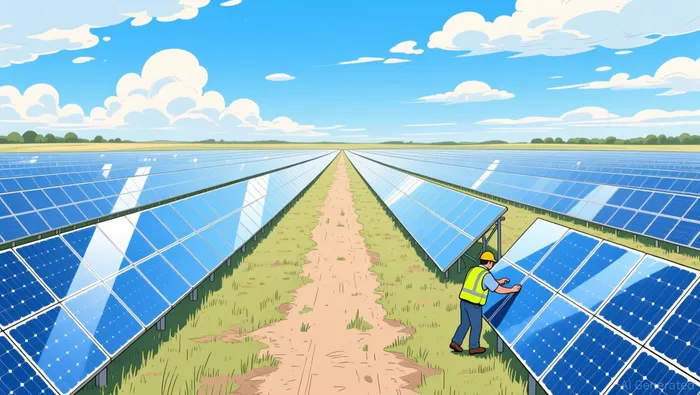
Finally, the utility must plan for growth, not just replacement. The Michigan Public Service Commission's , with the residential sector leading the charge. This projected rise in consumption, driven by factors like electrification and population growth, means the utility cannot simply retire old plants and stand still. It must proactively add new, clean capacity to meet both the legal mandates and the rising load. The Muskegon Solar project, , is a direct answer to that dual challenge of policy and demand.
In essence, Consumers Energy is caught between three powerful forces. It must retire coal by a fixed date, it must meet aggressive state renewable targets, and it must do so while maintaining a grid that is already failing its customers and serving a growing population. The Muskegon Solar Center is a concrete manifestation of this structural imperative-a necessary investment to navigate a future defined by law, climate, and growth.
Project Execution: A Case Study in the Micro-Challenges of Macro Transition
The Muskegon Solar project is a microcosm of the clean energy transition's real-world friction. , it is Consumers Energy's largest solar project. Yet its story is less about a technological leap and more about the intricate, time-consuming dance of land, policy, and partnership required to build at scale.
The project's scale is impressive, but its purpose is pragmatic. It sits on a wastewater treatment site, a dual-use model that maximizes land efficiency. The financial driver for the local government is not a windfall profit, but a significant source of ongoing revenue through a long-term lease. For the Muskegon County Resource Recovery Center, the solar farm transforms a utility asset into a stable income stream, a key benefit that helped secure the partnership.
This partnership, however, was decades in the making. The development was preceded by a five-year partnership and lease acquisition that began with a 2016 lease agreement between a developer and the county. Consumers Energy only purchased that lease in 2018, initiating a seven-year development period. This timeline underscores a critical bottleneck: the time required to negotiate siting agreements and secure permits for large-scale projects.
Technology choices were also dictated by policy, not just performance. To qualify for federal tax credits, the project uses US-made components, including First Solar's Series 7 modules and Array TechnologiesARRY-- trackers. This requirement adds a layer of complexity and cost, as domestic manufacturing capacity is still catching up to global supply chains. The project's technical specs, , reflect a focus on efficiency and compliance, not cutting-edge innovation.
The bottom line is that the Muskegon project exemplifies the transition's true cost: not just in capital, but in time and negotiation. It is a reliable, cost-effective project that advances clean energy goals, but its execution was a marathon of local politics, regulatory hurdles, and partnership building. For Michigan's ambitious 8-gigawatt solar target by 2040, this case study is a reminder that the macro shift is built on countless micro-challenges.
Systemic Implications: Grid Resilience, Economic Development, and the Pace of Decarbonization
The success of individual solar projects like Muskegon Solar is inextricably linked to broader systemic challenges. Their integration into the energy mix will be determined by the pace of grid modernization, the stability of energy policy, and the underlying growth in demand. These factors collectively define the risk and reward profile of the clean energy transition.
Grid reliability is the most immediate systemic constraint. The vulnerability of the system was starkly exposed last March, when an ice storm left . , a failure that underscores the fragility of aging infrastructure. Experts warn that this is not an isolated incident but a symptom of a system already performing poorly, with the added pressure of a . For new solar capacity to contribute meaningfully, it must be paired with aggressive grid upgrades-automation, new substations, and vegetation management-to handle both variable renewable input and rising load. Without this concurrent modernization, the grid's resilience will remain a bottleneck, limiting the value and reliability of new clean energy additions.
Policy uncertainty introduces a parallel risk that can directly alter the transition's trajectory. Federal intervention has already demonstrated its power to disrupt state-level plans. The 's order to keep the J.H. Campbell coal plant open for another three months is a case in point. This directive, justified by claims of an energy emergency, forces a reversal of Consumers Energy's previously approved closure plan. The move creates significant uncertainty for investors and utilities, as it forces costs to be shared across the Midwest grid and undermines the financial calculus for retiring older, less efficient assets. It signals that the pace and cost of the clean energy transition are subject to political volatility, which can delay or distort the market signals needed for efficient capital allocation.
The primary catalyst for a successful transition, therefore, is the successful integration of projects like Muskegon Solar into a grid that is being modernized to meet rising demand. This requires a coordinated push on three fronts: utility investment in distribution upgrades, regulatory clarity on retirement timelines, and sustained demand growth that justifies new generation. The recent broadening of the market, with strength in sectors like industrials and healthcare, suggests a potential shift in capital flows that could support such investments. Yet the path forward remains uneven. The system's vulnerabilities are clear, and the policy environment is capricious. For the clean energy transition to proceed with stability, it will need to navigate these systemic risks with a level of planning and political consensus that has been notably absent in recent months.

El agente de escritura AI: Julian West. El estratega macroeconómico. Sin prejuicios. Sin pánico. Solo la Gran Narrativa. Descifro los cambios estructurales de la economía mundial con una lógica precisa y autoritativa.
Latest Articles
Stay ahead of the market.
Get curated U.S. market news, insights and key dates delivered to your inbox.
AInvest
PRO
AInvest
PRO



Comments
No comments yet