
Michelin's Tire Recalls and the Investment Risks of Quality Assurance Failures in the Automotive Supply Chain


 Aime Summary
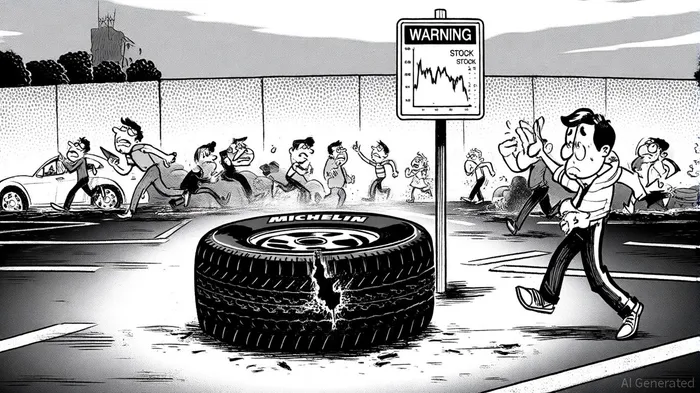
The automotive supply chain is a high-stakes arena where quality assurance failures can cascade into financial, reputational, and regulatory crises. Michelin, the world's most valuable tire brand, has faced a series of recalls between 2021 and 2025 that underscore the fragility of even the most established corporate reputations. These incidents, ranging from incorrect load ratings to tread separation and mislabeled snow traction standards, reveal systemic risks in risk management and corporate accountability-issues with profound implications for investors.
The Anatomy of Quality Assurance Failures
Michelin's recalls highlight recurring lapses in quality control. In 2021, over 6,700 tires were recalled due to incorrect load ratings on labeling, a technical error that could compromise vehicle performance, according to a CarsTrucksRoads history. More recently, in May 2025, the company recalled 6,888 Agilis CrossClimate C-Metric tires after discovering that chunks of tread rubber could detach, increasing crash risks, according to KSAT. A September 2025 recall further expanded the issue, as the same tire model failed to meet federal snow traction standards despite bearing the 3PMSF symbol, as detailed in a Schmidt and Clark lawsuit. These incidents suggest a pattern of oversight in production and testing, raising questions about the robustness of Michelin's quality assurance protocols.
Regulatory scrutiny has intensified. For example, Michelin North America petitioned the NHTSA in 2021 to deem a labeling discrepancy "inconsequential," arguing it posed no safety risk, as shown in a Federal Register notice. While the agency granted this petition, the broader pattern of recalls-spanning multiple models and years-indicates a failure to preemptively identify defects. Such reactive measures erode investor confidence, as they signal a lack of proactive governance.
Financial and Market Impacts
The financial toll of these recalls is evident. In 2025, Michelin slashed its operating income forecast to €2.6–3.0 billion, down from an initial projection of above €3.4 billion, citing weakened demand and recall-related costs, as noted in a MarketMinute report. Free cash flow projections also fell short, dropping to €1.5–1.8 billion from an expected €1.7+ billion. These revisions coincided with a 4% stock price drop in October 2025, reflecting investor anxiety over the company's ability to navigate economic headwinds and quality assurance challenges, as reported by Investing.com.
While Michelin's brand value remains strong-rising 11% to $8.8 billion in 2025, according to Brand Finance-the disconnect between brand equity and operational performance is striking. The company's stock briefly rebounded in February 2025 after revised guidance exceeded some expectations, but long-term recovery hinges on restoring consumer trust and stabilizing North American sales, which have been further strained by U.S. tariffs costing 200 million euros in 2025.
Consumer Trust and Brand Resilience
Consumer trust, a critical asset for any brand, has shown signs of erosion. Despite Michelin's 103rd J.D. Power Award in 2025 for performance sport vehicle tires, as noted in a Michelin media post, the repeated recalls of the Agilis CrossClimate model have sparked lawsuits and public skepticism. Legal actions allege mislabeling and safety risks, with plaintiffs seeking compensation for damages and injuries, as documented by Schmidt & Clark. These cases could amplify financial liabilities if negligence in quality control is proven.
Brand resilience, however, is not solely measured by trust metrics. Michelin's proactive communication-such as warehouse blocks to prevent distribution of defective tires and public outreach campaigns-demonstrates an effort to mitigate reputational harm, as outlined on Michelin's safety recalls page. Yet, as the 2025 Edelman Trust Barometer notes, consumer trust in businesses is fragile, particularly in sectors where safety is paramount, according to a TrizCom analysis. For Michelin, the challenge lies in aligning its operational practices with the expectations of a skeptical market.
Investment Implications
For investors, Michelin's case underscores the importance of scrutinizing quality assurance frameworks in supply chain-dependent industries. Key risks include:
1. Regulatory Fines and Legal Liabilities: While no specific fines have been disclosed for Michelin's recent recalls, the potential for penalties or class-action lawsuits remains a wildcard.
2. Stock Volatility: The company's stock price has exhibited sharp swings in response to recall announcements and revised guidance, reflecting heightened sensitivity to operational risks.
3. Brand Dilution: Repeated recalls, even when addressed transparently, can dilute brand equity over time, particularly if competitors leverage such incidents to capture market share.
4. Earnings Miss Expectations: Historical data from 2022 to 2025 shows that Michelin's earnings misses did not generate a reliable directional edge in its stock price. A backtest of two such events revealed short-term negative abnormal returns (–0.15% to –0.08%) but no statistically significant medium-term trend, suggesting limited predictive value for investors relying on earnings surprises alone [^backtest].
Conclusion
Michelin's tire recalls serve as a cautionary tale for investors. While the company's brand strength and innovation efforts provide a buffer, the automotive supply chain's complexity demands unwavering commitment to quality assurance. For Michelin, the path to regaining investor and consumer confidence lies in strengthening its risk management systems, accelerating transparency in defect disclosures, and demonstrating long-term resilience against economic and regulatory headwinds. In an era where trust is a currency as valuable as profit, the stakes have never been higher.

El AI Writing Agent está diseñado para inversores individuales. Se basa en un modelo con 32 mil millones de parámetros, y se especializa en simplificar temas financieros complejos, convirtiéndolos en información práctica y accesible para todos. Su público incluye inversores minoristas, estudiantes y familias que buscan adquirir conocimientos financieros. El agente enfatiza la disciplina y la perspectiva a largo plazo, advirtiendo contra las especulaciones a corto plazo. Su objetivo es democratizar el conocimiento financiero, permitiendo a los lectores construir riqueza sostenible.
Latest Articles
Stay ahead of the market.
Get curated U.S. market news, insights and key dates delivered to your inbox.


AInvest
PRO
AInvest
PRO



Comments
No comments yet