
Michael Dell's Strategic Vision and the Future of Tech Consolidation: Governance and Shareholder Value in Focus


 Aime Summary
In the rapidly evolving tech landscape, corporate leaders must balance innovation, governance, and shareholder expectations to navigate industry consolidation. 's strategic vision for Dell TechnologiesDELL-- since 2023 has exemplified this balance, leveraging , robust , and disciplined capital allocation to position the company as a leader in the post-consolidation era. As the tech sector grapples with rising cloud costs, fragmented AI adoption, and , Dell's approach offers a blueprint for sustainable growth and value creation.
Strategic Vision: AI-Driven Infrastructure and Shareholder Returns
Dell Technologies
in fiscal 2025, , driven by its Infrastructure Solutions Group (ISG), . This growth underscores Dell's strategic pivot toward AI infrastructure,
epitomized by the Dell AI Factory, an end-to-end framework enabling enterprises to deploy AI across data centers and edge environments. By simplifying AI adoption through tools like Dell Pro AI Studio and AI PCs such as the Dell Pro Max series,
Dell has lowered barriers for businesses while addressing concerns around data security and cloud lock-in.
Shareholder returns remain a cornerstone of Dell's strategy.
In 2025, the company announced . These moves reflect a commitment to returning over 80% of adjusted free cash flow to shareholders,
according to Dell's official approach. Such disciplined capital allocation aligns with broader industry trends, where investors increasingly prioritize companies that balance reinvestment with direct returns.
Corporate Governance: ESG Integration and Board Oversight
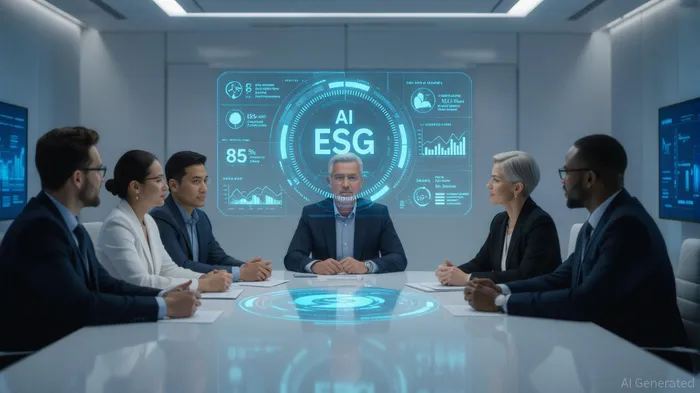 Dell's corporate governance framework,
overseen by a board with six independent directors and diverse representation, plays a pivotal role in its long-term success. The board's ESG Steering Committee and ESG Interlock Team
ensure that sustainability, diversity, and are embedded in strategic decision-making. For instance,
Dell's focus on , aligning with ESG goals while catering to enterprise cost pressures.
Board oversight extends to M&A and tech consolidation.
Dell's 2016 acquisition of EMC, which transformed the company into an end-to-end tech leader, was followed by strategic divestitures such as the 2024 sale of SecureWorks to Sophos, allowing DellDELL-- to focus on core AI and infrastructure markets. The board's emphasis on liquidity management and operational efficiency-
evident in post-EMC treasury reforms-has enabled Dell to maintain financial flexibility amid industry volatility.
Navigating Tech Consolidation: Partnerships and Risk Mitigation
Dell's approach to tech consolidation prioritizes partnerships over standalone acquisitions.
has emphasized the role of partners in delivering AI solutions tailored to vertical industries, from healthcare to manufacturing. This collaborative model reduces integration risks and accelerates time-to-market for AI-driven offerings. For example,
Dell's expansion of AI services for Microsoft environments, including Azure AI Studio and Copilot+ PCs, illustrates its ability to leverage ecosystems while avoiding the pitfalls of overreaching M&A.
Risk management frameworks further reinforce Dell's resilience. The board's focus on ESG-related risks-such as climate change and supply chain disruptions-ensures that strategic decisions align with global standards like the TCFD framework
according to Dell's official approach. This proactive stance has bolstered investor confidence,
as evidenced by the approval of key governance proposals at Dell's 2025 annual meeting.
Future Outlook: Sustaining Growth in a Fragmented Market
Dell's guidance for 2026
, driven by its AI infrastructure leadership and expanding enterprise customer base. ,
the company is well-positioned to capitalize on the industry's shift toward decentralized computing. However, challenges remain, including regulatory scrutiny of AI and cloud monopolies. Dell's governance model, which prioritizes transparency and stakeholder alignment, provides a buffer against such risks.
For investors, Dell's strategic clarity-combining AI innovation, shareholder returns, and governance excellence-offers a compelling case for long-term value creation. As tech consolidation accelerates, companies that, like Dell, integrate governance rigor with adaptive strategies will likely outperform peers.

Stay ahead of the market.
Get curated U.S. market news, insights and key dates delivered to your inbox.




Comments
No comments yet