
MiCA Compliant Stablecoins Transitioning to Stricter EU Standards
 Aime Summary
The grandfathering period for crypto firms under the EU's MiCA regulation is ending in half of EU member states as of July 1, 2026. Meeting MiCA's harmonized standards has been challenging, with an estimated 75% of crypto businesses expected to lose their registration status. Hong Kong is pushing forward with a stablecoin licensing initiative despite Beijing's opposition, aiming to testTST-- controlled use cases in cross-border payments and tokenized deposits.
The EU's Markets in Crypto-Assets (MiCA) regulation is reshaping the landscape for crypto asset service providers. As of July 1, 2026, the grandfathering period is set to expire in half of EU member states, requiring all crypto firms to hold a full MiCA license or cease operations. This regulatory shift is forcing businesses to meet stricter standards, including minimum capital requirements, governance reforms, and consumer protection measures. An estimated 75% of crypto businesses are expected to lose their registration status due to the difficulty of compliance.
MiCA has established a unified legal framework for crypto assets in the EU, categorizing crypto asset service providers into three classes with escalating capital requirements. Class 1 requires a minimum of €50,000, while Class 2 and 3 require €125,000 and €150,000, respectively. These requirements are in addition to prudential safeguards and governance protocols. 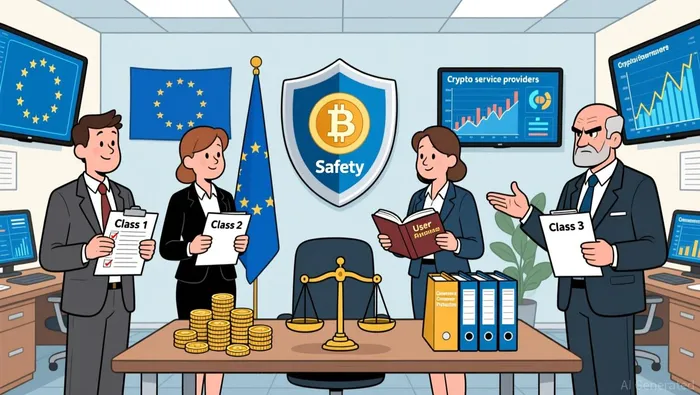 Compliance with MiCA is now mandatory for operating in the EU, and passporting rights for authorized firms offer strategic advantages.
Meanwhile, Hong Kong is moving forward with its own stablecoin licensing initiative, despite opposition from Beijing. The Hong Kong Monetary Authority has already received 36 stablecoin issuer applications and plans to issue the first batch of licenses in March. This initiative is part of a broader effort to explore controlled use cases such as cross-border payments and tokenized deposit systems. Hong Kong's approach is seen as a testbed for digital asset innovation, and its regulatory clarity is positioning it as a regional leader in onchain financial services.
What Are the Implications of MiCA Compliance for Crypto Firms?
MiCA compliance is proving to be a major hurdle for crypto firms, particularly those that previously operated under more lenient national regimes. The transition to MiCA's harmonized rules, which include minimum capital requirements and governance reforms, has been disruptive for many businesses. Some countries, like Germany and France, have imposed even stricter requirements, increasing the complexity of compliance. Despite the challenges, securing a MiCA license is seen as a long-term strategic move, as it offers passporting rights allowing firms to operate across all EU jurisdictions.
How Is Hong Kong Responding to the Global Stablecoin Trend?
Hong Kong is taking a proactive approach to stablecoin regulation by implementing a licensing framework. The Stablecoins Ordinance, passed in May 2024, requires licenses for entities issuing stablecoins within the territory or pegging them to the Hong Kong Dollar. This move is intended to explore controlled use cases for stablecoins, such as cross-border payments and tokenized deposit systems. Despite Chinese regulators advising against the initiative, Hong Kong is proceeding with its plans, leveraging its autonomy under the "one country, two systems" framework to test digital asset innovation.
What Are the Risks and Opportunities for Stablecoin Use in Asia?
Asia is emerging as a global leader in onchain financial services, driven by regional strategies that focus on real-world utility and regulation. Hong Kong and the UAE are recognized as the most advanced markets for stablecoin regulation, offering cheaper, quicker, and more convenient payment solutions. These stablecoins are being used by small businesses to bypass fragmented traditional payment systems, enabling faster cross-border transactions and more transparent foreign exchange rates. While the potential for stablecoins is significant, regulatory clarity and market adoption remain key risks for their long-term success.

Blending traditional trading wisdom with cutting-edge cryptocurrency insights.
Latest Articles
Stay ahead of the market.
Get curated U.S. market news, insights and key dates delivered to your inbox.


AInvest
PRO
AInvest
PRO



Comments
No comments yet