
MiCA Compliant Stablecoins Expand Infrastructure, Bridging DeFi and Traditional Finance
 Aime Summary
MiCA regulatory compliance is enabling stablecoin platforms to scale across European markets, with OKX and Qivalis offering cross-border and institutional-grade solutions according to AInvest.
Stablecoin adoption is expanding beyond speculative trading to become a core infrastructure for risk management and liquidity, driven by volatility in 2026 as reported.
Institutional adoption is accelerating due to regulatory clarity from the U.S. GENIUS Act and MiCA in Europe, with stablecoin transaction volumes reaching $46 trillion and projected to hit $56 trillion by 2030 according to AInvest.
MiCA compliance is rapidly transforming the European stablecoin landscape, enabling platforms like OKX and Qivalis to provide institutional-grade and user-friendly payment solutions. OKX, operating under a broad MiCA license, now facilitates MastercardMA-- transactions with low fees and strong security through its partnership with Standard Chartered Bank. This infrastructure legitimizes stablecoins as a bridge between DeFi and traditional finance, reducing risk for users and attracting institutional interest as detailed.
Meanwhile, Qivalis, a European banking consortium, is preparing to launch a regulated euro stablecoin in 2026 under Dutch Central Bank supervision. This initiative aims to enable 24/7 cross-border payments and support digital asset settlements. With participation from major banks like INGING-- and CaixaBank, Qivalis is positioning itself as a key player in regulated digital finance according to CaixaBank.
The broader stablecoin ecosystem is witnessing a shift from speculative trading to value-based models. Wintermute predicts that by 2026, tokens will only be launched after achieving product-market fit with proven unit economics. This trend reflects a maturing industry focused on sustainable earnings and risk management as Wintermute states.
How Does MiCA Compliance Affect Stablecoin Growth?
MiCA compliance is a key driver of stablecoin growth in Europe. OKX, which has secured a MiCA passport for its operations, now serves multiple EEA countries without redundant compliance processes, reducing costs and accelerating deployment. The platform reported a 53-fold increase in trading volume in licensed markets, with daily active wallets doubling in 2025 according to AInvest.
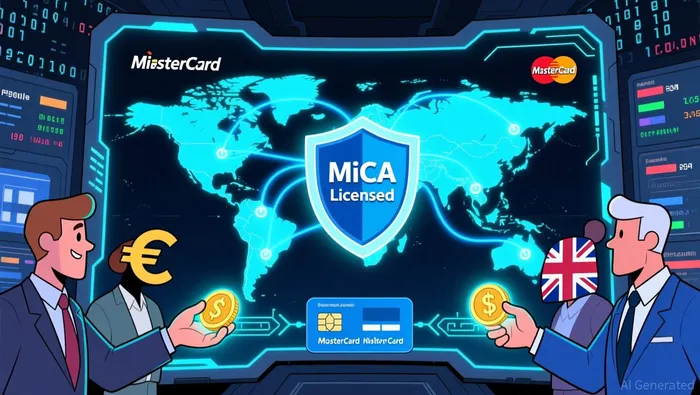
The MiCA framework also encourages transparency and security, as platforms must operate under licensed electronic money institutions and provide clear custody solutions. OKX’s partnership with Standard Chartered Bank and integration with PayPal and Apple Pay/Google Pay further expand its utility and accessibility as noted.
For institutional investors, MiCA compliance reduces perceived risk and aligns with global regulatory trends, such as the U.S. GENIUS Act. These frameworks are fostering trust and legitimizing stablecoins as a critical component of financial infrastructure according to AInvest.
What Are the Risks and Limitations of Stablecoin Expansion?
Despite the growth, stablecoins still face challenges, including fragmented blockchain ecosystems and the lack of coordination infrastructure. Multiple stablecoins across different blockchains create friction in cross-chain transactions, limiting their full potential according to Sahm Capital.
Wintermute highlights that the solution lies in building coordination layers that handle seamless conversions between stablecoins without exposing users to currency risk. This infrastructure, similar to traditional banking but optimized for crypto, is still in development as Wintermute explains.
Moreover, institutional adoption is not universal. Coinbase CEO Brian Armstrong’s clash with traditional banking leaders at Davos highlighted ongoing tensions over regulatory frameworks and the integration of crypto into legacy systems. While some banks, like BNY Mellon, are embracing digital assets, others remain skeptical of the risks and opportunities as reported by KuCoin.
In summary, MiCA-compliant stablecoins are playing a pivotal role in reshaping the crypto landscape. They are enabling faster, more secure payments and fostering institutional trust. However, the industry must still address infrastructure limitations and regulatory fragmentation to fully realize the potential of stablecoins as a global financial tool.

Blending traditional trading wisdom with cutting-edge cryptocurrency insights.
Latest Articles
Stay ahead of the market.
Get curated U.S. market news, insights and key dates delivered to your inbox.


AInvest
PRO
AInvest
PRO



Comments
No comments yet