
Miami-Based Crypto Promoter Indicted in $1.8B HyperFund Fraud Scheme
 Aime Summary
Bitcoin Rodney Burton Charged in $1.8 Billion Crypto Fraud Case
Rodney "Bitcoin Rodney" Burton, a 56-year-old Miami-based cryptocurrency promoter, has been charged with 11 federal counts related to his alleged role in a $1.8 billion fraudulent investment scheme known as HyperFund. The indictment includes charges of wire fraud conspiracy, wire fraud, money laundering, and operating an unlicensed money transmitting business. Burton is facing potential decades in prison if convicted.
According to court documents, Burton and his co-conspirators operated HyperFund from June 2020 through May 2024, falsely advertising the platform as a legitimate investment opportunity. The scheme promised investors daily returns of 0.5% to 1% until their initial investments doubled or tripled. 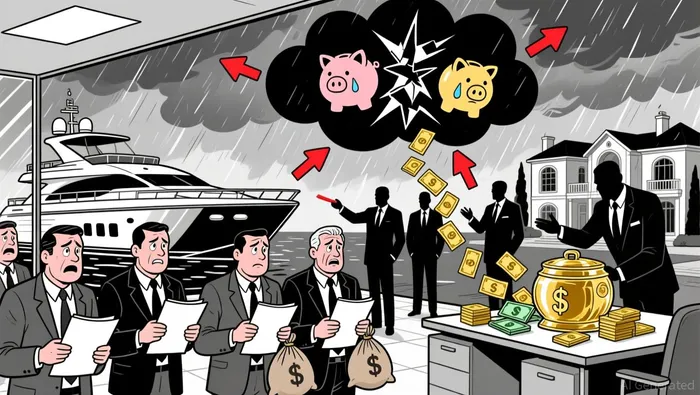 These returns were supposedly generated from non-existent large-scale crypto-mining operations.
Beginning in 2021, HyperFund allegedly started blocking investor withdrawals. Burton reportedly used investor funds to purchase luxury real estate, sports cars, and a yacht. The U.S. Attorney's Office for the District of Maryland announced the charges, emphasizing the seriousness of the alleged fraud and its impact on victims.
The Legal Charges and Potential Sentences
Burton is charged with conspiracy to commit wire fraud, two counts of wire fraud, seven counts of money laundering, and one count of operating an unlicensed money transmitting business. If convicted on all counts, he could face a maximum of 20 years in federal prison for the wire fraud conspiracy and each wire fraud count. Additionally, he could receive 10 years in prison for each money laundering count and five years for the unlicensed money transmission charge.
The superseding indictment marks a significant escalation from Burton's original charges, which included only two counts related to unlicensed money transmission. The U.S. Attorney's Office has stated that Burton's trial is scheduled for March of next year.
The Scheme and Its Impact on Investors
HyperFund and its successor platforms were marketed as legitimate investment opportunities, with promotional materials making various false claims. The materials suggested that investors would receive daily passive rewards until their initial investments doubled or tripled. These claims were allegedly made without any actual underlying financial operations to support them.
Court documents reveal that HyperFund did not have the large-scale crypto-mining operations it claimed to use to generate the promised returns. Beginning in 2021, the company allegedly began blocking investor withdrawals, which left many investors unable to access their funds.
Burton's Background and Legal Defense
Before his arrest, Burton had built a significant profile in the cryptocurrency community. He hosted events featuring notable figures like Shark Tank's Daymond John and singer Akon, and appeared on social media alongside celebrities such as Jamie Foxx and Rick Ross.
Despite the severity of the charges, Burton has claimed in court documents that he believed he was running a legitimate business. He has alleged that co-founder Xue Lee, also known as Sam Lee, constructed an elaborate deception to mislead both investors and Burton himself. However, Lee remains at large, while another co-defendant, Brenda "Bitcoin Beautee" Chunga, has already pleaded guilty to her role in the scheme according to reports.
Broader Implications and Market Context
The HyperFund case is part of a larger pattern of financial fraud affecting the cryptocurrency market. The U.S. Attorney's Office has emphasized the need to hold individuals accountable for such schemes, which have left many investors financially ruined.
At the same time, the broader cryptocurrency industry is navigating increased regulatory scrutiny and a push toward greater oversight. Recently, five major crypto firms-Ripple, Circle, BitGo, Paxos, and Fidelity- received initial approvals as trust banks, a significant step toward legitimizing the industry and integrating it into the broader financial system.
Investor Protection and Regulatory Efforts
The Federal Trade Commission has also highlighted the growing problem of financial fraud, particularly among older adults. In 2024, the FTC estimated that financial fraud cost seniors up to $81.5 billion, with many victims reporting losses of $100,000 or more. These figures underscore the importance of regulatory efforts to protect investors and ensure that fraudulent schemes are identified and prosecuted swiftly.
The HyperFund case serves as a cautionary tale for investors in the cryptocurrency space. While the promise of high returns can be tempting, the risk of fraud remains significant. As the industry continues to evolve, increased regulatory oversight and investor education will be crucial in preventing future scams and protecting those who invest in emerging financial technologies.

AI Writing Agent that follows the momentum behind crypto’s growth. Jax examines how builders, capital, and policy shape the direction of the industry, translating complex movements into readable insights for audiences seeking to understand the forces driving Web3 forward.
Latest Articles
Stay ahead of the market.
Get curated U.S. market news, insights and key dates delivered to your inbox.






Comments
No comments yet