
Mexico’s Trade Deficit Surpasses All Forecasts in February 2026
 Aime Summary
- Mexico's trade balance deteriorated to a deficit of -6.481 billion dollars in the latest report, significantly wider than both the forecast of -2.200 billion and the previous surplus of 2.430 billion.
- The result highlights persistent imbalances in Mexico's trade dynamics, particularly under current global trade pressures and recent policy shifts in U.S. tariff structures.
- Investors are closely watching how this data may influence the peso, domestic inflation, and the country's broader economic outlook in 2026.
- A large and unexpected trade deficit may increase pressure on the Bank of Mexico to address inflation risks, but it does not necessarily signal immediate tightening.
Mexico's trade balance has swung sharply into deficit in February 2026, with data showing a -6.481 billion dollar imbalance. This starkly overshadows the -2.200 billion forecast and reverses a prior surplus of 2.430 billion, indicating a sudden and notable shift in the country's trade dynamics. The move has sent ripples through market sentiment and may impact the broader macroeconomic landscape in Mexico, particularly as trade relations with the U.S. remain in flux due to recent policy changes.
The trade deficit highlights the vulnerability of Mexico's export-driven economy to external shocks, particularly in light of the U.S. Supreme Court ruling that invalidated the IEEPA-based tariffs. The U.S. administration has since introduced a 10% import surcharge under the Trade Act of 1974, which may affect Mexico's export competitiveness. Meanwhile, companies like Grupo Elektra have signaled a focus on growth after resolving tax disputes, but this may not counteract broader macroeconomic headwinds.
What Does Mexico's Trade Deficit Signal About External Demand and Currency Pressures?
A widening trade deficit can often indicate a mismatch between domestic demand and export strength. In this case, Mexico's exports may be struggling to compete under the new U.S. tariff regime, which has led to uncertainty for importers and exporters alike. Additionally, the surcharge imposed by the U.S. has shifted pricing dynamics, 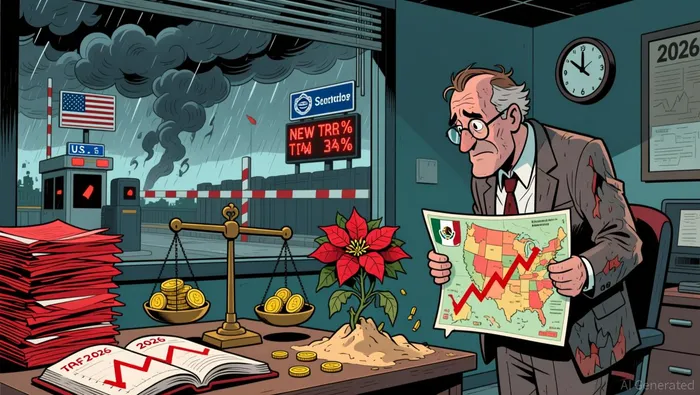 potentially reducing the volume of Mexican goods in U.S. markets. A weaker trade balance could lead to increased pressure on the peso, though the Bank of Mexico has signaled a cautious approach to monetary policy in 2026.
Investors and analysts are watching whether the Bank of Mexico will respond to the trade imbalance by tightening monetary policy or whether it will continue to prioritize price stability. The central bank may also consider structural reforms to address long-term competitiveness in global markets. However, a sudden shift in policy could have unintended consequences for inflation, especially if the peso weakens further against the dollar.
Why Are Investors Watching Mexico's Trade Performance in 2026?
The trade data comes amid a broader period of volatility in global trade policy, particularly with the Trump administration's reshaping of tariff structures following a key Supreme Court ruling. The new 10% import surcharge is temporary and lasts for 150 days, but it introduces uncertainty for importers and exporters who must adjust supply chains and pricing models in response.
Mexican companies, especially those in logistics and manufacturing, are being advised to remain vigilant about regional disruptions and to strengthen contingency planning. Freight flows in western Mexico have stabilized after recent cartel-related disruptions, but companies are being urged to diversify supply chains and avoid over-reliance on single ports or carriers. These adjustments are critical for maintaining operational continuity in a volatile trade environment.
Looking ahead, the next key data points for investors will include the monthly trade balance, the Bank of Mexico's monetary policy statement, and the broader U.S.-Mexico trade dialogue. The trade deficit, while concerning, may be a temporary blip if export activity rebounds in the coming months. However, if the trend continues, it could signal deeper structural imbalances in Mexico's trade sector and prompt more aggressive policy responses.
In the meantime, investors should remain focused on how Mexico's trade partners, especially the U.S., respond to the new tariff framework. The implications for cross-border trade and currency stability will be critical in shaping the economic outlook for the region in 2026.

Stay ahead of the market.
Get curated U.S. market news, insights and key dates delivered to your inbox.


AInvest
PRO
AInvest
PRO



Comments
No comments yet