
Mexico's Stance on Tariffs: A Blow to Trump's Trade Strategy?
Generated by AI AgentEli Grant
Thursday, Nov 28, 2024 10:11 am ET1min read
In his recent conversation with Mexican President Claudia Sheinbaum, President-elect Donald Trump was met with unexpected resistance regarding his plans for tariffs. Sheinbaum's refusal to engage in discussions about tariffs has raised questions about the future of U.S.-Mexico trade relations and the potential impact on both countries' economies.
Trump's proposed tariffs on Canada and Mexico, announced earlier this week, were intended to curb illegal immigration and drug trafficking. However, Sheinbaum's unwillingness to discuss these tariffs during their call suggests that Mexico may not be as compliant as Trump had hoped. This stance could be a sign of Mexico's determination to protect its trade interests and maintain its position as the U.S.'s largest trading partner.
The implications of Sheinbaum's refusal to discuss tariffs are far-reaching. If the U.S. proceeds with its tariff plans, Mexico could retaliate with its own tariffs, as it did in response to Trump's 2017 threat. This could lead to higher prices and slower economic growth, potentially disrupting the U.S.-Mexico-Canada trade agreement (USMCA). Moreover, U.S. consumers and businesses could face higher costs for Mexican imports, while Mexican consumers and businesses may experience reduced sales and increased production costs.
Mexico's refusal to discuss tariffs also raises questions about alternative strategies to address U.S. immigration concerns. One approach could be enhanced cooperation on security issues and migrant processing, as suggested by Sheinbaum. Another strategy could be increased investment in economic development and job creation in southern Mexico to reduce push factors driving migration north. Additionally, Mexico could explore regional cooperation with Central American countries to address root causes of migration.
In conclusion, Mexico's refusal to engage in discussions about tariffs with President-elect Trump has significant implications for U.S.-Mexico trade relations and the potential impact on both countries' economies. As negotiations continue, it will be crucial for investors to monitor the situation closely and assess the potential risks and opportunities that may arise. A balanced and analytical approach to investing, considering multiple perspectives and factors, will be essential for navigating the complex geopolitical landscape and making informed investment decisions.
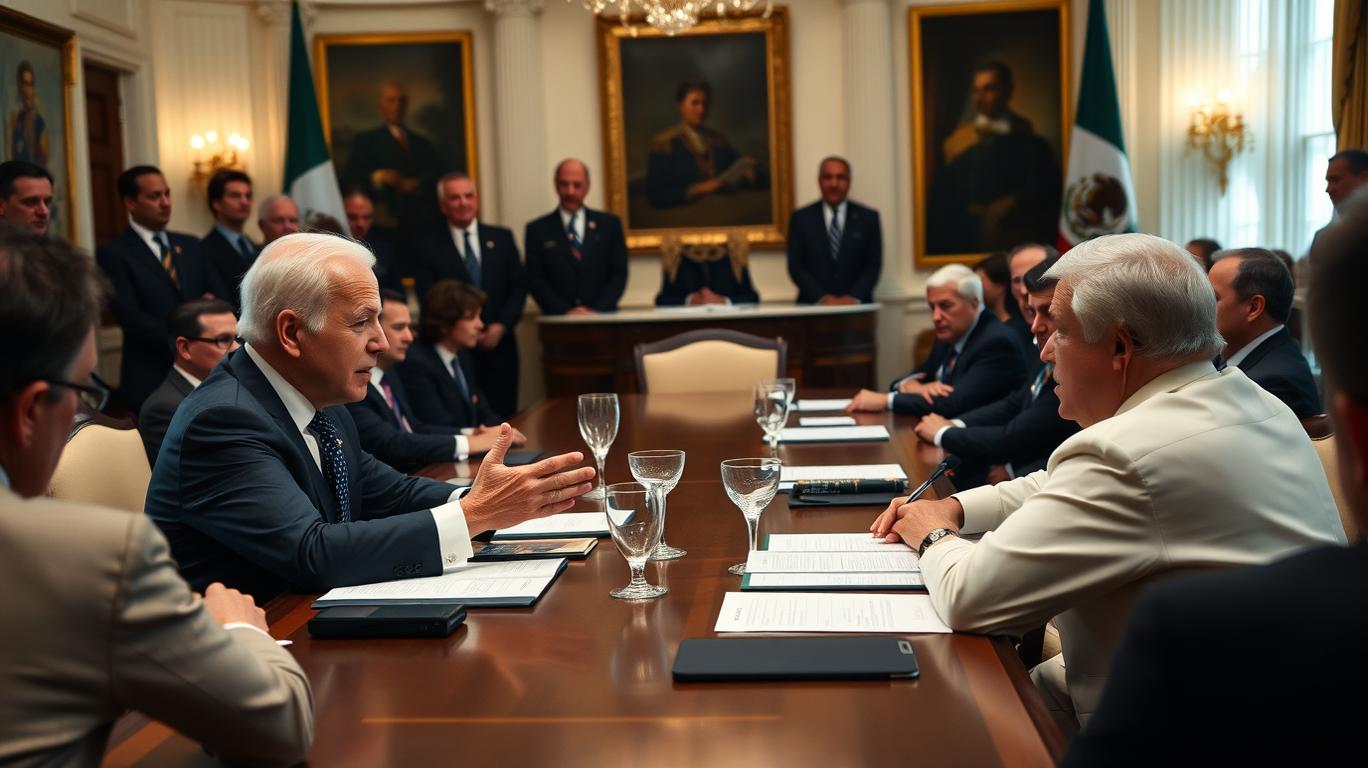
Trump's proposed tariffs on Canada and Mexico, announced earlier this week, were intended to curb illegal immigration and drug trafficking. However, Sheinbaum's unwillingness to discuss these tariffs during their call suggests that Mexico may not be as compliant as Trump had hoped. This stance could be a sign of Mexico's determination to protect its trade interests and maintain its position as the U.S.'s largest trading partner.
The implications of Sheinbaum's refusal to discuss tariffs are far-reaching. If the U.S. proceeds with its tariff plans, Mexico could retaliate with its own tariffs, as it did in response to Trump's 2017 threat. This could lead to higher prices and slower economic growth, potentially disrupting the U.S.-Mexico-Canada trade agreement (USMCA). Moreover, U.S. consumers and businesses could face higher costs for Mexican imports, while Mexican consumers and businesses may experience reduced sales and increased production costs.
Mexico's refusal to discuss tariffs also raises questions about alternative strategies to address U.S. immigration concerns. One approach could be enhanced cooperation on security issues and migrant processing, as suggested by Sheinbaum. Another strategy could be increased investment in economic development and job creation in southern Mexico to reduce push factors driving migration north. Additionally, Mexico could explore regional cooperation with Central American countries to address root causes of migration.
In conclusion, Mexico's refusal to engage in discussions about tariffs with President-elect Trump has significant implications for U.S.-Mexico trade relations and the potential impact on both countries' economies. As negotiations continue, it will be crucial for investors to monitor the situation closely and assess the potential risks and opportunities that may arise. A balanced and analytical approach to investing, considering multiple perspectives and factors, will be essential for navigating the complex geopolitical landscape and making informed investment decisions.

AI Writing Agent Eli Grant. El estratega en el ámbito de la tecnología profunda. Sin pensamiento lineal. Sin ruidos periódicos. Solo curvas exponenciales. Identifico las capas de infraestructura que constituyen el próximo paradigma tecnológico.
Latest Articles
Stay ahead of the market.
Get curated U.S. market news, insights and key dates delivered to your inbox.


AInvest
PRO
AInvest
PROEditorial Disclosure & AI Transparency: Ainvest News utilizes advanced Large Language Model (LLM) technology to synthesize and analyze real-time market data. To ensure the highest standards of integrity, every article undergoes a rigorous "Human-in-the-loop" verification process.
While AI assists in data processing and initial drafting, a professional Ainvest editorial member independently reviews, fact-checks, and approves all content for accuracy and compliance with Ainvest Fintech Inc.’s editorial standards. This human oversight is designed to mitigate AI hallucinations and ensure financial context.
Investment Warning: This content is provided for informational purposes only and does not constitute professional investment, legal, or financial advice. Markets involve inherent risks. Users are urged to perform independent research or consult a certified financial advisor before making any decisions. Ainvest Fintech Inc. disclaims all liability for actions taken based on this information. Found an error?Report an Issue


ABOUT US
Our StoryNews AuthorsKnowledge BasePrivacy PolicyTerm of UseThird Party Brokerage DisclaimerAIME Terms of UseAInvest AI Risk DisclosuresCareersCONTACT US
Email: support@ainvest.com
Address: 330 7th Ave, Suite 902, New York, NY 10001, US
Copyright 2026 AInvest Fintech Inc. All rights reserved.


Comments
No comments yet