
Mexico Retail Sales Slow as Labor Costs Eat 45% of Sales
 Aime Summary
- Mexico’s retail sales grew at 4.3% year-over-year in the latest report, slightly down from the prior 4.4% reading.
- The slowdown reflects ongoing pressure from rising labor and food costs, with labor now consuming 40–45% of gross sales.
- Retailers face competitive challenges, with Mexican restaurant closures like Tito’s Burritos & Wings highlighting sector fragility.
- Mexico’s central bank has paused rate cuts amid fiscal and inflationary uncertainties, while economic growth projections hinge on the timely renewal of USMCA.
- Investors should monitor the peso’s trajectory, inflation trends, and the pace of retail sector adaptation to cost pressures.
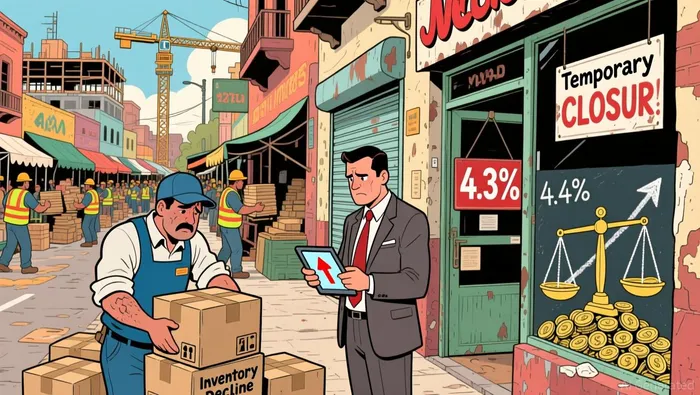
According to the latest report, Mexico’s retail sales data for the most recent period shows a 4.3% year-over-year increase, slightly below the previous 4.4% print. While this represents continued growth, the marginal decline signals a potential slowdown in consumer spending amid rising operational costs. For retailers and investors, the report highlights a critical intersection of inflation, labor costs, and trade policy uncertainty that could shape near-term market dynamics.
The deceleration in retail sales reflects broader economic headwinds. Labor costs now account for 40–45% of gross sales, up from 30–35% in prior years, straining margins and pricing strategies. This shift is particularly impactful in a sector like Mexican restaurants, where competition is fierce and thin profit margins leave little room for error. Popular chains such as Tito’s Burritos & Wings have recently closed locations, underscoring the challenge of maintaining profitability in a high-cost environment.
For investors, Mexico’s retail sector is a bellwether for broader economic conditions. The sector is large and interconnected with U.S. trade flows through the USMCA agreement. A 2.2% increase in the number of Mexican restaurants in the U.S. as of 2025 suggests industry resilience, but rising costs and uncertain trade policy are creating new risks. The Mexican finance executives association (IMEF) has maintained its 1.3% GDP growth forecast for 2026, but this is conditional on the timely renewal of USMCA by July 1, 2026. Prolonged uncertainty could weigh on investment and weaken the peso, raising the cost of debt for state-owned enterprises like Pemex.
The Bank of Mexico (Banxico) has taken a cautious stance, pausing its rate-cut cycle in February 2026 amid concerns over inflation persistence and the impact of fiscal adjustments such as IEPS tax increases and tariff changes. Inflation ticked up to 3.77% in January 2026, driven largely by food goods, while non-core inflation remains low. Despite this, long-term inflation expectations have risen, delaying convergence to the 3% target until mid-2027. The central bank is monitoring whether the current fiscal shocks are transitory before considering further easing.
Going forward, investors should closely follow the trajectory of the Mexican peso, as its strength could influence import prices and inflation. The peso has already appreciated significantly in 2025 and early 2026, and IMEF now forecasts a year-end exchange rate of Ps18.5 per U.S. dollar. Additionally, the pace of retail adaptation to rising costs and the outcome of USMCA renewal negotiations will be key factors in determining the sector’s health. In the absence of clear policy signals, volatility in consumer spending and investment is likely to persist, making careful monitoring essential for macro-aware investors.

Stay ahead of the market.
Get curated U.S. market news, insights and key dates delivered to your inbox.


AInvest
PRO
AInvest
PRO



Comments
No comments yet