
Mexico's Post-Election Pivot: Navigating Opportunities in a Transforming Economy
The landslide victory of President Claudia Sheinbaum in Mexico's 2024 election has ushered in a new chapter for the country's economic trajectory. With a legislative supermajority and a bold policy agenda, her administration is poised to accelerate structural reforms in energy, infrastructure, and technology—sectors critical to attracting foreign capital. Yet, geopolitical risks, inflationary pressures, and U.S. trade dynamics complicate the outlook. For investors, the question is clear: How to balance Mexico's transformative potential with its vulnerabilities?
The Structural Reforms: A State-Led Vision with Private Sector Niche Opportunities
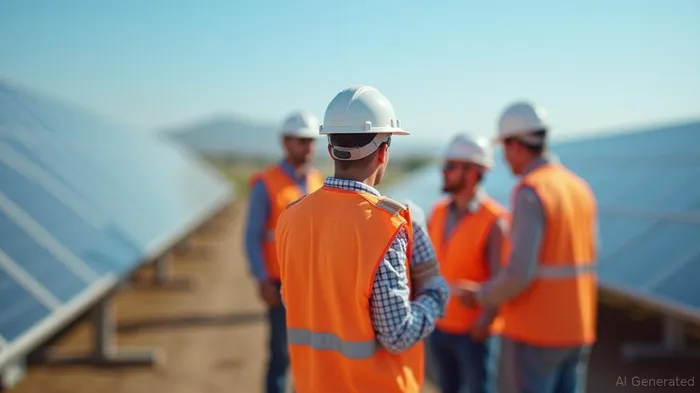
The Sheinbaum government's Mexico Plan represents a strategic shift toward state-led economic growth, anchored in energy sovereignty and technological modernization. Key reforms include:
1. Energy Sector Overhaul:
- The state-owned Federal Electricity Commission (CFE) must supply 54% of national gridNGG-- electricity by 2030, prioritizing thermal, solar, and wind projects.
- Private firms can participate in renewable energy and grid modernization through joint ventures (CFE retains 54% control) or onsite generation.
- Risk: CFE's dominance may deter private investment amid regulatory uncertainties.
- Infrastructure and Technology:
- A MX$30 billion incentive package offers tax breaks for investments in fixed assets (e.g., railroads, EV infrastructure) and training/innovation.
Digitalization initiatives aim to cut the time to finalize investments from 2.6 years to 1 year.
Trade and Nearshoring:
- Mexico's alignment with U.S. policies, such as countering Chinese influence, could boost nearshoring in semiconductors and EV supply chains.
The reforms create asymmetric opportunities in sectors like renewable energy and tech infrastructure, where private firms can partner with state entities or leverage tax incentives.
Investment Vehicles: ETFs, Bonds, and Sector-Specific Plays
For investors, Mexico's markets offer a mix of tools to capitalize on these trends:
- Equity Exposure:
- iShares MSCI Mexico ETF (EWW): Tracks Mexican equities, including energy giants like Pemex and infrastructure firms.
Risk: EWW is sensitive to oil prices and geopolitical risks.
Sovereign Bonds:
Mexico Sovereign Bond (MEXICOBON): Offers exposure to Mexico's macroeconomic stability. Current yields (~8.5%) reflect inflation risks and geopolitical uncertainty.
Sector-Specific Funds:
- Renewable Energy: Invest in companies like IEnova (infrastructure) or private solar developers via thematic ETFs.
- Technology: Mexico's manufacturing hubs (e.g., Nuevo León) are attracting semiconductor and EV firms.
Risks and Challenges: Inflation, Trade, and Geopolitics
Mexico's economy faces headwinds that could undermine its reform agenda:
- Inflation: At 4.4% (May 2025), it exceeds the central bank's 2–4% target, driven by food and housing costs. While the bank has cut rates to 8.5%, further easing hinges on whether inflation trends downward.
- U.S. Trade Dynamics: 80% of Mexico's exports to the U.S. face 25% tariffs unless USMCA-compliant. This creates a “two-speed economy,” favoring border states over central regions.
- Energy Dependency: Mexico's reliance on U.S. natural gas and its lack of a national gas supply strategy could delay infrastructure projects.
Actionable Thesis: Timing the Entry
The optimal time to invest hinges on three catalysts:
1. Policy Implementation: Watch for clarity on CFE's dispatch rules and private sector participation by Q4 2025.
2. Inflation Data: A sustained decline below 4% by early 2026 would justify rate cuts, boosting bond prices and equity multiples.
3. Trade Resolution: Negotiations with the U.S. on tariffs and nearshoring incentives could unlock manufacturing-sector growth.
Recommendation:
- Aggressive Investors: Deploy capital in renewable energy and tech infrastructure now, using ETFs like EWW or sector-specific funds. Pair with MEXICOBON for income, but hedge against inflation with short-term Treasuries.
- Cautious Investors: Wait for inflation to stabilize below 4% and clarity on CFE's reforms in early 2026 before scaling up.
Conclusion: A Calculated Gamble on Mexico's Future
Mexico's post-election landscape offers a compelling but nuanced investment thesis. The reforms under Sheinbaum's administration could unlock long-term growth in energy and technology, but near-term risks—particularly inflation and trade—demand careful timing. For investors willing to navigate these challenges, Mexico's structural pivot presents an opportunity to participate in a critical phase of its economic evolution. The question is no longer whether to invest, but when—and how—to do so with maximum resilience.

Stay ahead of the market.
Get curated U.S. market news, insights and key dates delivered to your inbox.






Comments
No comments yet