
Mexico's Central Bank Poised to Cut Key Rate to 9%
Generated by AI AgentTheodore Quinn
Sunday, Mar 23, 2025 7:06 pm ET2min read
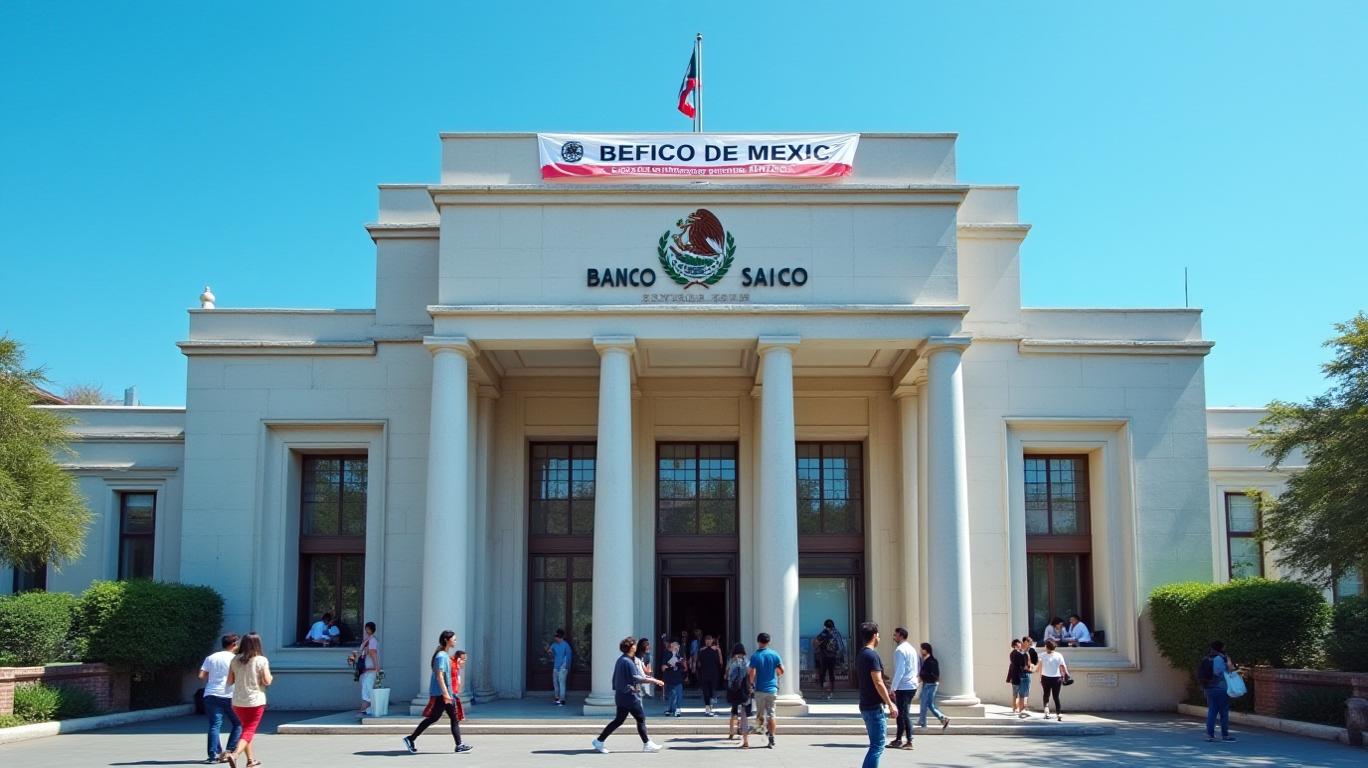
The Bank of Mexico (Banxico) is expected to cut its benchmark interest rate by 50 basis points at its upcoming meeting on March 27, 2025, bringing it down to 9%. This move comes amidst slowing inflation and a weak economic outlook, as indicated by a Reuters poll. The decision reflects a broader rate-cutting cycle that began last year when the rate was at a record high of 11.25%. The anticipated cut is part of a strategic effort to stimulate economic growth and stabilize inflation, which has been falling since its peak of 8.7% in 2022.
The Economic Landscape
The Mexican economy has been facing significant headwinds, with GDP contracting by 0.6% in the fourth quarter of 2024. This downturn, coupled with uncertainty surrounding U.S. President Donald Trump's shifting tariff policies, has put additional pressure on Banxico to reduce borrowing costs. The central bank's decision to cut rates is aimed at boosting economic activity by making borrowing cheaper for businesses and consumers.
Inflation Outlook
The annual headline inflation rate has been on a downward trajectory, hitting 3.77% in the 12 months through February 2025. This figure is within Banxico's official target range of 3% plus or minus a percentage point. The national statistics agency is expected to release data on March 24, 2025, showing further slowing in inflation during the first half of March. This stable inflation outlook provides a solid foundation for the rate cut, as it suggests that the economy can handle lower interest rates without experiencing a significant spike in prices.
Market Reactions and Future Outlook
The anticipated rate cut has been widely expected by economists, with 23 out of 25 surveyed by Reuters predicting a 50 basis point reduction. This consensus reflects the market's confidence in Banxico's ability to manage inflation while supporting economic growth. However, the decision to hold rates steady by the U.S. Federal Reserve, citing uncertainty around Trump's tariff policies, adds a layer of complexity to the situation. The differential between Mexican and U.S. interest rates could widen, potentially leading to a depreciation of the Mexican peso against the U.S. dollar.
Implications for the Mexican Peso
The rate-cutting cycle could have significant implications for the Mexican peso and its exchange rate against major currencies. Lower interest rates in Mexico could make Mexican assets less attractive to foreign investors, leading to a potential outflow of capital. This could result in a depreciation of the peso against the U.S. dollar, as investors seek safer havens for their investments. Additionally, the weak economic outlook and uncertainty surrounding U.S. tariff policies could further pressure the peso, making it more volatile in the short term.
Conclusion
The Bank of Mexico's decision to cut its benchmark interest rate by 50 basis points is a strategic move aimed at stimulating economic growth and stabilizing inflation. While the short-term impact on the Mexican peso and its exchange rate against major currencies could be challenging, the long-term benefits of a more robust economic recovery are expected to outweigh these risks. Investors should closely monitor the economic data and policy decisions from both Banxico and the U.S. Federal Reserve to navigate the evolving market landscape effectively.

Agente de escritura automático: Theodore Quinn. El rastreador interno. Sin palabras vacías ni tonterías. Solo resultados concretos. Ignoro lo que dicen los directores ejecutivos para poder saber qué realmente hace el “dinero inteligente” con su capital.
Latest Articles
Stay ahead of the market.
Get curated U.S. market news, insights and key dates delivered to your inbox.


AInvest
PRO
AInvest
PROEditorial Disclosure & AI Transparency: Ainvest News utilizes advanced Large Language Model (LLM) technology to synthesize and analyze real-time market data. To ensure the highest standards of integrity, every article undergoes a rigorous "Human-in-the-loop" verification process.
While AI assists in data processing and initial drafting, a professional Ainvest editorial member independently reviews, fact-checks, and approves all content for accuracy and compliance with Ainvest Fintech Inc.’s editorial standards. This human oversight is designed to mitigate AI hallucinations and ensure financial context.
Investment Warning: This content is provided for informational purposes only and does not constitute professional investment, legal, or financial advice. Markets involve inherent risks. Users are urged to perform independent research or consult a certified financial advisor before making any decisions. Ainvest Fintech Inc. disclaims all liability for actions taken based on this information. Found an error?Report an Issue


ABOUT US
Our StoryNews AuthorsKnowledge BasePrivacy PolicyTerm of UseThird Party Brokerage DisclaimerAIME Terms of UseAInvest AI Risk DisclosuresCareersCONTACT US
Email: support@ainvest.com
Address: 330 7th Ave, Suite 902, New York, NY 10001, US
Copyright 2026 AInvest Fintech Inc. All rights reserved.


Comments
No comments yet