
Mexican Tariff Turbulence: Navigating Supply Chain Risks and Capitalizing on Regional Diversification
The U.S.-Mexico tariff standoff, amplified by Trump-era protectionism, has reignited geopolitical and economic tensions, exposing vulnerabilities in U.S. manufacturing reliant on Mexican imports. As tariffs on copper, automotive parts, and steel hover between 15-18%, industries face rising costs, while diplomatic spats risk destabilizing North American trade. Yet, this turmoil presents a catalyst for investors to reallocate capital toward geographically diversified equities and infrastructure in Central America and the Caribbean—regions poised to benefit from reshaped supply chains.
The Tariff Trap: Risks to U.S. Industries
The latest tariffs threaten to derail Mexico's diplomatic efforts to solidify its position as a North American trade hub. J.P. Morgan's analysis warns that a 50% tariff on copper could collapse LME prices to $9,100/mt by Q3 2025, while automotive tariffs may inflate U.S. car prices by 11.4%. These pressures disproportionately impact sectors like automotive, electronics, and medical devices, which rely on just-in-time Mexican imports.
The cascading risks are clear: U.S. manufacturers face higher input costs, delayed production cycles, and disrupted supplier networks. For instance, Ford and GMGM--, which source 40% of their Mexican components for North American markets, now confront a precarious balancing act between absorbing tariffs or shifting production.
Diplomatic Tensions as a Catalyst for Diversification
Recent diplomatic moves—such as the U.S.-Vietnam trade deal and the 90-day tariff reprieve with China—highlight the U.S.'s desperation to stabilize supply chains. Yet, these stopgaps ignore the systemic flaw: overreliance on Mexico. Investors must ask: What happens if tariffs persist, or Mexico's political risks (e.g., rail nationalization, labor disputes) escalate?
The answer lies in diversification. Central America and the Caribbean offer a strategic buffer, with governments actively courting FDI through modernized logistics and advanced manufacturing hubs.
Investment Opportunities: Where to Deploy Capital
1. Logistics Infrastructure in Central America
Mexico's nearshoring boom has spilled over into regions like Costa Rica's Alajuela, Panama's Eastern Areas, and Guatemala's Villa Nueva, where FDI is fueling industrial parks and e-commerce hubs. Ports like Cartagena and Kingston, though underdeveloped, are undergoing upgrades to handle post-Panamax ships, aligning with the Panama Canal's expanded capacity.
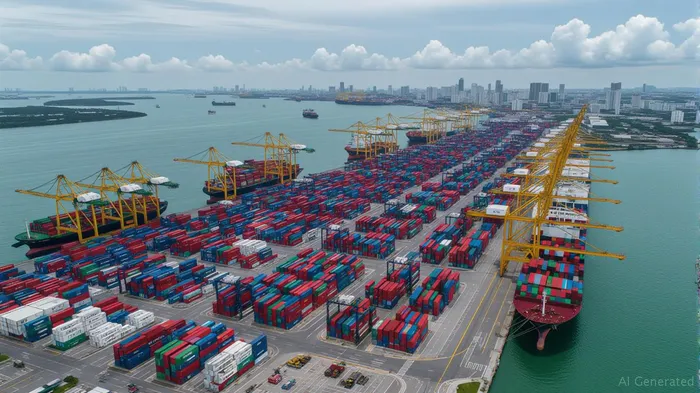
Target sectors:
- 3PL providers (e.g., Nowports, Nuvocargo) leveraging AI for real-time tracking and predictive analytics.
- Infrastructure funds focused on port modernization and regional rail projects (e.g., Chile's “Chile on Rails”).
2. Advanced Manufacturing in the Caribbean
The Caribbean is emerging as a hub for light manufacturing, particularly in medical devices and electronics, thanks to its proximity to the U.S. and low labor costs. Countries like the Dominican Republic and Jamaica are attracting investments in semiconductor assembly and pharmaceuticals, with governments offering tax incentives and streamlined customs.
3. Regional Trade Corridors: The Middle Corridor's Potential
While often overlooked, the Middle Corridor—a multimodal route linking China to Europe via Central Asia—offers a geopolitical alternative to Russia-dependent routes. Turkey's investments in rail and pipeline infrastructure position it as a transit hub, while EU funding under the Global Gateway initiative aims to boost capacity.
4. Sustainability-Driven Sectors
Investors should prioritize firms adopting green logistics and circular supply chains. Costa Rica's focus on renewable energy and Panama's tech-enabled industrial zones exemplify this trend. Companies like Grupo Aeroportuario del Pacífico (GAP), which operates eco-friendly airports, or Grupo Aeroportuario del Sureste (ASUR), are well-positioned to serve growing trade volumes.
Risks and Mitigation Strategies
- Infrastructure bottlenecks: Central American ports often lack deep-water capacity or automation. Investors should favor projects with public-private partnerships (e.g., Mexico's $5 billion rail modernization plan).
- Geopolitical instability: Sanctions on Iran or Russian disruptions to the Middle Corridor require diversification across multiple corridors.
- Labor shortages: Tech-driven workforce management tools (e.g., ManpowerGroup) can mitigate risks in high-demand sectors like automotive assembly.
Conclusion: The Case for Geographical Diversification
The U.S.-Mexico tariff saga underscores the fragility of concentrated supply chains. Investors ignoring regional diversification risk exposure to escalating trade wars. Instead, capital should flow toward logistics infrastructure in Central America, sustainable manufacturing hubs, and diverse trade corridors. The reward? A portfolio insulated from geopolitical storms—and positioned to profit from the $40 billion FDI surge already reshaping the region.
As volatility looms, the question is not if supply chains will shift, but where. The answer lies south of the border—and beyond.

Stay ahead of the market.
Get curated U.S. market news, insights and key dates delivered to your inbox.




Comments
No comments yet