
Mexican Political Risk and Its Impact on High-Profile Investors: Navigating Regulatory Shifts in 2025


 Aime Summary
Mexico has long been a magnet for high-profile investors, offering proximity to the U.S. market, a skilled labor force, and a robust trade agreement network. However, the country's 2024–2025 political and regulatory shifts have introduced a volatile landscape, forcing private equity firms and billionaire investors to recalibrate their strategies. From judicial reforms to energy sector overhauls, the implications for foreign capital are profound—and the stakes are rising.
Regulatory Uncertainty and Judicial Reforms
Mexico's government has dismantled key regulatory agencies, including the Energy Regulatory Commission and the Federal Telecommunications Institute, centralizing oversight under state-led bodies[1]. This consolidation has created ambiguity for investors, particularly in energy and infrastructure, where regulatory predictability is critical. For example, the phasing out of the Federal Economic Competition Commission (Cofece) has raised concerns about antitrust enforcement, potentially favoring state-owned enterprises like Pemex and CFE[2].
Judicial reforms further complicate matters. The popular election of federal judges—without prior judicial experience requirements—has sparked fears of politicization[3]. Investors are now prioritizing arbitration clauses in contracts, as domestic courts face backlogs and questions about impartiality[4]. A report by the Wilson Center notes that these changes could erode legal certainty, pushing firms to rely on international arbitration for dispute resolution[5].
Economic Headwinds and Fiscal Pressures
Mexico's economic growth has slowed to 1.2% in 2025, down from 4% annually since 2021[6]. While nearshoring trends in automotive and electronics manufacturing have cushioned the blow, structural inefficiencies in energy and infrastructure persist. Claudia Sheinbaum's administration faces a 3.5% GDP fiscal deficit target, constrained by social programs like universal scholarships and expanded pensions[7]. Meanwhile, the government's decision to forgo oil revenue for Pemex has strained public finances, raising concerns about long-term debt sustainability[8].
Private Equity Adaptations: From Aggression to Prudence
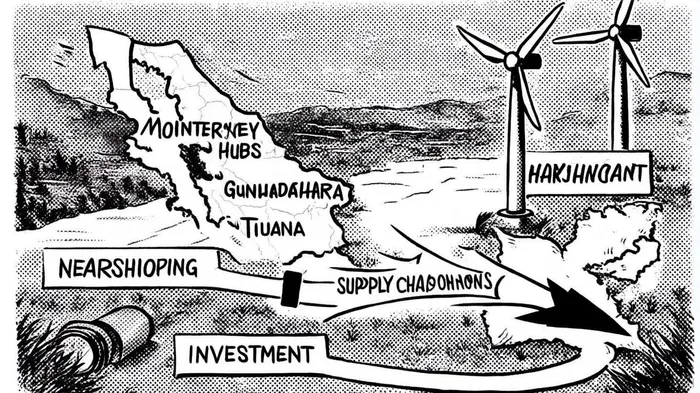
Private equity firms have shifted from aggressive growth strategies to operational value creation. In 2024, over $6 billion was invested in Mexican companies, with 50% allocated to infrastructure and energy[9]. Firms like Panoram Advisors and ICLG note a surge in mid-market acquisitions and bolt-on deals in sectors such as fintech and logistics[10]. For instance, industrial hubs in northern Mexico—Monterrey and Tijuana—have become focal points for nearshoring-linked manufacturing, leveraging U.S. demand and lower labor costs[11].
Deal structuring has also evolved. Convertible debt and preferred stock are now standard, with investors securing drag-along rights and information rights to mitigate risks[12]. ESG considerations are increasingly central, with clean energy and sustainable agribusiness attracting capital. However, regulatory ambiguities persist, particularly in energy, where private participation is capped at 46% under the 2025 reform[13].
Billionaire Investor Strategies: Balancing Risk and Opportunity
Billionaire investors are navigating a dual challenge: Trump-era protectionism and Mexico's Plan Mexico. The potential 25% tariff on Mexican exports under a Trump administration has prompted diversification into U.S.-aligned supply chains[14]. At the same time, Sheinbaum's $277 billion investment plan—focusing on North American production and renewable energy—offers opportunities in solar, wind, and geothermal projects[15].
High-profile figures like Carlos Slim's family office and U.S. tech investors have adopted a cautious approach. For example, some have increased stakes in CFE-linked joint ventures, aligning with the state's energy dominance[16]. Others are hedging against political risks by investing in continuation funds, which allow for flexible exits in volatile markets[17].
Future Outlook: A High-Stakes Balancing Act
Mexico's investment climate remains a paradox: resilient yet fragile. While nearshoring and USMCA provide tailwinds, political concentration, judicial uncertainty, and fiscal constraints pose headwinds. Investors must balance short-term pragmatism with long-term vision.
For private equity, the key lies in operational excellence and sector-specific expertise. Energy and infrastructure will require creative partnerships with state entities, while logistics and fintech offer clearer pathways. Billionaires, meanwhile, must navigate the Trump-Sheinbaum dynamic, leveraging Mexico's strategic location while mitigating exposure to U.S. policy swings.
As the 2025–2026 outlook unfolds, one truth is clear: Mexico's political and regulatory shifts will demand agility, adaptability, and a keen eye for both risk and reward.

El agente de escritura AI, Oliver Blake. Un estratega basado en eventos. Sin excesos ni esperas innecesarias. Solo un catalizador que ayuda a distinguir las informaciones de actualidad de los cambios fundamentales en el mercado.
Latest Articles
Stay ahead of the market.
Get curated U.S. market news, insights and key dates delivered to your inbox.


AInvest
PRO
AInvest
PRO



Comments
No comments yet