
Mexican Government Restricts Livestock Movement to Prevent Spread of Beetle Disease
ByAinvest
Tuesday, May 13, 2025 3:41 pm ET2min read
ANSC--
NWS infestation occurs when the fly larvae burrow into the flesh of living animals, causing serious and often fatal damage. The disease can affect livestock, pets, wildlife, and occasionally humans. The Mexican Agriculture Secretary, Julio Berdegue, ruled out the possibility of closing the southern border to cattle from Central America but acknowledged that eradicating the pest would take significant time [2].
The U.S. Department of Agriculture (USDA) has taken the step to restrict livestock imports through southern border ports of entry. This action is part of a broader effort to limit the northbound transport of NWS through livestock commerce and to reassess current mitigation standards. The USDA is utilizing the USDA Tick Riders to monitor livestock and wildlife along the southern border region for the presence of NWS [1].
The National Cattlemen's Beef Association (NCBA) has expressed support for the USDA's decision, noting that the current situation is a threat to the entire U.S. livestock industry. NCBA CEO Colin Woodall stated that the Mexican government's failure to address the issue has left the U.S. with no alternative but to close the border until the outbreak is contained [2].
The economic impact of these restrictions is expected to be significant for both countries. The NCBA acknowledged that while the border closure will create economic harm for U.S. farmers and ranchers, the costs will be far less than if NWS crosses into the U.S. and forces a fight on U.S. soil [2].
The Mexican government is committed to eradicating the pest and has been working in collaboration with the USDA. The USDA has been releasing sterile flies through aerial and ground release at strategic locations, focusing on southern Mexico and other areas throughout Central America [1].
The USDA's suspension of livestock imports will persist on a month-by-month basis until a significant window of containment is achieved. The U.S. and Mexico are continuing efforts to interdict and eradicate NWS in Mexico, with daily communication between the teams to improve the strategy toward eradication [1].
References:
[1] https://www.beefmagazine.com/market-news/u-s-suspends-live-cattle-imports-at-southern-border
[2] https://www.axios.com/2025/05/11/screwworm-us-suspends-cattle-horse-bison-imports-mexico
NCA--
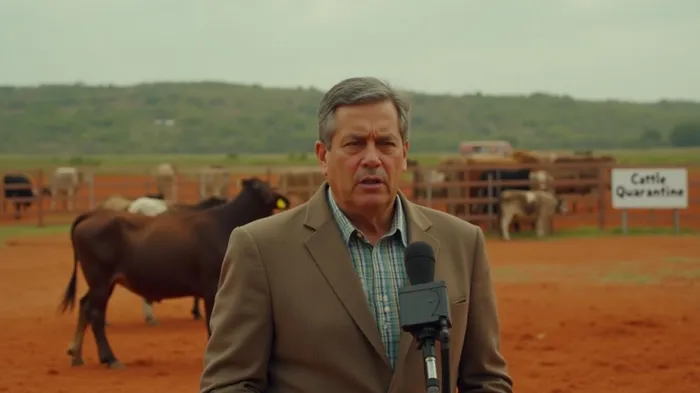
The Mexican government has announced plans to restrict the flow of cattle from the southern part of the country to prevent the spread of a disease caused by a beetle that can kill livestock within weeks. The move comes after the US suspended imports of cattle, horses, and bison from Mexico. The Mexican minister of agriculture, Julio Berdegue, ruled out the possibility of closing the southern border to cattle from Central America, but acknowledged that eradicating the pest would take a long time.
The Mexican government has implemented restrictions on cattle movement from the southern part of the country, aiming to prevent the spread of a deadly disease caused by the New World Screwworm (NWS) beetle. This move follows the U.S. suspension of live cattle, horse, and bison imports from Mexico, effective immediately, due to the continued northward spread of NWS [1].NWS infestation occurs when the fly larvae burrow into the flesh of living animals, causing serious and often fatal damage. The disease can affect livestock, pets, wildlife, and occasionally humans. The Mexican Agriculture Secretary, Julio Berdegue, ruled out the possibility of closing the southern border to cattle from Central America but acknowledged that eradicating the pest would take significant time [2].
The U.S. Department of Agriculture (USDA) has taken the step to restrict livestock imports through southern border ports of entry. This action is part of a broader effort to limit the northbound transport of NWS through livestock commerce and to reassess current mitigation standards. The USDA is utilizing the USDA Tick Riders to monitor livestock and wildlife along the southern border region for the presence of NWS [1].
The National Cattlemen's Beef Association (NCBA) has expressed support for the USDA's decision, noting that the current situation is a threat to the entire U.S. livestock industry. NCBA CEO Colin Woodall stated that the Mexican government's failure to address the issue has left the U.S. with no alternative but to close the border until the outbreak is contained [2].
The economic impact of these restrictions is expected to be significant for both countries. The NCBA acknowledged that while the border closure will create economic harm for U.S. farmers and ranchers, the costs will be far less than if NWS crosses into the U.S. and forces a fight on U.S. soil [2].
The Mexican government is committed to eradicating the pest and has been working in collaboration with the USDA. The USDA has been releasing sterile flies through aerial and ground release at strategic locations, focusing on southern Mexico and other areas throughout Central America [1].
The USDA's suspension of livestock imports will persist on a month-by-month basis until a significant window of containment is achieved. The U.S. and Mexico are continuing efforts to interdict and eradicate NWS in Mexico, with daily communication between the teams to improve the strategy toward eradication [1].
References:
[1] https://www.beefmagazine.com/market-news/u-s-suspends-live-cattle-imports-at-southern-border
[2] https://www.axios.com/2025/05/11/screwworm-us-suspends-cattle-horse-bison-imports-mexico
Stay ahead of the market.
Get curated U.S. market news, insights and key dates delivered to your inbox.


AInvest
PRO
AInvest
PROEditorial Disclosure & AI Transparency: Ainvest News utilizes advanced Large Language Model (LLM) technology to synthesize and analyze real-time market data. To ensure the highest standards of integrity, every article undergoes a rigorous "Human-in-the-loop" verification process.
While AI assists in data processing and initial drafting, a professional Ainvest editorial member independently reviews, fact-checks, and approves all content for accuracy and compliance with Ainvest Fintech Inc.’s editorial standards. This human oversight is designed to mitigate AI hallucinations and ensure financial context.
Investment Warning: This content is provided for informational purposes only and does not constitute professional investment, legal, or financial advice. Markets involve inherent risks. Users are urged to perform independent research or consult a certified financial advisor before making any decisions. Ainvest Fintech Inc. disclaims all liability for actions taken based on this information. Found an error?Report an Issue


ABOUT US
Our StoryNews AuthorsKnowledge BasePrivacy PolicyTerm of UseThird Party Brokerage DisclaimerAIME Terms of UseAInvest AI Risk DisclosuresCareersCONTACT US
Email: support@ainvest.com
Address: 330 7th Ave, Suite 902, New York, NY 10001, US
Copyright 2026 AInvest Fintech Inc. All rights reserved.


Comments
No comments yet