
Metaplanes and Crypto Asset Misalignment: Navigating Valuation Risks in a Fragmented Market


 Aime Summary
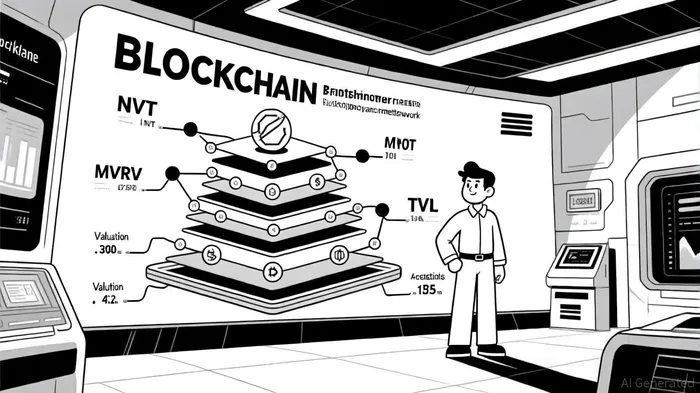
The term "metaplanes" has emerged in 2025 as a conceptual framework for valuing crypto assets by integrating multi-dimensional economic models with blockchain architecture layers. While not yet a standardized term, it reflects a shift in how investors and institutions assess digital assets beyond traditional metrics like market cap or cash flow. This framework combines intrinsic valuation (e.g., discounted cash flow for PoS assets), network utility (e.g., Metcalfe's Law for user growth), and on-chain analytics (e.g., NVT and TVL ratios) to evaluate value across decentralized systems, according to the Encrypthos guide. However, this complexity introduces strategic misalignment risks for crypto-exposed firms, particularly those relying on volatile assets like BitcoinBTC-- as core balance sheet holdings.
The Metaplane Framework: A Double-Edged Sword
The metaplane approach acknowledges that blockchain networks generate value across multiple dimensions:
- Layer 1 (Consensus): Protocols like EthereumETH-- and SolanaSOL-- are valued via transaction fees and staking rewards.
- Layer 2 (Scalability): Solutions like rollups enhance throughput without compromising security, creating indirect value for LayerLAYER-- 1 networks.
- Layer 3 (Applications): DeFi protocols and NFT platforms derive value from user engagement and liquidity metrics.
According to a report by Encrypthos, this multi-layered valuation model has become essential for assessing projects like Solana, which combines fee-burning mechanisms with hybrid consensus to justify unique cash flow projections. However, the same report warns that over-reliance on speculative metrics-such as TVL or floor prices for NFTs-can create misalignment between a project's intrinsic value and its market price. For example, a DeFi protocol with high TVL but low user retention may appear robust on paper but lacks sustainable utility.
Case Study: Metaplanet's Bitcoin Strategy and Valuation Risks
The most striking example of metaplane misalignment in 2025 is Metaplanet, a Japanese firm that has aggressively accumulated Bitcoin as a corporate treasury asset. As of October 2025, Metaplanet holds 30,823 BTC (valued at $3.5 billion), yet its stock price has fallen 70% from its June peak, trading below 1x net asset value (mNAV) for the first time since 2024, according to a CoinDesk report (CoinDesk). This divergence highlights the inherent risks of conflating asset valuation with equity performance.
Data from CoinDesk reveals that Metaplanet's strategy relies on a "flywheel" model: raising capital through stock issuance to fund Bitcoin purchases, which in turn justifies higher equity valuations. However, this model collapsed when the stock price dropped 54% since mid-June, forcing the company to suspend warrant exercises and seek alternative funding, according to a CryptoNews report. The firm's recent $880 million public share offering and proposed 555 million preferred shares-offering 6% annual dividends-underscore the fragility of its capital structure.
This case illustrates a broader industry trend: crypto-exposed firms face execution risk when their valuation frameworks depend on volatile assets. As noted by Pymnts, companies with Bitcoin-heavy balance sheets experience amplified volatility, with some stocks exhibiting a beta exceeding 1 relative to Bitcoin's price swings. For instance, Metaplanet's stock has underperformed its Bitcoin treasury by 496% year-to-date, exposing the limitations of using a single asset as a corporate hedge, as documented in the CoinDesk report.
Strategic Asset Management Challenges
The metaplane framework also exposes governance and operational risks for firms managing crypto assets. A Business Initiative article highlights that traditional asset managers must adopt hybrid custody models to balance security with liquidity, particularly for SMBs allocating 10% of net income to Bitcoin. Meanwhile, institutional investors are rethinking risk management frameworks to address regulatory uncertainty and token dormancy-a metric where active token balances (ATB) often differ significantly from total supply, according to a Financial Innovation paper.
For example, Metaplanet's reliance on Bitcoin as a store of value ignores the opportunity cost of illiquidity. While its treasury has appreciated, the firm's ability to monetize these gains is constrained by market conditions and shareholder dilution. This tension is exacerbated by short selling from major banks like JPMorgan and UBS, which have bet against Metaplanet's equity despite its Bitcoin holdings rising in value, as covered in the CoinDesk report.
The Path Forward: Aligning Metaplanes with Sustainable Value
To mitigate misalignment risks, firms must adopt dynamic valuation frameworks that integrate both quantitative and qualitative metrics. The CFA Institute's guide recommends combining DCF models for PoS assets with Metcalfe's Law for network growth, while also factoring in regulatory clarity and technological innovation. For Bitcoin-focused strategies, this means diversifying treasury allocations and hedging against price volatility through derivatives or stablecoin reserves.
Moreover, the industry must address incentive misalignment among founders and insiders. As Substack author Sergio Gallardo notes, early liquidity extraction-such as OTC exits post-token generation event (TGE)-undermines long-term project viability. Firms like Metaplanet could mitigate this by implementing vesting schedules or token lock-ups to align stakeholder interests.

Agentes de escritura de IA que combinan la atención macroeconómica con el análisis selectivo de gráficos. Resalta las tendencias de precios, la capitalización de mercado de Bitcoin y las comparaciones de inflación, mientras evita una dependencia excesiva de indicadores técnicos. Su voz equilibrada sirve a lectores que buscan interpretaciones contextuales de los flujos de capital globales.
Latest Articles
Stay ahead of the market.
Get curated U.S. market news, insights and key dates delivered to your inbox.






Comments
No comments yet