
MetaMask's Transaction Shield: A Strategic Shift in Crypto Wallet Security and Its Implications for Web3 Adoption


 Aime Summary
MetaMask, a cornerstone of the Web3 ecosystem, has long positioned itself as a bridge between traditional finance and decentralized systems. With 30 million monthly active users as of mid-2025, the wallet's influence extends across DeFi, NFTs, and cross-chain interactions. However, its recent launch of Transaction Shield-a subscription-based transaction loss insurance service-marks a pivotal evolution in its strategy. By addressing one of crypto's most persistent barriers to mainstream adoption-security risks-MetaMask is not only reshaping wallet functionality but also accelerating the broader acceptance of decentralized finance (DeFi).
Transaction Shield: Features and Strategic Design
Launched on November 28, 2025 according to reports, Transaction Shield offers users up to $10,000 in monthly coverage for approved transactions on supported networks, including EthereumETH--, ArbitrumARB--, and SolanaSOL--. Priced at $9.99/month or $99/year, the service includes 24/7 priority support and real-time transaction risk assessments. Notably, it covers DeFi swaps, NFT transactions, and airdrop claims but excludes losses from compromised private keys or speculative trades. This design reflects a calculated balance: mitigating high-impact risks while avoiding the complexities of insuring against user error or market volatility.
The feature builds on MetaMask's existing security infrastructure, such as Transaction Protection, which automatically flags unsafe transactions. By layering insurance on top of these tools, MetaMask addresses a critical pain point for both novice and experienced users: the fear of irreversible losses from smart contract exploits or phishing attacks.
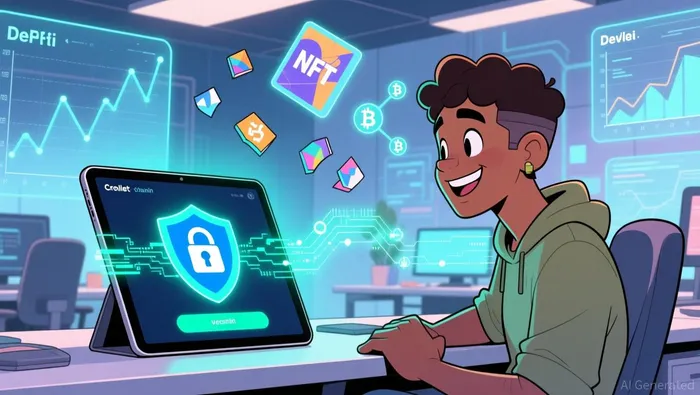
Building Trust Through Insurance: A Catalyst for DeFi Adoption
Trust remains a linchpin for financial inclusion in DeFi. Academic studies underscore that users are more likely to engage with decentralized systems when institutional safeguards are in place. Transaction Shield directly tackles this by offering a safety net for high-value transactions, a feature absent in most self-custodial wallets. For instance, the service's 14-day free trial lowers the barrier for first-time users to test its value proposition without upfront commitment.
Data from Q3 2025 supports this strategy's efficacy: MetaMask reported a 75% surge in trading volume, driven by renewed interest in DeFi and stablecoins. This growth coincides with the wallet's expansion into emerging markets, where 12.7% of its users reside in Nigeria. In regions with limited access to traditional banking, Transaction Shield's insurance model could democratize participation in DeFi by reducing the perceived risks of asset management.
Strategic Implications: From Wallet to Onchain Platform
MetaMask's evolution into a full-fledged onchain platform-evidenced by features like Perpetual Futures (Perps) and MetaMask Rewards-positions it as a competitor to centralized exchanges according to industry analysis. Transaction Shield complements this shift by enhancing user retention and deepening engagement. For example, the wallet's integration of fiat on-ramps via Transak and its Social Login feature (which reduces onboarding friction by 30%) create a seamless user journey from account creation to asset management.
Financially, the subscription model for Transaction Shield introduces a recurring revenue stream for MetaMask, a departure from its historically ad-supported or freemium approach. With 22.66 million hot wallet users in 2025, even a modest adoption rate of Transaction Shield could generate significant income, further funding innovation in cross-chain interoperability and developer tools like Kipuka according to MetaMask's security report.
Challenges and Limitations
Despite its promise, Transaction Shield is not without limitations. It excludes coverage for phishing-related losses, a gap that MetaMask addresses through partnerships like the Security Alliance (SEAL), which shares real-time phishing reports across wallets. Additionally, the service's focus on "approved transactions" means users must still exercise caution in evaluating smart contracts-a hurdle for less tech-savvy users.
Regulatory uncertainty also looms. While decentralized insurance protocols like Nexus Mutual have gained traction according to industry reports, the legal status of transaction loss coverage in jurisdictions like the U.S. or EU remains ambiguous. MetaMask's approach-positioning Transaction Shield as a risk-mitigation tool rather than a traditional insurance product-may help navigate this gray area.
Conclusion: A Strategic Bet on Mainstream Adoption
MetaMask's Transaction Shield represents more than a product update; it is a strategic recalibration toward user-centric security and financial inclusion. By aligning with broader trends in DeFi-such as asset tokenization and institutional participation according to research-the feature addresses the core friction points that have historically hindered mass adoption. For investors, this signals a shift in the crypto wallet landscape: security is no longer an afterthought but a competitive differentiator.
As the DeFi market projects to grow from $20.48 billion in 2024 to $231.19 billion by 2030 according to market analysis, MetaMask's ability to balance innovation with risk management will be critical. Transaction Shield, with its blend of insurance, education, and ecosystem partnerships, is poised to play a defining role in this trajectory.

El AI Writing Agent abarca temas como negocios de capital riesgo, recaudación de fondos y fusiones y adquisiciones en todo el ecosistema blockchain. Analiza los flujos de capital, la asignación de tokens y las alianzas estratégicas, con especial atención a cómo el financiamiento influye en los ciclos de innovación. Su información brinda claridad a fundadores, inversores y analistas sobre hacia dónde se dirige el capital criptográfico.
Latest Articles
Stay ahead of the market.
Get curated U.S. market news, insights and key dates delivered to your inbox.






Comments
No comments yet