
MetaMask's mUSD and the Future of Wallet-Native Stablecoins: A Disruptive Force in the $250B Market


 Aime Summary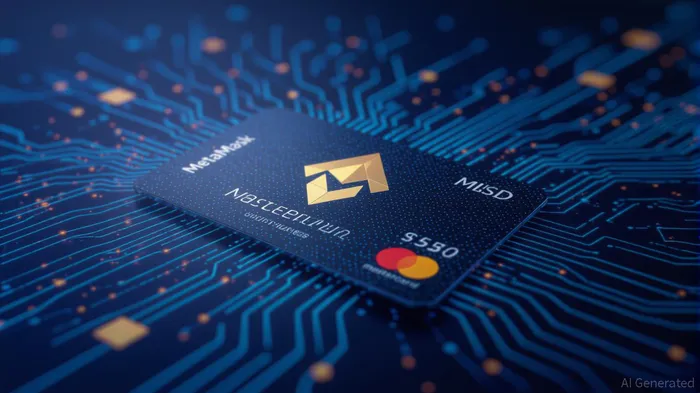
The stablecoin market, now valued at over $277 billion, is undergoing a seismic shift. At the center of this transformation is MetaMask's mUSD, a wallet-native stablecoin that redefines the intersection of decentralized finance (DeFi), real-world spending, and regulatory compliance. For investors, mUSD represents not just a speculative asset but a strategic play in the self-custodial finance revolution—a movement poised to disrupt legacy financial systems.
The DeFi Integration Advantage
mUSD's design is inherently optimized for DeFi. Unlike traditional stablecoins like USDTUSDC-- or USDCUSDC--, which require users to navigate multiple platforms for liquidity, mUSD is deeply embedded within the MetaMask ecosystem. This integration allows users to mint, swap, and bridge mUSD directly within the wallet, eliminating intermediaries and reducing on-ramp friction. By 2025, MetaMask's 30 million active users have access to a seamless on-chain experience, enabling participation in lending markets, yield farming, and decentralized exchanges (DEXs) without leaving the wallet.
The cross-chain utility of mUSD further amplifies its appeal. Powered by M0's decentralized liquidity network and Bridge (a Stripe subsidiary), mUSD operates across 10 blockchain networks, including EthereumETH-- and Arbitrum. This interoperability ensures that users can leverage mUSD in high-yield DeFi protocols while avoiding the complexities of bridging assets between chains. For investors, this means mUSD is not just a stablecoin but a foundational asset for the next wave of DeFi growth.
Real-World Spending: Bridging the On-Chain and Off-Chain Divide
One of mUSD's most groundbreaking features is its real-world utility. The MetaMask Card, a co-branded MastercardMA--, allows users to spend mUSD at millions of global merchants. This is a critical differentiator: while most stablecoins remain confined to on-chain ecosystems, mUSD enables users to convert digital assets into fiat instantly at the point of sale.
The pilot launch of the MetaMask Card in the EU and UK during Q2 2025 demonstrated strong user engagement. By leveraging a Linea-based smart contract to verify transactions in under five seconds, the card maintains non-custodial control while enabling seamless spending. This hybrid model addresses a key pain point in crypto adoption—utility in everyday commerce—and positions mUSD as a default asset for both DeFi and traditional finance.
Regulatory Tailwinds: A Compliant Alternative to Legacy Stablecoins
Regulatory uncertainty has long plagued the stablecoin market, but mUSD's launch coincides with a pivotal shift. The U.S. GENIUS Act, enacted in 2025, established the first federal framework for payment stablecoins, mandating 1:1 reserve backing and real-time transparency. mUSD's structure—fully backed by U.S. cash and short-term Treasuries—aligns perfectly with these requirements, making it a compliant alternative to legacy stablecoins like USDT and USDC.
This regulatory clarity has attracted institutional confidence. Partnerships with BlackstoneBX-- for custody services and Bridge for compliance infrastructure further solidify mUSD's credibility. For investors, this means mUSD is less vulnerable to regulatory shocks and more likely to attract institutional capital, which could drive its market cap from $2.9 million in August 2025 to a multi-billion-dollar asset by 2026.
Investment Thesis: A Strategic Play in Self-Custodial Finance
For early investors, mUSD offers a unique opportunity to capitalize on three converging trends:
1. DeFi Growth: As the DeFi market expands to $750 billion by 2025, mUSD's cross-chain utility and wallet-native design position it as a default stablecoin for on-chain activity.
2. Real-World Adoption: The MetaMask Card's global rollout will drive mUSD's utility beyond DeFi, creating a flywheel effect as users convert fiat to mUSD for spending and back again.
3. Regulatory Resilience: mUSD's compliance with the GENIUS Act ensures it remains a viable asset in an increasingly regulated market, avoiding the pitfalls that have plagued other stablecoins.
Conclusion: The Future of Stablecoins is Wallet-Native
MetaMask's mUSD is more than a stablecoin—it's a blueprint for the future of finance. By combining DeFi integration, real-world spending, and regulatory compliance, mUSD addresses the limitations of legacy stablecoins while leveraging the strengths of self-custodial systems. For investors, this represents a rare opportunity to participate in a market transition that could redefine how value is stored, transferred, and spent in both digital and physical economies.
As the stablecoin market evolves, mUSD's wallet-native model is likely to become the standard. Early adopters who recognize this shift now may find themselves at the forefront of a financial revolution—one where control, utility, and compliance converge.

Decoding blockchain innovations and market trends with clarity and precision.
Latest Articles
Stay ahead of the market.
Get curated U.S. market news, insights and key dates delivered to your inbox.


AInvest
PRO
AInvest
PRO



Comments
No comments yet