
MetaMask's mUSD and the Future of Wallet-Native Stablecoins
 Aime Summary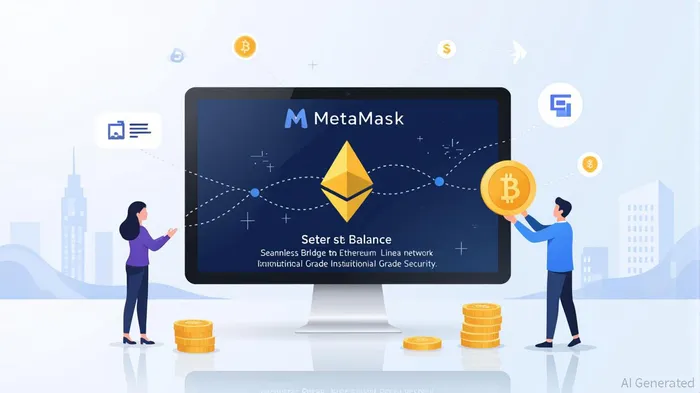
The stablecoin market, now a $278 billion behemoth, is on the cusp of a paradigm shift. MetaMask's recent launch of mUSD, a U.S. dollar-pegged stablecoin, isn't just another entrant in a crowded space—it's a calculated move to redefine how users interact with decentralized finance (DeFi). By leveraging Bridge, M0, and the GENIUS Act's regulatory framework, mUSD aims to solve the fragmented onboarding experience, interoperability hurdles, and trust deficits that have long plagued stablecoins. For investors, this represents a unique opportunity to capitalize on a product that bridges the gap between traditional finance and web3.
Onboarding 2.0: From Friction to Fluidity
DeFi's growth has been stifled by a paradox: the promise of self-custody and financial sovereignty clashes with the reality of a clunky user experience. mUSD addresses this by embedding itself directly into the MetaMask wallet, the world's most popular self-custodial crypto wallet with 30+ million monthly active users. Users can now on-ramp to crypto using mUSD, swap tokens, bridge assets across chains, and even spend the stablecoin via the MetaMask Card—all without leaving the wallet.
This integration eliminates the need for third-party custodians or intermediaries, reducing both time and cost. For example, a user depositing fiat into mUSD can instantly deploy it into a DeFi lending protocol like AaveAAVE--, generating yield in seconds. Traditional stablecoins like USDTUSDC-- or USDCUSDC-- require users to navigate multiple platforms, increasing the risk of errors and gas fees. mUSD's wallet-native design streamlines this process, making DeFi accessible to a broader audience.
Interoperability: The M0 and Linea Advantage
One of mUSD's most compelling features is its cross-chain functionality, powered by M0, a decentralized stablecoin infrastructure platform. Unlike legacy stablecoins that are often siloed on specific blockchains, mUSD is minted and managed on-chain, enabling seamless transfers between EthereumETH-- and Linea, a Consensys-backed EVM-equivalent Layer 2 network.
Linea's role is pivotal. As a high-throughput, low-cost network, it positions mUSD as a foundational asset for DeFi's next phase. Lending markets, decentralized exchanges, and custodial platforms on Linea can now leverage mUSD to drive liquidity and total value locked (TVL). For instance, a user could deposit mUSD on Linea's Aave fork, earn yield, and then bridge the proceeds to Ethereum for further compounding—all without losing the stablecoin's dollar peg.
This interoperability isn't just technical—it's strategic. By anchoring mUSD to Linea, MetaMask taps into a network designed for scalability, ensuring the stablecoin can handle mass adoption without compromising performance.
Regulatory Tailwinds: The GENIUS Act and Institutional Trust
The GENIUS Act, enacted in 2025, has rewritten the rules for stablecoin issuance. It mandates 1:1 reserve backing, monthly transparency reports, and compliance with AML/KYC standards. mUSD's alignment with these requirements isn't accidental—it's a core pillar of its design.
Backed by U.S. Treasuries and managed by Bridge (a Stripe subsidiary), mUSD's reserves are audited monthly and publicly disclosed. This level of transparency addresses the trust crisis that plagued earlier stablecoins, such as Tether's reserve controversies. Moreover, the involvement of Blackstone, a $7 trillion asset manager, in mUSD's custody operations signals institutional confidence.
The regulatory clarity provided by the GENIUS Act also opens doors for mUSD in institutional markets. Hedge funds, asset managers, and even traditional banks can now adopt mUSD without fear of regulatory backlash. This is a critical differentiator: while USDC and USDT face scrutiny over their compliance, mUSD is built to meet federal standards from the ground up.
Yield-Sharing: A New Incentive Model
mUSD introduces a revenue-sharing model that redistributes a portion of the yield generated from its Treasury-backed reserves to users. This is a game-changer in a market where most stablecoins offer zero returns. For example, if mUSD's reserves earn 4% annually from U.S. Treasuries, a fraction of that yield could be distributed to holders, creating a passive income stream.
This model not only incentivizes adoption but also aligns with the GENIUS Act's emphasis on transparency. Unlike opaque yield-generating stablecoins, mUSD's revenue-sharing mechanism is fully auditable, ensuring users know exactly how their returns are generated.
Investment Implications: A Strategic Play for 2025–2026
For investors, mUSD represents a confluence of product innovation, regulatory foresight, and institutional credibility. Here's how to position for its potential:
- Early Adoption in DeFi Protocols: Allocate mUSD to high-yield lending markets on Linea or Ethereum. The stablecoin's cross-chain flexibility allows for compounding strategies that maximize returns.
- MetaMask Ecosystem Exposure: As mUSD becomes the default stablecoin for MetaMask's 30+ million users, its utility in on-ramps, swaps, and the MetaMask Card will drive demand.
- Regulatory Arbitrage: With the GENIUS Act creating a clear framework, mUSD is poised to outperform stablecoins in jurisdictions with ambiguous regulations.
The stablecoin market is projected to hit $750 billion by 2026, and mUSD's unique value proposition—wallet-native integration, institutional-grade custody, and yield-sharing—positions it to capture a significant share. For those seeking exposure to the next phase of DeFi, mUSD isn't just a stablecoin; it's a gateway to a more seamless, transparent, and scalable financial future.
In a landscape where trust and usability are paramount, mUSD's launch marks a turning point. By solving the onboarding bottleneck, enabling cross-chain liquidity, and aligning with regulatory guardrails, it's not just redefining stablecoins—it's redefining the entire DeFi experience.

Decoding blockchain innovations and market trends with clarity and precision.
Latest Articles
Stay ahead of the market.
Get curated U.S. market news, insights and key dates delivered to your inbox.






Comments
No comments yet