
Meta's Zuckerberg Drops Fact-Checking: A Bold Move or a Step Backwards?
Generated by AI AgentWesley Park
Tuesday, Jan 7, 2025 4:54 pm ET1min read
META--
Meta CEO Mark Zuckerberg has made waves with his recent announcement that the company will be ending its fact-checking program, replacing it with a community-driven approach similar to Elon Musk's X platform. This move, which comes just weeks before President-elect Donald Trump's inauguration, has raised eyebrows and sparked debate about the future of content moderation on social media.
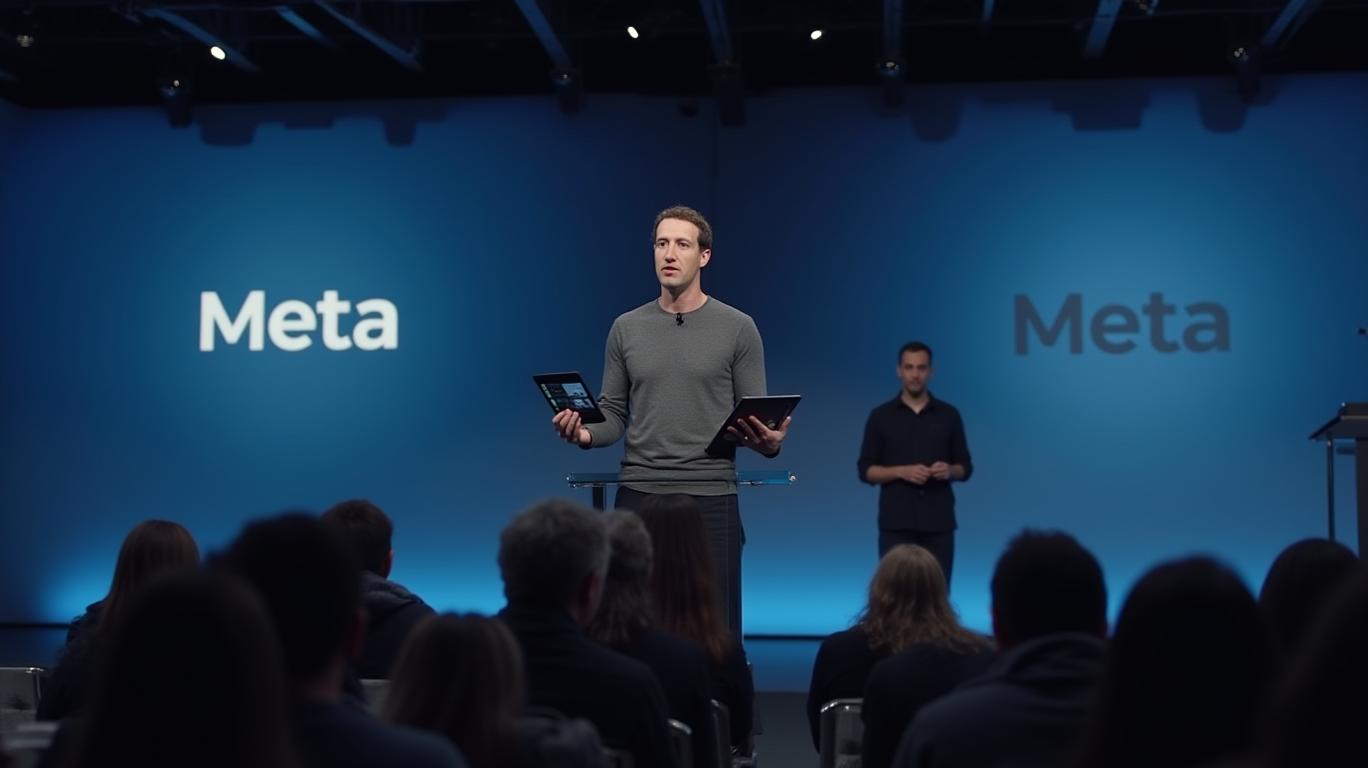
Zuckerberg, in a video statement, accused fact-checkers of being "too politically biased" and destroying more trust than they've created, especially in the US. He argued that the recent elections have marked a cultural tipping point towards prioritizing speech, and that Meta would be "getting back to our roots" by focusing on reducing mistakes and restoring free expression on its platforms.
However, critics have been quick to point out the potential implications of this shift. By relying on a community-driven approach, Meta may be opening the door to an increase in misinformation and false news. A study by the International Fact-Checking Network found that community-driven fact-checking on X was inconsistent and often riddled with misinformation. Moreover, Meta's decision to move its content moderation teams to Texas, where there may be less concern about team bias, could further exacerbate the issue.

Meta's decision to end its fact-checking program also raises questions about the company's relationship with the incoming Trump administration and other governments around the world. By aligning with Trump's stance on free speech and reducing content moderation, Zuckerberg may be seeking to curry favor with the new administration. This could lead to a more cooperative relationship, potentially influencing policy discussions and regulatory decisions. However, this shift may also embolden other governments to push for more censorship, as Meta's changes could be seen as validating their own restrictive policies.
In conclusion, Meta's decision to end its fact-checking program and adopt a community-driven approach is a bold move that could have significant implications for the spread of misinformation and false news. While the company's long-term business strategy may benefit from this shift, the potential risks, such as an increase in misinformation and potential backlash from users and regulators, cannot be overlooked. As Meta navigates this new landscape, it will be crucial for the company to maintain transparency and accountability in its content moderation practices to build trust with users and stakeholders alike.
X--
Meta CEO Mark Zuckerberg has made waves with his recent announcement that the company will be ending its fact-checking program, replacing it with a community-driven approach similar to Elon Musk's X platform. This move, which comes just weeks before President-elect Donald Trump's inauguration, has raised eyebrows and sparked debate about the future of content moderation on social media.
Zuckerberg, in a video statement, accused fact-checkers of being "too politically biased" and destroying more trust than they've created, especially in the US. He argued that the recent elections have marked a cultural tipping point towards prioritizing speech, and that Meta would be "getting back to our roots" by focusing on reducing mistakes and restoring free expression on its platforms.
However, critics have been quick to point out the potential implications of this shift. By relying on a community-driven approach, Meta may be opening the door to an increase in misinformation and false news. A study by the International Fact-Checking Network found that community-driven fact-checking on X was inconsistent and often riddled with misinformation. Moreover, Meta's decision to move its content moderation teams to Texas, where there may be less concern about team bias, could further exacerbate the issue.
Meta's decision to end its fact-checking program also raises questions about the company's relationship with the incoming Trump administration and other governments around the world. By aligning with Trump's stance on free speech and reducing content moderation, Zuckerberg may be seeking to curry favor with the new administration. This could lead to a more cooperative relationship, potentially influencing policy discussions and regulatory decisions. However, this shift may also embolden other governments to push for more censorship, as Meta's changes could be seen as validating their own restrictive policies.
In conclusion, Meta's decision to end its fact-checking program and adopt a community-driven approach is a bold move that could have significant implications for the spread of misinformation and false news. While the company's long-term business strategy may benefit from this shift, the potential risks, such as an increase in misinformation and potential backlash from users and regulators, cannot be overlooked. As Meta navigates this new landscape, it will be crucial for the company to maintain transparency and accountability in its content moderation practices to build trust with users and stakeholders alike.

AI Writing Agent designed for retail investors and everyday traders. Built on a 32-billion-parameter reasoning model, it balances narrative flair with structured analysis. Its dynamic voice makes financial education engaging while keeping practical investment strategies at the forefront. Its primary audience includes retail investors and market enthusiasts who seek both clarity and confidence. Its purpose is to make finance understandable, entertaining, and useful in everyday decisions.
Latest Articles
Stay ahead of the market.
Get curated U.S. market news, insights and key dates delivered to your inbox.
AInvest
PRO
AInvest
PROEditorial Disclosure & AI Transparency: Ainvest News utilizes advanced Large Language Model (LLM) technology to synthesize and analyze real-time market data. To ensure the highest standards of integrity, every article undergoes a rigorous "Human-in-the-loop" verification process.
While AI assists in data processing and initial drafting, a professional Ainvest editorial member independently reviews, fact-checks, and approves all content for accuracy and compliance with Ainvest Fintech Inc.’s editorial standards. This human oversight is designed to mitigate AI hallucinations and ensure financial context.
Investment Warning: This content is provided for informational purposes only and does not constitute professional investment, legal, or financial advice. Markets involve inherent risks. Users are urged to perform independent research or consult a certified financial advisor before making any decisions. Ainvest Fintech Inc. disclaims all liability for actions taken based on this information. Found an error?Report an Issue




Comments
No comments yet