
Meta Unveils Hyperion AI Data Center With Five Gigawatts Power
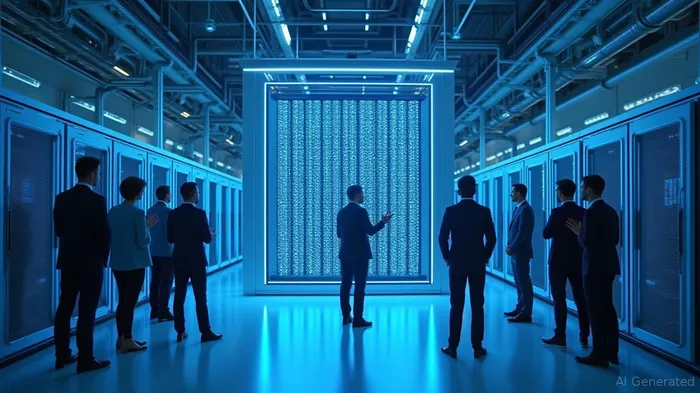
Meta, the parent company of Facebook, has announced the construction of a colossal AI data center named Hyperion, which is set to deliver an unprecedented five gigawatts of computational power. This ambitious project is part of Meta's strategy to gain a competitive edge in the rapidly evolving AI landscape, where computational power is a critical factor in developing advanced AI models. The data center, which will be comparable in size to most of Manhattan, is expected to provide the necessary infrastructure for training and deploying sophisticated AI systems.
Meta's commitment to this endeavor is not just about hardware; it's also about talent. The company has brought on board top minds to lead its MetaMETA-- Superintelligence Lab, including individuals such as Alexandr Wang, formerly CEO of Scale AI, and Daniel Gross, who previously led Safe Superintelligence. The combination of elite talent and a massive computational infrastructure positions Meta to make significant strides in developing frontier AI models. The company recognizes that groundbreaking AI innovation requires not only brilliant minds but also an unparalleled capacity for data processing and model training.
Beyond Hyperion, Meta also plans to bring another significant supercluster, named Prometheus, online by 2026. Prometheus is slated to provide one gigawatt of power, further solidifying Meta’s position as one of the pioneering tech companies to deploy such immense computational resources. These investments collectively signal Meta’s determination to lead the charge in AI development, ensuring it has the foundational capabilities to train and deploy the most advanced AI systems.
The race to develop advanced artificial intelligence is fundamentally a race for computational power. Training frontier AI models, especially large language models (LLMs) and complex generative AI systems, demands extraordinary processing capabilities. These models learn from vast datasets, requiring billions, if not trillions, of parameters to be adjusted and optimized through iterative training cycles. Each cycle consumes immense computational resources, translating directly into a need for massive electrical power. Meta’s investment in five gigawatt power for Hyperion is a direct response to this escalating demand.
The benefits of possessing such a powerful infrastructure are manifold. Firstly, it allows Meta to iterate on its AI models much faster than competitors with less computational muscle. This speed is critical in a rapidly evolving field where incremental improvements can lead to significant breakthroughs. Secondly, it enables Meta to train models of unprecedented scale and complexity, potentially unlocking new capabilities and applications that are currently beyond reach. This could include more sophisticated conversational AI, highly realistic content generation, or advanced scientific discovery tools. Thirdly, having dedicated, immense computational power reduces reliance on external cloud providers, offering greater control, security, and potentially cost efficiency in the long run.
Furthermore, this infrastructure serves as a powerful magnet for top-tier AI talent. Researchers and engineers are often drawn to organizations that can provide them with the tools and resources necessary to push the boundaries of AI. The opportunity to work with a five-gigawatt supercomputer like Hyperion is a compelling proposition for those looking to make a significant impact in the field. This symbiotic relationship between infrastructure and talent is crucial for Meta’s long-term success in the AI domain, ensuring it remains at the forefront of innovation.
While the technological ambitions behind Meta’s AI data center projects are undeniable, they come with significant environmental implications, particularly concerning AI energy consumption. The combined power needs of Hyperion and Prometheus alone will be enough to supply millions of homes, raising serious questions about the sustainability of such massive energy demands. The reliance on traditional energy sources for these data centers could place considerable strain on existing power grids and local communities.
One tangible example of this impact has already emerged. A Meta data center project reportedly led to water taps running dry in some residential areas, highlighting a critical, often overlooked aspect of data center operations: their substantial water requirements for cooling. As AI data centers grow in size and power, their demand for water for cooling systems will also escalate, potentially exacerbating water scarcity issues in drought-prone or water-stressed regions.
The issue is not unique to Meta. Other major players in the AI hyperscaler space are facing similar challenges. These examples underscore a broader trend: the insatiable appetite of AI for energy and resources. Without a rapid and substantial increase in renewable energy production, this trajectory could lead to significant environmental strain and resource conflicts.
Addressing the environmental footprint of AI is becoming a paramount concern. Solutions could include renewable energy integration, advanced cooling technologies, strategic location planning, and energy efficiency. The balance between technological advancement and environmental responsibility will be a defining challenge for the AI industry in the coming years.
Meta’s massive investment in its AI data center infrastructure is part of a larger, global AI arms race involving the world’s leading technology companies. Beyond Meta, other notable efforts include OpenAI’s “Stargate” project and Elon Musk’s xAI developing its “Colossus” supercomputer, demonstrating a shared understanding among tech leaders that immense computational power is the key to unlocking the next generation of AI capabilities.
This push for vast AI infrastructure has garnered significant support from governmental bodies. The federal commitment to accelerating energy production from various sources, including coal, nuclear, geothermal, and natural gas, to meet the burgeoning demands of the AI sector. This governmental backing suggests that the AI industry is poised to consume a substantial portion of America’s energy output in the foreseeable future, potentially reshaping national energy policies and infrastructure priorities.
The implications of this coordinated effort between tech giants and government are profound. It suggests a future where computational power becomes a strategic national asset, akin to natural resources or military capabilities. The ability to train and deploy cutting-edge frontier AI models will not only drive economic growth but also influence geopolitical standing. However, this also intensifies the urgency to address the associated environmental challenges, ensuring that the pursuit of intelligence does not come at an unsustainable cost to the planet.
Meta’s ambitious AI data center projects, Hyperion and Prometheus, represent a critical inflection point in the development of artificial intelligence. By committing to five gigawatt power capacity, Meta is not just building infrastructure; it’s laying the groundwork for a future where AI capabilities are vastly expanded and integrated more deeply into our lives. This immense investment signals a firm belief that the next generation of technological breakthroughs will be driven by powerful AI, requiring computational resources far beyond what is currently common.
The scale of these projects also brings to the forefront the pressing need for sustainable energy solutions. As AI energy consumption continues its exponential rise, innovation in renewable energy, energy efficiency, and grid management will become paramount. The challenges faced by communities near these data centers, such as water scarcity, underscore the importance of responsible development and transparent engagement with local stakeholders. The conversation around AI must expand beyond its capabilities to include its ecological footprint and societal impact.
Ultimately, Meta’s Hyperion and Prometheus initiatives are powerful indicators of the direction in which the technology world is heading. They are a testament to the belief that AI will redefine industries, create new economic opportunities, and solve complex global challenges. However, they also serve as a stark reminder that this progress must be carefully managed to ensure it is sustainable and equitable. The future of AI is not just about intelligence; it’s about responsible power.

Stay ahead of the market.
Get curated U.S. market news, insights and key dates delivered to your inbox.




Comments
No comments yet