
Meta Unveils Three Experimental Virtual and Mixed Reality Headset Prototypes at SIGGRAPH 2025
ByAinvest
Friday, Aug 8, 2025 4:15 am ET2min read
IMMR--
Tiramisu: Pushing VR Clarity
Tiramisu is designed to deliver near-photorealistic VR visuals through high dynamic range (HDR), denser pixels, and advanced optics. Key specifications include an angular resolution of 90 pixels per degree (PPD), which is about 3.6 times the PPD of the Quest 3. The display boasts a peak brightness of up to 1,400 nits, roughly 14 times that of the Quest 3, and a contrast ratio around three times higher. The headset features dual high-resolution microOLED panels and custom glass lenses to minimize visual artifacts such as the screen-door effect. However, Tiramisu is bulkier and heavier than consumer headsets, with a field of view of 33 degrees by 33 degrees. The rendering cost is offset by NVIDIA DLSS 3 technology [1].
Boba 3 and Boba 3 VR: Wider Perspective
Boba 3 is a mixed reality prototype with high-resolution passthrough video and an ultrawide FOV, blending physical and digital worlds seamlessly. Boba 3 VR, on the other hand, focuses solely on VR immersion while retaining optical upgrades, potentially lowering power demands and weight. Both models feature a horizontal FOV of 180 degrees and a vertical FOV of 120 degrees, significantly expanding peripheral vision compared to the Quest 3. Each model offers a 4K by 4K per-eye resolution and uses mass-production displays with high-curvature reflective polarizers and pancake lenses. The Boba 3 prototype weighs around 840 grams, while the Boba 3 VR variant is around 660 grams [1].
Trade-offs and Future Implications
The prototypes showcase Meta’s commitment to foundational research, even as it navigates a competitive and evolving XR market. While Tiramisu represents a maximalist approach to visual quality, Boba 3 and Boba 3 VR focus on expanding the user’s peripheral vision. These prototypes serve as a tangible glimpse into Meta’s long-term strategy for the next computing platform, setting new benchmarks for the industry. However, they are not expected to hit mass-market price points soon and remain in the research domain [1][2].
References
[1] https://www.business-standard.com/technology/tech-news/meta-research-prototypes-highlight-mixed-reality-headset-future-details-tiramisu-boba-3-vr-125080800815_1.html
[2] https://www.meta.com/blog/reality-labs-research-tiramisu-boba-3-siggraph-2025-ultrawide-fov-hyperrealistic-vr/?srsltid=AfmBOoq5usi2p5f8B0ZhMJw7NQ7mNJdkU07NZYA5HEjrqUS8d9sS46KV
META--
NVDA--
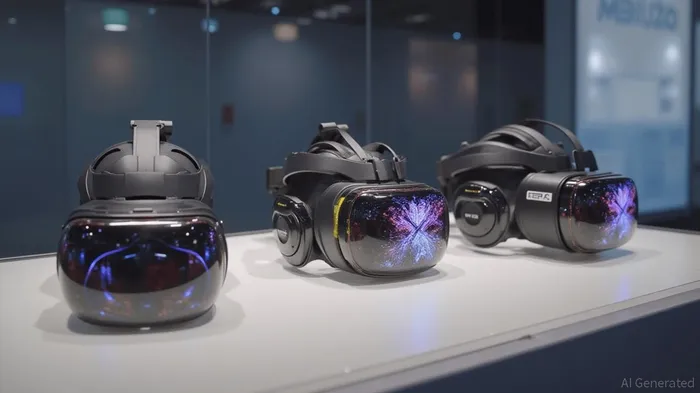
Meta will showcase three research prototypes at SIGGRAPH 2025: Tiramisu, Boba 3, and Boba 3 VR. Tiramisu focuses on near-photorealistic VR visuals with high dynamic range, denser pixels, and advanced optics. Boba 3 and Boba 3 VR explore wider fields of view for enhanced peripheral vision and blended physical and digital worlds. The prototypes prioritize different trade-offs in size, weight, and GPU demands.
Meta, the tech giant, is set to unveil three advanced virtual and mixed reality (VR/MR) headset prototypes at the SIGGRAPH 2025 conference in Vancouver, Canada, on August 11. The prototypes, named Tiramisu, Boba 3, and Boba 3 VR, are described as purely research-oriented devices designed to explore innovative technologies that may not enter consumer production. Each headset focuses on different aspects of immersive experiences, including display quality, field of view (FOV), and realism.Tiramisu: Pushing VR Clarity
Tiramisu is designed to deliver near-photorealistic VR visuals through high dynamic range (HDR), denser pixels, and advanced optics. Key specifications include an angular resolution of 90 pixels per degree (PPD), which is about 3.6 times the PPD of the Quest 3. The display boasts a peak brightness of up to 1,400 nits, roughly 14 times that of the Quest 3, and a contrast ratio around three times higher. The headset features dual high-resolution microOLED panels and custom glass lenses to minimize visual artifacts such as the screen-door effect. However, Tiramisu is bulkier and heavier than consumer headsets, with a field of view of 33 degrees by 33 degrees. The rendering cost is offset by NVIDIA DLSS 3 technology [1].
Boba 3 and Boba 3 VR: Wider Perspective
Boba 3 is a mixed reality prototype with high-resolution passthrough video and an ultrawide FOV, blending physical and digital worlds seamlessly. Boba 3 VR, on the other hand, focuses solely on VR immersion while retaining optical upgrades, potentially lowering power demands and weight. Both models feature a horizontal FOV of 180 degrees and a vertical FOV of 120 degrees, significantly expanding peripheral vision compared to the Quest 3. Each model offers a 4K by 4K per-eye resolution and uses mass-production displays with high-curvature reflective polarizers and pancake lenses. The Boba 3 prototype weighs around 840 grams, while the Boba 3 VR variant is around 660 grams [1].
Trade-offs and Future Implications
The prototypes showcase Meta’s commitment to foundational research, even as it navigates a competitive and evolving XR market. While Tiramisu represents a maximalist approach to visual quality, Boba 3 and Boba 3 VR focus on expanding the user’s peripheral vision. These prototypes serve as a tangible glimpse into Meta’s long-term strategy for the next computing platform, setting new benchmarks for the industry. However, they are not expected to hit mass-market price points soon and remain in the research domain [1][2].
References
[1] https://www.business-standard.com/technology/tech-news/meta-research-prototypes-highlight-mixed-reality-headset-future-details-tiramisu-boba-3-vr-125080800815_1.html
[2] https://www.meta.com/blog/reality-labs-research-tiramisu-boba-3-siggraph-2025-ultrawide-fov-hyperrealistic-vr/?srsltid=AfmBOoq5usi2p5f8B0ZhMJw7NQ7mNJdkU07NZYA5HEjrqUS8d9sS46KV
Stay ahead of the market.
Get curated U.S. market news, insights and key dates delivered to your inbox.
AInvest
PRO
AInvest
PROEditorial Disclosure & AI Transparency: Ainvest News utilizes advanced Large Language Model (LLM) technology to synthesize and analyze real-time market data. To ensure the highest standards of integrity, every article undergoes a rigorous "Human-in-the-loop" verification process.
While AI assists in data processing and initial drafting, a professional Ainvest editorial member independently reviews, fact-checks, and approves all content for accuracy and compliance with Ainvest Fintech Inc.’s editorial standards. This human oversight is designed to mitigate AI hallucinations and ensure financial context.
Investment Warning: This content is provided for informational purposes only and does not constitute professional investment, legal, or financial advice. Markets involve inherent risks. Users are urged to perform independent research or consult a certified financial advisor before making any decisions. Ainvest Fintech Inc. disclaims all liability for actions taken based on this information. Found an error?Report an Issue




Comments
No comments yet