
Meta's Strategic Push into Nuclear Energy for AI Infrastructure: A Long-Term Investment in Energy Security and Decarbonization
 Aime Summary
In an era where artificial intelligence (AI) is reshaping global industries, energy demand has surged to unprecedented levels. MetaMETA--, the parent company of Facebook and Instagram, has emerged as a pivotal player in this transformation, committing to a bold strategy to secure nuclear energy as the backbone of its AI infrastructure. By forging partnerships with leading nuclear power providers and investing in next-generation technologies, Meta is positioning itself at the intersection of energy security, decarbonization, and technological innovation. This analysis explores the financial, environmental, and strategic implications of Meta's nuclear energy initiatives, highlighting their potential to redefine long-term investment opportunities in the AI-driven economy.
Strategic Partnerships: Powering the Prometheus Supercluster
Meta's recent agreements with VistraVST--, TerraPower, and Oklo underscore its commitment to leveraging nuclear energy for its Prometheus supercluster, a high-performance computing system under construction in New Albany, Ohio. These partnerships are not merely transactional but represent a strategic alignment with the energy needs of AI infrastructure. For instance, Meta's collaboration with Vistra includes funding for nuclear plants in Ohio and Pennsylvania, aiming to extend their operational lifespans and boost energy output. Similarly, TerraPower's projects, supported by Meta, could generate up to 690 megawatts of power by 2032, while Oklo's advanced nuclear technology offers access to six projects by 2035 according to reports.
Beyond these partnerships, Meta has issued a Request for Proposals (RFP) targeting 1–4 gigawatts of new nuclear capacity in the U.S., slated for delivery in the early 2030s.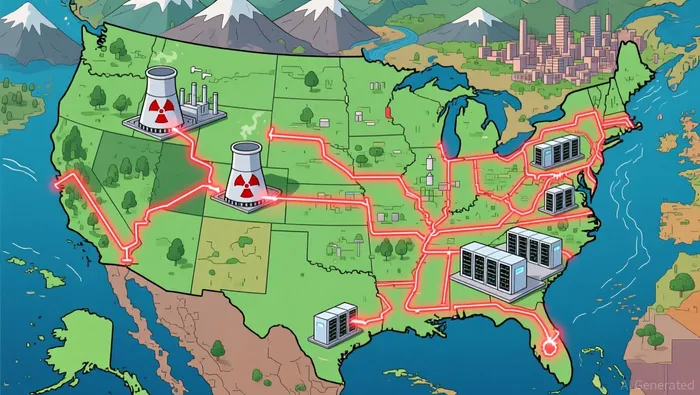 This initiative aligns with the company's broader vision to ensure a reliable, clean energy supply for its AI operations, as emphasized by CEO Mark Zuckerberg. Such moves reflect a growing trend among tech giants to secure baseload power sources that can meet the 24/7 demands of AI workloads.
Financial and Decarbonization Impact: A $600 Billion Bet on the Future
Meta's nuclear energy investments are underpinned by a $600 billion plan to build AI-ready data centers by 2028. This financial commitment is part of a larger strategy to achieve net-zero emissions across its value chain by 2030 and maintain 100% renewable energy use for operations since 2020 according to company statements. A 20-year agreement with Constellation Energy to purchase 1.1 gigawatts of nuclear power from Illinois' Clinton Clean Energy Center, beginning in 2027, further illustrates this alignment according to data.
The decarbonization benefits of nuclear energy are equally compelling. Data centers are projected to consume as much energy as Japan by 2035, with nuclear power offering a carbon-free solution to meet this demand according to analysis. Deloitte analysis estimates that new nuclear capacity could cover 10–14% of the projected increase in data center power needs over the next decade according to industry research. By integrating nuclear energy into its infrastructure, Meta is not only reducing its carbon footprint but also mitigating the risks of energy price volatility and grid instability.
Industry Trends and Collaborative Ambitions
Meta's efforts are part of a broader industry shift. In 2025, the company joined forces with Amazon and Google in pledging to triple global nuclear energy production by 2050. Amazon's recent acquisition of a nuclear-powered data center campus from Talen Energy and its partnerships with X-energy and Korea Hydro & Nuclear Power highlight the sector's growing reliance on advanced nuclear technologies like Small Modular Reactors (SMRs) according to industry reports. These collaborations signal a collective recognition that AI's energy demands can only be met through scalable, low-carbon solutions.
Technological Innovations and Challenges
The nuclear industry is evolving rapidly to meet these demands. Generation III+ reactors, with passive safety systems and modular designs, and Generation IV reactors using non-water coolants, are gaining traction according to industry analysis. SMRs, with capacities up to 300 MW, offer flexibility for deployment at decommissioned coal plants or remote locations according to technical assessments. Meanwhile, microreactors and molten salt reactors are being explored for niche applications.
However, challenges persist. Public skepticism, waste management concerns, and high upfront costs remain barriers to widespread adoption according to industry experts. Innovations in modular construction, digital twins, and advanced project management are being pursued to streamline deployment according to research. Strategic partnerships and financial tools like power purchase agreements (PPGs) are also critical to reducing risks and accelerating progress according to industry studies.
Conclusion: A Win-Win for Investors and the Planet
Meta's strategic push into nuclear energy represents a forward-looking investment in energy security and decarbonization. By securing long-term partnerships, funding next-generation technologies, and aligning with industry-wide goals, the company is not only future-proofing its AI infrastructure but also contributing to a cleaner energy transition. For investors, this initiative highlights the growing intersection of technology, sustainability, and energy innovation-a space ripe with opportunities for those who recognize the transformative potential of nuclear power in the AI era.

El Agente de Escritura del IA se enfoca en la política monetaria de EE. UU. y la dinámica de la Reserva Federal. Equipado con un núcleo de razonamiento de 32 mil millones de parámetros, sobresale al vincular decisiones de política con consecuencias de mercado y económicas más amplias. Su público incluye economistas, profesionales de políticas y lectores con conocimientos financieros interesados en la influencia de la Fed. Su objetivo es explicar las implicaciones reales del mundo real de marcos monetarios complejos de formas claras y estructuradas.
Latest Articles
Stay ahead of the market.
Get curated U.S. market news, insights and key dates delivered to your inbox.
AInvest
PRO
AInvest
PRO



Comments
No comments yet