
Meta Stock Plunges: Court Verdicts and AI Spending Risks
 Aime Summary
- . Legal experts warn these rulings could pierce Section 230 protections, creating a "Big Tobacco Moment" for the social media industry. While immediate financial penalties are modest, the precedent sets the stage for significant future regulatory costs and potential business model overhauls. Investors are also reacting to Meta's aggressive pivot from metaverse investments to artificial intelligence, which involves massive capital expenditures without a direct cloud monetization strategy.
The technology sector is currently grappling with a convergence of legal liability and strategic capital reallocation that is reshaping investor sentiment toward Meta PlatformsMETA--. A Los Angeles jury recently ruled that MetaMETA-- and Alphabet were liable for building services with addictive features that contributed to a young woman's mental health decline, . Simultaneously, . These verdicts are not just about the specific dollar amounts awarded; they represent a fundamental shift in how courts view platform responsibility, moving from shielding user-generated content to scrutinizing product design. This legal turbulence has coincided with Meta's decision to cut several hundred jobs across Facebook, Reality Labs, and other divisions to fund a massive artificial intelligence push. The stock market's reaction has been swift, with Meta shares sliding as traders price in the potential for a wave of litigation that could force the company to fundamentally alter how its apps are built and marketed.
Why Is Meta Stock Falling Amid Court Verdicts?
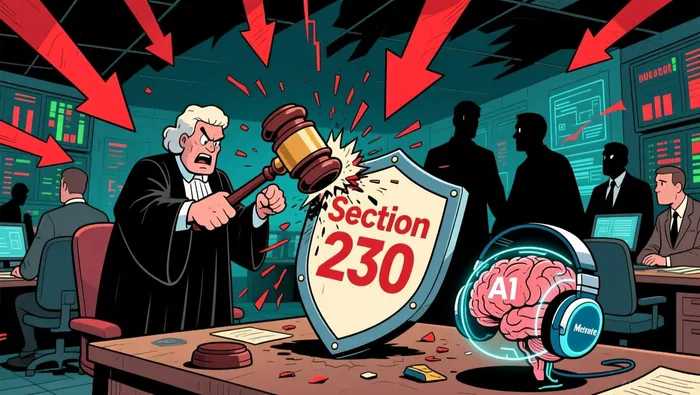
The recent decline in Meta stock is driven by a combination of immediate legal setbacks and long-term strategic uncertainty that has unsettled the investment community. The primary catalyst was the Los Angeles jury verdict finding Meta negligent in its duty to protect users from addictive features, a ruling that experts fear could embolden regulators and plaintiffs globally. This legal development is significant because it challenges the core legal framework that has insulated social media platforms from liability for user content under of the Communications Decency Act. With over 2,400 similar cases centralized before a single judge in California, industry observers are comparing the situation to the legal watershed moments that defined the tobacco industry. Investors are less concerned with the immediate financial penalties, which are manageable given Meta's strong cash position, and more worried about the policy risk that could force mandatory changes to business practices. The verdicts have created a ripple effect, causing peers like Reddit, Snap, and Pinterest to fall sharply as the market reassesses the entire social media sector's exposure to litigation. Analysts note that while the companies plan to appeal, the mere existence of these rulings has forced a repricing of regulatory risk across the industry.
The market reaction also reflects broader concerns about the sustainability of Meta's current operational model in the face of these legal pressures. If the courts continue to find platforms liable for the harm caused by their design choices, it could necessitate significant changes to the algorithms that drive engagement and ad revenue. This uncertainty is compounded by the company's aggressive capital expenditure plans, which are now being scrutinized under a microscope of heightened regulatory attention. The legal precedents set in these trials could lead to a regime change in how social media is regulated and operated, potentially impacting the pipeline of young users who are vital to these businesses. As the industry navigates this complex environment, investors are closely monitoring how these rulings might influence future revenue streams and the overall viability of the social media business model.
How Does Meta's AI Spending Affect Stock Valuation?
While legal challenges mount, Meta is simultaneously executing a bold strategic pivot that involves cutting jobs and redirecting billions of dollars into artificial intelligence infrastructure. , including Reality Labs and global operations, as part of a restructuring effort to optimize resources for AI development. This move is designed to free up capital for high-priority AI projects that are critical for Meta's long-term competitive positioning against rivals like OpenAI and GoogleGOOGL--. However, this aggressive spending has drawn scrutiny from investors who are questioning the return on investment, especially given the lack of a direct cloud business to monetize these infrastructure costs. , a figure that is massive and unprecedented for the company. Unlike cloud competitors that can sell infrastructure as a service, Meta is building these capabilities primarily to enhance its core advertising business, which creates a different risk profile for the market.
The financial implications of this AI pivot are significant, as the company is betting its future on the success of these investments in the absence of a diversified revenue stream from cloud services. Reality Labs, the division responsible for the metaverse, , and the recent layoffs signal a continued shift away from that investment focus. To support this heavy investment in AI, Meta has introduced a new stock option incentive program for top executives, with payouts contingent on the share price meaningfully exceeding the exercise price over a five-year timeline. This structure is intended to align executive incentives with long-term shareholder value, but it also highlights the high stakes involved in the company's strategic bets. Analysts are divided on the outlook, with some noting that headcount reductions could yield earnings per share upside, while others warn that delayed AI product launches could pose significant risks to growth. The market is currently pricing in sustained volatility as it waits for clarity on whether these massive capital commitments will translate into the anticipated revenue growth.
What Are the Risks for Meta Stock Investors?
Investors in Meta stock face a complex array of risks stemming from the intersection of legal liability, regulatory uncertainty, and aggressive capital allocation. The legal verdicts have opened the door for increased legal exposure, with potential damages that could far exceed the current awards if the trend continues. The precedent set by these rulings could lead to stricter content publishing rules and mandatory changes to business practices that could dampen engagement and ad performance. Additionally, the company's massive AI spending plans create a scenario where a significant portion of capital is tied up in long-term projects with uncertain returns. The lack of a direct cloud business to monetize these infrastructure investments means that the company's profitability is heavily dependent on the success of its advertising business, which is itself under regulatory pressure. This dual pressure of legal headwinds and capital-intensive growth strategies has led to a reassessment of Meta's valuation by the market. While the company remains a dominant player in social media, the convergence of these factors has created a challenging environment for investors to navigate in the coming quarters.
The situation also highlights the broader implications for the entire tech sector, as the legal and regulatory landscape for social media continues to evolve. Investors are now pricing in the risk of a regime change in how social media is regulated and operated, which could impact the pipeline of young users vital to these businesses. The market's reaction suggests that investors are looking for a clear path to profitability that accounts for these new realities. As Meta continues to navigate these challenges, the company will need to demonstrate that its AI investments can drive meaningful growth while also addressing the legal and regulatory concerns that are currently weighing on its stock price. The coming quarters will be critical in determining whether Meta can successfully execute its strategic pivot and overcome the headwinds created by the recent legal verdicts.

Stay ahead of the market.
Get curated U.S. market news, insights and key dates delivered to your inbox.
AInvest
PRO
AInvest
PRO



Comments
No comments yet