
Meta's Smart Glasses Face Skepticism Amid Concerns Over Data Collection and Business Model
ByAinvest
Wednesday, Sep 24, 2025 2:09 pm ET2min read
META--
The Ray-Ban Meta (Gen 2) smart glasses, for instance, have seen a significant upgrade in battery life, now lasting up to 8 hours compared to the previous generation's 4 hours [1]. The new model also features an improved 12MP ultra-wide camera capable of recording in 3K Ultra HD at 60fps. Additionally, the glasses come in multiple styles and colors, with support for prescription lenses [1].
However, the company's marketing hype and the awkward demonstrations during the conference have raised eyebrows. The writer of this article, who has never purchased a Meta device and only uses the company's free social media services, expresses concerns about data collection and advertising practices. The writer also points out that the current market for smart glasses is still niche and may not justify the high price points of these devices.
The Meta Ray-Ban Display, the flagship product in the new lineup, features a high-resolution screen embedded in the lens, allowing users to see text, images, and video overlaid onto their field of vision [2]. This is a significant advancement in augmented reality technology, but the writer questions whether this feature adds enough value to justify the $799 price tag in the U.S.
The Oakley Meta Vanguard, designed for athletes and outdoor enthusiasts, promises up to nine hours of battery life and water resistance. However, the writer is skeptical about the device's practicality for everyday use, given the high price point and the fact that many users may not need the advanced features offered by smart glasses.
In conclusion, while Meta's new smart glasses offer impressive technological advancements, the market reception is mixed. The writer's concerns about data privacy, advertising practices, and the overall value proposition of these devices suggest that the market may not be ready for a widespread adoption of smart glasses just yet. Investors and financial professionals should approach this market with caution and a critical eye.
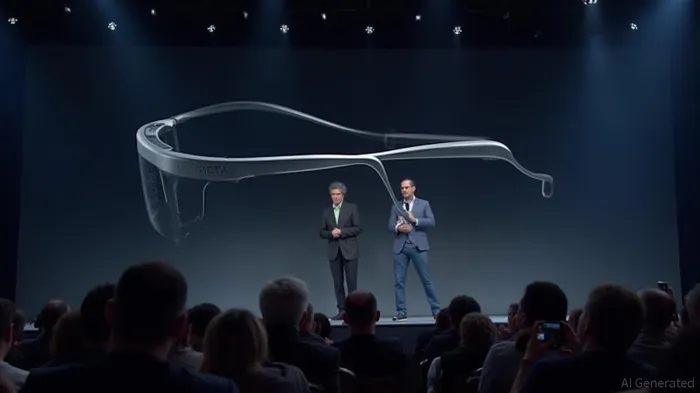
Meta's new smart glasses, unveiled at a recent developer conference, have been praised for their advanced features and battery life. However, despite the company's marketing hype, it's hard to make a case for buying them. The writer has no interest in purchasing a pair, citing concerns about data collection and advertising practices, as well as the awkward demos on stage. Additionally, the writer has never purchased a Meta device and has only used the company's free social media services, such as Instagram and WhatsApp.
Meta's recent unveiling of its latest smart glasses at a developer conference has sparked interest and debate among tech enthusiasts and investors alike. The new models, including the Ray-Ban Meta (Gen 2), Oakley Meta Vanguard, and Meta Ray-Ban Display, have been praised for their advanced features and improved battery life. However, the market reception is mixed, with some users expressing concerns about data collection, advertising practices, and the overall value proposition of these devices.The Ray-Ban Meta (Gen 2) smart glasses, for instance, have seen a significant upgrade in battery life, now lasting up to 8 hours compared to the previous generation's 4 hours [1]. The new model also features an improved 12MP ultra-wide camera capable of recording in 3K Ultra HD at 60fps. Additionally, the glasses come in multiple styles and colors, with support for prescription lenses [1].
However, the company's marketing hype and the awkward demonstrations during the conference have raised eyebrows. The writer of this article, who has never purchased a Meta device and only uses the company's free social media services, expresses concerns about data collection and advertising practices. The writer also points out that the current market for smart glasses is still niche and may not justify the high price points of these devices.
The Meta Ray-Ban Display, the flagship product in the new lineup, features a high-resolution screen embedded in the lens, allowing users to see text, images, and video overlaid onto their field of vision [2]. This is a significant advancement in augmented reality technology, but the writer questions whether this feature adds enough value to justify the $799 price tag in the U.S.
The Oakley Meta Vanguard, designed for athletes and outdoor enthusiasts, promises up to nine hours of battery life and water resistance. However, the writer is skeptical about the device's practicality for everyday use, given the high price point and the fact that many users may not need the advanced features offered by smart glasses.
In conclusion, while Meta's new smart glasses offer impressive technological advancements, the market reception is mixed. The writer's concerns about data privacy, advertising practices, and the overall value proposition of these devices suggest that the market may not be ready for a widespread adoption of smart glasses just yet. Investors and financial professionals should approach this market with caution and a critical eye.
Stay ahead of the market.
Get curated U.S. market news, insights and key dates delivered to your inbox.


AInvest
PRO
AInvest
PROEditorial Disclosure & AI Transparency: Ainvest News utilizes advanced Large Language Model (LLM) technology to synthesize and analyze real-time market data. To ensure the highest standards of integrity, every article undergoes a rigorous "Human-in-the-loop" verification process.
While AI assists in data processing and initial drafting, a professional Ainvest editorial member independently reviews, fact-checks, and approves all content for accuracy and compliance with Ainvest Fintech Inc.’s editorial standards. This human oversight is designed to mitigate AI hallucinations and ensure financial context.
Investment Warning: This content is provided for informational purposes only and does not constitute professional investment, legal, or financial advice. Markets involve inherent risks. Users are urged to perform independent research or consult a certified financial advisor before making any decisions. Ainvest Fintech Inc. disclaims all liability for actions taken based on this information. Found an error?Report an Issue


ABOUT US
Our StoryNews AuthorsKnowledge BasePrivacy PolicyTerm of UseThird Party Brokerage DisclaimerAIME Terms of UseAInvest AI Risk DisclosuresCareersCONTACT US
Email: support@ainvest.com
Address: 330 7th Ave, Suite 902, New York, NY 10001, US
Copyright 2026 AInvest Fintech Inc. All rights reserved.


Comments
No comments yet