
Meta Signs Multi-Billion-Dollar Deal to Rent Google AI Chips: What It Means for Stocks, Nvidia, and the AI Industry
 Aime Summary
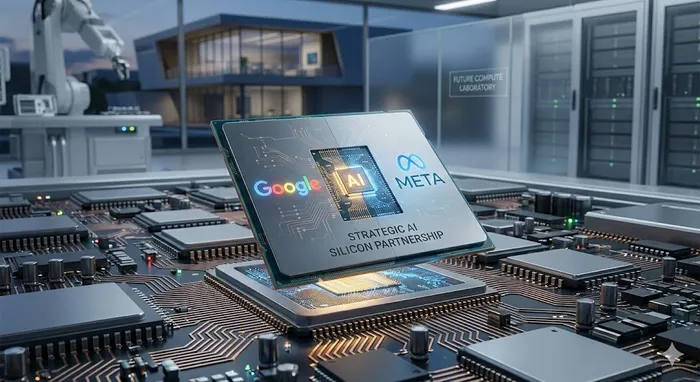
According to a recent Reuters Business report, Meta signs multi-billion-dollar deal to rent GooglePIXEL-- AI chips. The agreement centers on Google's custom Tensor Processing Units (TPUs), which Meta will use to power large-scale AI training and inference workloads.
This is not a fixed "$10 billion" transaction as some headlines suggest, but rather a multi-billion-dollar, multi-year infrastructure commitment. And in today's AI arms race, that distinction matters less than the strategic direction it signals: Big Tech is aggressively securing compute capacity wherever it can find performance and leverage.
Why Meta Needs Google's AI Chips
Meta's AI ambitions are enormous. From large language models to AI-driven advertising optimization and recommendation systems, computer demand continues to surge. Renting Google's TPUs allows Meta to expand capacity without relying exclusively on Nvidia hardware.
Diversification reduces supply bottlenecks and strengthens Meta negotiating power in future chip procurement discussions. Investors generally view long-term compute agreements positively because they reduce operational risk and support predictable scaling. If Meta continues improving AI monetization across ads and engagement products, this deal strengthens its long-term growth narrative rather than diluting it.
Alphabet's Opportunity: Monetizing Proprietary Silicon
For Alphabet, this agreement represents something equally strategic. Google originally designed TPUs for internal AI workloads, but renting them to Meta transforms proprietary hardware into an external revenue stream. That will further encroach on Nvidia's Turf.
That move strengthens Google Cloud's AI positioning at a time when infrastructure differentiation matters more than ever. If Alphabet successfully commercializes its silicon beyond internal usage, investors may increasingly view it not only as an advertising and search leader but also as a vertically integrated AI infrastructure provider. That narrative shift can influence valuation frameworks over time.
What About Nvidia?
Any major AI chip deal immediately raises the Nvidia question. Nvidia remains the dominant force in AI accelerators, with industry estimates widely cited in financial media and summarized on Wikipedia indicating it controls the vast majority of high-end AI training GPU share.
This Google–Meta agreement does not remove Nvidia from the AI stack. Nvidia's CUDA software ecosystem, performance leadership, and manufacturing scale remain powerful advantages. However, the deal reinforces a broader industry trend: hyperscalers are increasingly adopting multi-vendor strategies. As credible alternatives like Google TPUs gain traction, Nvidia may eventually face incremental pricing pressure. The shift is evolutionary, not disruptive — at least for now.
A Structural Trend: The Diversification of AI Compute
This partnership highlights a deeper transformation underway in the AI ecosystem. AI model sizes continue to grow, inference demand is expanding globally, and data center capital expenditures remain elevated. The global data center market size was valued at USD 269.79 billion in 2025 and is projected to grow from USD 300.64 billion in 2026.Instead of relying on a single supplier, technology giants are building diversified chip stacks that may include Nvidia GPUs, Google TPUs, AMD accelerators, and internally designed silicon.
Such diversification improves resilience and bargaining power while accelerating innovation. Over time, this dynamic could lower compute costs and expand total AI adoption rather than merely redistributing market share among chipmakers.
Cooperation in Infrastructure, Competition in Products
Although Google and Meta are collaborating on infrastructure, they remain fierce competitors in digital advertising, AI consumer tools, and broader platform ecosystems. Their cooperation exists at the hardware layer, where capital intensity is extreme and shared economics can make sense. At the application layer, competition remains intense.
In modern technology markets, collaboration and rivalry increasingly coexist.
Conclusion
The multi-billion-dollar agreement for Meta to rent Google AI chips reflects a structural evolution in the AI arms race. For Meta, it strengthens computer security and long-term scaling capacity. For Alphabet, it validates TPUs as commercially viable infrastructure beyond internal use. For Nvidia, it signals growing competitive alternatives while leaving near-term dominance intact.
More broadly, this deal underscores that the future of AI will not be determined solely by model sophistication, but by access to scalable, diversified, and cost-efficient compute power. The battle for AI leadership is increasingly being fought at the chip level — and partnerships like this are shaping the terrain.

Tianhao Xu is currently a financial content editor, focusing on fintech and market analysis. Previously, he worked as a full-time forex trader for several years, specializing in global currency trading and risk management. He holds a master’s degree in Financial Analysis.
Latest Articles
Stay ahead of the market.
Get curated U.S. market news, insights and key dates delivered to your inbox.
AInvest
PRO
AInvest
PRO



Comments
No comments yet