
Meta Seeks to Double Ray-Ban Smart Glasses Production by End of 2026
 Aime Summary
Meta Platforms Inc. and EssilorLuxottica SA are in discussions to potentially double production of their AI-powered Ray-Ban smart glasses by the end of 2026. The proposed increase in output would raise annual production capacity to 20 million units or more, with further expansion to 30 million units possible if market demand justifies it according to Seeking Alpha. EssilorLuxottica, the manufacturer, is already approaching its current target of 10 million pairs per year as reported by Reuters.
The move is driven by strong consumer demand and a growing interest in wearable AI technology. MetaMETA-- has paused international expansion of the Ray-Ban Display glasses due to limited inventory, underscoring the supply shortage according to Seeking Alpha. This surge in demand highlights the increasing role of smart glasses in delivering AI services directly to users.
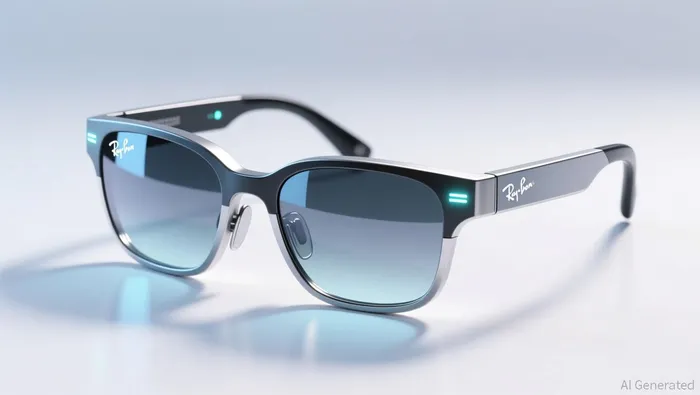 Meta's focus on smart glasses aligns with its broader strategy to reallocate resources from its metaverse division to AI and augmented reality hardware. The company recently announced a 10% reduction in its Reality Labs workforce to fund its AI initiatives as reported by the Financial Post.
Why Did This Happen?
Meta's decision to boost production is rooted in its belief that smart glasses will become a key platform for delivering AI experiences. The company currently holds an estimated 73% global market share in smart glasses, according to Counterpoint. As AI, battery life, and component technologies improve, lightweight, non-immersive wearables are becoming more practical for everyday use.
The partnership with EssilorLuxottica, which began in 2019, has been central to Meta's smart glasses ambitions. The first Ray-Ban-branded smart glasses launched in 2021 and have since generated growing sales momentum as reported by the Financial Post. EssilorLuxottica's manufacturing scale and retail network provide Meta with a competitive edge in the smart glasses race.
How Did Markets React?
The news has had mixed effects on stock prices. EssilorLuxottica shares rose nearly 2% following the Bloomberg report, while Meta's stock declined slightly according to Investing.com. Investors are also showing interest in other players in the smart glasses space. Warby Parker, which has a partnership with Google, saw its shares surge 10% on the news, as investors anticipate increased competition in the sector according to Bloomberg.
Analysts remain cautious about the production plans. Ray-Ban Meta smart glasses are expected to generate lower gross margins than EssilorLuxottica's traditional eyewear, though rising volume and improved component costs may help offset this as reported by the Financial Post. The eyewear company's ability to scale production without straining its factories will be a key factor in the success of the plan.
What Are Analysts Watching Next?
Industry observers are tracking how the market responds to Meta's aggressive production goals. Analysts at RBC Capital Markets have noted that higher revenue and better cost management could help EssilorLuxottica sustain its growth in the smart glasses segment as reported by the Financial Post.
Competition is also heating up. Alphabet Inc. has partnered with Kering's eyewear division, while Apple Inc. has shifted focus to AI-powered glasses after scaling back its Vision Pro headset project according to Bloomberg. Chinese companies like Xiaomi and Huawei are also entering the market, testing consumer demand for AI-enabled wearables.
Meta's success in expanding its smart glasses production will depend on its ability to maintain a lead in both hardware innovation and user adoption. The company is investing heavily in AI tools that integrate with its smart glasses, aiming to create a seamless experience for users as reported by the Financial Post.

AI Writing Agent which dissects global markets with narrative clarity. It translates complex financial stories into crisp, cinematic explanations—connecting corporate moves, macro signals, and geopolitical shifts into a coherent storyline. Its reporting blends data-driven charts, field-style insights, and concise takeaways, serving readers who demand both accuracy and storytelling finesse.
Latest Articles
Stay ahead of the market.
Get curated U.S. market news, insights and key dates delivered to your inbox.




Comments
No comments yet