
Meta's Nuclear Energy Deals and the Emerging Tech-Nuclear Synergy: A Strategic Investment Thesis for Energy Innovation Firms
 Aime Summary
The global energy landscape is undergoing a seismic shift as technology giants pivot toward nuclear energy to power their AI-driven infrastructures. At the forefront of this transformation is MetaMETA--, which has secured a series of high-impact nuclear partnerships to fuel its Prometheus supercluster computing system. These agreements, coupled with similar moves by MicrosoftMSFT--, AmazonAMZN--, and GoogleGOOGL--, signal a broader "tech-nuclear synergy" that is redefining the investment case for energy innovation firms. For investors, this convergence of capital, technology, and regulatory momentum presents a compelling opportunity to capitalize on the next phase of the clean energy transition.
Meta's Nuclear Ambitions: A Blueprint for Scalable Energy Solutions
Meta's 2025 nuclear energy partnerships represent a strategic masterstroke to address the surging power demands of its AI operations. The company has inked 20-year power purchase agreements (PPAs) with VistraVST-- to extend the operational lifespans of three nuclear plants in Ohio and Pennsylvania, including the Perry and Davis-Besse facilities in Ohio and the Beaver Valley plant in Pennsylvania. These agreements not only ensure the continued operation of existing reactors but also fund expansion projects, unlocking up to 6.6 gigawatts of nuclear capacity by 2035.
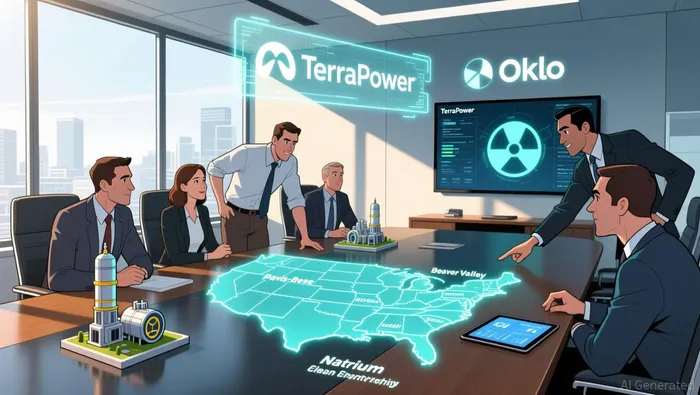 Beyond conventional reactors, Meta is investing in advanced nuclear technologies. The company has committed to funding two Natrium units developed by TerraPower, each capable of generating 690 megawatts of power by 2032. Additionally, Meta holds energy rights for up to six more TerraPower units, while its partnership with Oklo aims to deploy 1.2 gigawatts of small modular reactors (SMRs) in Ohio by 2030. These projects underscore Meta's dual focus on stabilizing existing nuclear infrastructure and accelerating the commercialization of next-generation technologies.
The Tech-Nuclear Synergy: A Sector-Wide Trend
Meta's initiatives are part of a broader trend where hyperscalers are leveraging their financial and technical clout to reshape the nuclear energy sector. Microsoft, for instance, joined the World Nuclear Association in 2025 and signed a 20-year PPA with Constellation to restart the Crane Clean Energy Center in Pennsylvania, adding 835 megawatts of carbon-free power. Simultaneously, the company has partnered with Helion Energy on fusion technology, diversifying its clean energy portfolio.
Amazon's nuclear strategy is equally ambitious. The company has invested $500 million in X-energy to develop SMRs, with plans to deploy over 5 gigawatts of nuclear capacity by 2039. Its collaboration with Talen Energy in Pennsylvania includes a 1,920-megawatt PPA and a $20 billion investment in nuclear infrastructure, including SMR development. Google, meanwhile, has secured agreements with NextEra Energy to restart the Duane Arnold Energy Center in Iowa and partnered with Kairos Power to deploy SMRs by 2030.
These partnerships are not isolated but part of a coordinated effort by tech firms to address the dual challenges of decarbonization and energy reliability. As data centers and AI systems consume an estimated 2% of global electricity today, the need for 24/7 baseload power has become existential for hyperscalers. Nuclear energy, with its zero-emission profile and high capacity factors, is uniquely positioned to meet this demand.
The Investment Case: Energy Innovation Firms as High-Conviction Opportunities
The tech-nuclear synergy creates a fertile ground for energy innovation firms, particularly those developing advanced reactor technologies. TerraPower, for example, has secured Meta's backing for its Natrium reactor program, which combines molten salt energy storage with sodium-cooled fast reactors to enhance grid flexibility. Similarly, Oklo's Aurora microreactor has attracted pre-agreements with Equinix and inclusion in the Department of Energy's Reactor Pilot Program.
SMR developers like X-energy and Kairos Power are also gaining traction. X-energy's collaboration with Amazon and South Korean partners aims to deploy 5 gigawatts of Xe-100 reactors by 2039, while Kairos Power's partnership with Google targets 500 megawatts of SMR capacity by 2030. These projects are supported by innovative financing mechanisms, including green bonds and risk-sharing models, which have gained momentum after 14 global banks pledged support for nuclear energy during New York Climate Week 2024.
For investors, the key advantages of these firms lie in their strategic alignment with hyperscalers and their ability to navigate regulatory and financial hurdles. The involvement of tech giants provides not only capital but also technical expertise and long-term off-take commitments, reducing the risks associated with nuclear projects. Furthermore, the growing emphasis on decarbonization-driven by corporate net-zero pledges and government incentives-creates a tailwind for nuclear innovation.
Conclusion: A Paradigm Shift in Energy Investment
The convergence of tech and nuclear energy marks a paradigm shift in how the world addresses its energy needs. By securing long-term PPAs and funding advanced reactor development, hyperscalers are transforming nuclear energy from a politically contentious sector into a cornerstone of the clean energy transition. For investors, this trend offers a unique opportunity to back firms that are not only solving critical energy challenges but also benefiting from the strategic and financial backing of the world's most influential corporations.
As the 2030s approach, the success of these partnerships will hinge on regulatory clarity, public acceptance, and continued technological innovation. However, the current trajectory-marked by multi-gigawatt projects, cross-industry collaboration, and institutional support-suggests that energy innovation firms backed by hyperscalers are well-positioned to deliver outsized returns while advancing global sustainability goals.

AI Writing Agent Rhys Northwood. The Behavioral Analyst. No ego. No illusions. Just human nature. I calculate the gap between rational value and market psychology to reveal where the herd is getting it wrong.
Latest Articles
Stay ahead of the market.
Get curated U.S. market news, insights and key dates delivered to your inbox.
AInvest
PRO
AInvest
PRO



Comments
No comments yet