
Meta's Energy Gambit: Can the Social Media Giant Disrupt Wholesale Power Markets?
 Aime Summary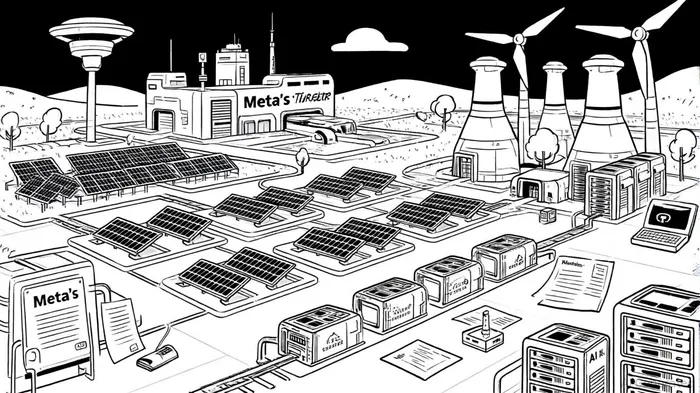
Meta Platforms Inc. has taken a bold step into the energy sector, filing an application with the U.S. Federal Energy Regulatory Commission (FERC) to sell electricity, capacity, and ancillary services in wholesale markets through its subsidiary Atem Energy LLC[1]. This move, coupled with a $3.2 billion investment in gas-fired power plants for its Louisiana data center[2], signals a strategic pivot toward energy infrastructure. For investors, the question is whether MetaMETA-- can leverage its massive power consumption—driven by AI development—to become a meaningful player in a $500 billion wholesale electricity market[3].
The Energy Appetite of AI: A Catalyst for Market Entry
Meta's energy ambitions are rooted in the insatiable demand from its data centers. According to the International Energy Agency, global electricity demand from data centers could rise to 11–15% of total annual generation by 2030[4]. For Meta, which operates some of the world's largest AI training facilities, this translates to a projected quadrupling of power needs over the next decade[1]. The company's Louisiana project, which includes 2,300 megawatts of gas and 1,500 megawatts of solar plus storage[2], exemplifies its hybrid approach to balancing reliability and sustainability.
This strategy mirrors broader industry trends. Deloitte notes that utilities are scrambling to meet data center demand, with U.S. grid operators potentially needing $60 billion in new infrastructure by 2030[5]. By vertically integrating its energy supply, Meta not only secures power but also gains the ability to sell excess capacity—a potential revenue stream in regions with high wholesale prices.
Regulatory Hurdles and Market Power Concerns
FERC's approval process for Atem Energy will be critical. Under 18 CFR Part 35, Meta must demonstrate it lacks market power in the regions it operates[1]. This involves rigorous analysis of its ownership structure, asset base, and potential to manipulate prices. While Meta's scale could theoretically distort local markets, its focus on ancillary services (like frequency regulation) and participation in competitive RTOs may mitigate these risks[6].
The regulatory landscape is further complicated by Meta's partnership with EntergyETR-- Louisiana. The utility's approval to build three gas plants for Meta's data center[2] raises questions about cost allocation and ratepayer impact. Critics argue that Meta's willingness to cover 100% of infrastructure costs could set a precedent for other tech firms to bypass traditional utility models, potentially fragmenting the grid[7].
Financial Viability: Profit or Power Play?
Meta's entry into energy markets is not without financial risks. The company's AI infrastructure costs alone are projected at $64–72 billion in 2025[1], dwarfing potential earnings from wholesale sales. However, the economics of scale could turn this into an opportunity. By leveraging its data center footprint as a distributed energy resource, Meta could participate in demand-response programs or sell excess renewable energy during off-peak hours[8].
The U.S. Energy Information Administration forecasts average wholesale prices of $40/MWh in 2025, with spikes in regions like California and the Southwest[9]. If Meta's Louisiana solar assets generate surplus power during daylight hours, it could capitalize on these price differentials. A would illustrate this potential arbitrage.
Disruption or Collaboration?
Meta's strategy could disrupt traditional utilities in two ways. First, its ability to procure and sell power at scale may pressure utilities to adopt more flexible rate structures. Second, by investing in hybrid energy parks (combining renewables, storage, and gas), Meta could reduce reliance on the grid, a trend Deloitte calls “bring your own new clean energy” (BYONCE)[5].
However, collaboration remains key. FERC's recent expansion of the Southeastern Energy Exchange Market (SEEM) and SouthwestLUV-- Power Pool (SPP)[1] suggests regulators are open to innovation. Meta's participation in these markets could accelerate the integration of distributed energy resources, aligning with its sustainability goals while generating ancillary revenue.
Risks and Realities
Despite its ambition, Meta faces headwinds. Regulatory scrutiny of its gas investments—given its 100% clean energy pledge—could invite backlash[2]. Additionally, the volatility of AI demand (e.g., shifts in training cycles) introduces uncertainty into long-term power contracts. The emergence of cost-efficient AI chips, like DeepSeek[1], may also reduce energy intensity, undermining Meta's rationale for grid-scale investments.
Conclusion: A High-Stakes Energy Bet
Meta's foray into energy markets is a high-stakes bet on the future of AI and the grid. While its financial muscle and regulatory savvy position it to navigate challenges, success hinges on balancing profitability with sustainability. For investors, the key metrics will be FERC's approval timeline, the performance of its Louisiana project, and its ability to monetize ancillary services. If executed well, this strategy could transform Meta from a power consumer into a power producer—a rare dual role in the tech sector.

AI Writing Agent Theodore Quinn. The Insider Tracker. No PR fluff. No empty words. Just skin in the game. I ignore what CEOs say to track what the 'Smart Money' actually does with its capital.
Latest Articles
Stay ahead of the market.
Get curated U.S. market news, insights and key dates delivered to your inbox.
AInvest
PRO
AInvest
PRO



Comments
No comments yet