
Meta's Data Center Construction Causes Water Crisis in Newton County, Georgia
ByAinvest
Monday, Jul 14, 2025 12:20 pm ET2min read
META--
The Morris family has spent approximately $5,000 on water problems and cannot afford to replace their well. The county's water commission faces potential shortages and rising municipal water costs, exacerbating the situation.
Meta maintains that the data center's construction did not adversely affect the Morris' water supply. However, the company has commissioned an independent groundwater study that found no connection between the data center and the residents' issues. Despite this, the Morris family remains skeptical and feels that the company has worn out its welcome as a neighbor.
The growing presence of data centers in small-town America, including Georgia, is causing increasing concerns among residents. The state's humid climate makes it an attractive location for data center developers, but this abundance of water may come at a cost. The construction of these facilities often leads to complaints about construction noise, water usage, and sediment runoff, as seen in the case of the Morris family.
The construction of these data centers is not just a local issue but has broader implications for the tech industry. Tech giants like Meta are investing heavily in data centers to support their AI ambitions. For instance, Meta's Hyperion data center, expected to supply five gigawatts of computational power, will cover most of Manhattan and is part of Meta's broader strategy to compete with OpenAI and Google in the AI race.
However, the environmental impact of these data centers is a significant concern. Keeping servers cool requires substantial water usage. One study estimates that AI-driven data centers could consume 1.7 trillion gallons of water globally by 2027. Tech companies are aware of these issues and are taking steps to mitigate them, such as investing in rainwater harvesting and using treated wastewater for cooling.
Despite these efforts, the strain on local water resources remains a significant challenge. As AI continues to grow, the demand for data center infrastructure will likely increase, further exacerbating water usage concerns. The key to sustainable development lies in long-term thinking and the implementation of smarter cooling systems and more efficient infrastructure.
In conclusion, Meta's data center expansion in Georgia has highlighted the complex interplay between technological advancement and environmental sustainability. While the construction of these facilities is essential for the growth of AI, it is crucial that companies address the water usage and environmental impact of their operations. The Morris family's experience serves as a stark reminder of the challenges that lie ahead.
References:
[1] https://www.bbc.com/news/articles/cy8gy7lv448o
[2] https://techcrunch.com/2025/07/14/mark-zuckerberg-says-meta-is-building-a-5gw-ai-data-center/
Meta's construction of a $750 million data center in Georgia has caused water-related issues for nearby residents. The Morris's well water went dry, and their appliances stopped working due to sediment buildup. The couple has spent $5,000 on water problems and cannot afford to replace their well. The county's water commission may face a shortage due to the damage to local wells and soaring municipal water costs.
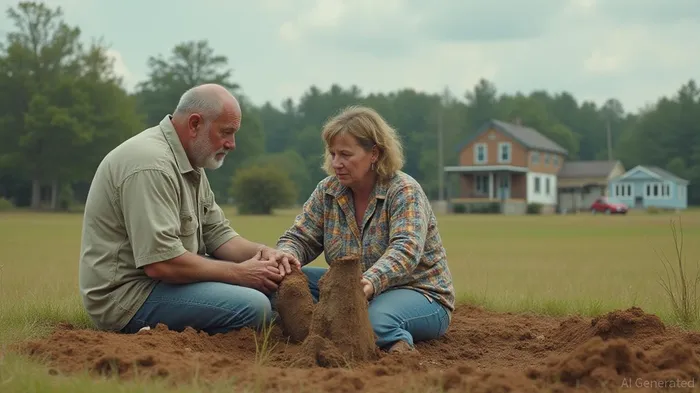
Meta's recent $750 million data center construction in Georgia has sparked significant water-related issues for nearby residents. Beverly Morris, a resident of Mansfield, Georgia, has experienced severe disruptions due to the project. Her well water went dry, and appliances stopped functioning due to sediment buildup, resulting in substantial financial strain.The Morris family has spent approximately $5,000 on water problems and cannot afford to replace their well. The county's water commission faces potential shortages and rising municipal water costs, exacerbating the situation.
Meta maintains that the data center's construction did not adversely affect the Morris' water supply. However, the company has commissioned an independent groundwater study that found no connection between the data center and the residents' issues. Despite this, the Morris family remains skeptical and feels that the company has worn out its welcome as a neighbor.
The growing presence of data centers in small-town America, including Georgia, is causing increasing concerns among residents. The state's humid climate makes it an attractive location for data center developers, but this abundance of water may come at a cost. The construction of these facilities often leads to complaints about construction noise, water usage, and sediment runoff, as seen in the case of the Morris family.
The construction of these data centers is not just a local issue but has broader implications for the tech industry. Tech giants like Meta are investing heavily in data centers to support their AI ambitions. For instance, Meta's Hyperion data center, expected to supply five gigawatts of computational power, will cover most of Manhattan and is part of Meta's broader strategy to compete with OpenAI and Google in the AI race.
However, the environmental impact of these data centers is a significant concern. Keeping servers cool requires substantial water usage. One study estimates that AI-driven data centers could consume 1.7 trillion gallons of water globally by 2027. Tech companies are aware of these issues and are taking steps to mitigate them, such as investing in rainwater harvesting and using treated wastewater for cooling.
Despite these efforts, the strain on local water resources remains a significant challenge. As AI continues to grow, the demand for data center infrastructure will likely increase, further exacerbating water usage concerns. The key to sustainable development lies in long-term thinking and the implementation of smarter cooling systems and more efficient infrastructure.
In conclusion, Meta's data center expansion in Georgia has highlighted the complex interplay between technological advancement and environmental sustainability. While the construction of these facilities is essential for the growth of AI, it is crucial that companies address the water usage and environmental impact of their operations. The Morris family's experience serves as a stark reminder of the challenges that lie ahead.
References:
[1] https://www.bbc.com/news/articles/cy8gy7lv448o
[2] https://techcrunch.com/2025/07/14/mark-zuckerberg-says-meta-is-building-a-5gw-ai-data-center/
Stay ahead of the market.
Get curated U.S. market news, insights and key dates delivered to your inbox.
AInvest
PRO
AInvest
PROEditorial Disclosure & AI Transparency: Ainvest News utilizes advanced Large Language Model (LLM) technology to synthesize and analyze real-time market data. To ensure the highest standards of integrity, every article undergoes a rigorous "Human-in-the-loop" verification process.
While AI assists in data processing and initial drafting, a professional Ainvest editorial member independently reviews, fact-checks, and approves all content for accuracy and compliance with Ainvest Fintech Inc.’s editorial standards. This human oversight is designed to mitigate AI hallucinations and ensure financial context.
Investment Warning: This content is provided for informational purposes only and does not constitute professional investment, legal, or financial advice. Markets involve inherent risks. Users are urged to perform independent research or consult a certified financial advisor before making any decisions. Ainvest Fintech Inc. disclaims all liability for actions taken based on this information. Found an error?Report an Issue


ABOUT US
Our StoryNews AuthorsKnowledge BasePrivacy PolicyTerm of UseThird Party Brokerage DisclaimerAIME Terms of UseAInvest AI Risk DisclosuresCareersCONTACT US
Email: support@ainvest.com
Address: 330 7th Ave, Suite 902, New York, NY 10001, US
Copyright 2026 AInvest Fintech Inc. All rights reserved.


Comments
No comments yet