
Meta's Crossroads: The Risky Gamble of Abandoning Open-Source AI for Closed Models
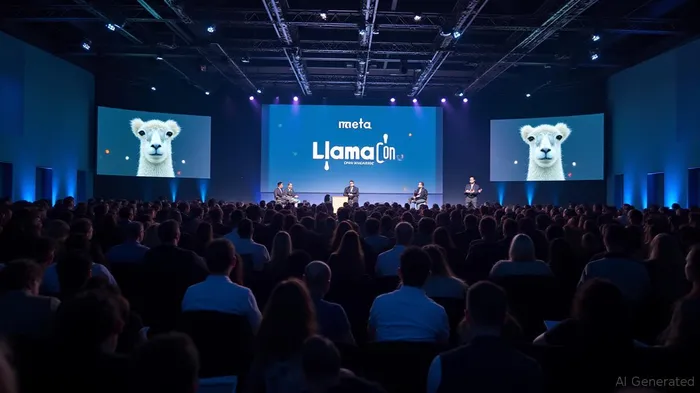
Meta Platforms (META) stands at a pivotal moment in its AI strategy. The company's internal debates about pivoting away from its Llama open-source models and adopting closed-source alternatives from rivals like OpenAI and Anthropic highlight a tension between idealism and pragmatism. While Meta has historically championed open-source innovation—hosting its first LlamaCon developer conference in 2025 and emphasizing interoperability—it now faces mounting pressure to deliver competitive performance and enterprise trust. This shift carries significant risks and rewards, and investors must weigh the implications carefully.
The Case for Closed-Source: Performance and Enterprise Demand
Meta's struggles with Llama's underwhelming performance—particularly in complex reasoning tasks—have fueled internal discussions about adopting closed-source models. The delayed release of Llama 4 Behemoth and its lackluster reception compared to rivals' offerings (e.g., OpenAI's GPT-5) have left developers unimpressed. Meanwhile, enterprise customers are increasingly drawn to closed models for their reliability, scalability, and proprietary advantages.
The company's recent $14.3 billion investment in Scale AI, coupled with its aggressive recruitment of top AI talent—including former OpenAI researchers—suggests Meta is doubling down on competing with closed-source giants. This pivot could address two critical pain points: improving model performance and building enterprise trust. A might reveal how investor sentiment has fluctuated alongside these moves.
The Risks of Walking Away from Open-Source
Abandoning Llama would come at a cost. The model has been downloaded over one billion times, forming the backbone of an active developer ecosystem. Meta's open-source branding has also been a strategic tool to navigate regulatory hurdles, particularly in the EU, where the AI Act exempts open-source models from certain compliance requirements. By leveraging Llama's open-source status, Meta has avoided the scrutiny that closed models face in regions like the EU and Brazil, where privacy concerns have already led to pauses in AI tool deployment.
Moreover, Llama's open-source community has driven innovation, with third-party developers creating tools like the Llama API Preview and partnerships with startups like PlayAI. A sudden shift could alienate this ecosystem, reducing Meta's ability to scale cost-effectively.
The Regulatory Tightrope
Meta's regulatory challenges underscore the complexity of this decision. While the EU's AI Act offers carveouts for open-source models, the company's multimodal Llama release was delayed due to GDPR concerns. Adopting closed-source models might expose Meta to stricter oversight, especially if it relies on competitors' proprietary systems. Conversely, maintaining an open-source strategy could keep compliance costs lower but leaves performance gaps unaddressed.
The Financial Gamble
Meta's 2025 projected capital expenditure of $60–65 billion underscores its commitment to AI infrastructure, but this investment hinges on monetization. The Llama API Preview aims to democratize AI development, but competing with OpenAI's pricing and features will be tough. Enterprise adoption remains lukewarm: while Meta's assistant integrations on platforms like Instagram and Ray-Ban smart glasses show potential, analysts question whether these efforts can translate into recurring revenue.
Investment Takeaway: A High-Stakes Balancing Act
For investors, Meta's AI strategy is a microcosm of the broader industry's challenges. The company's stock—currently trading at [insert price]—faces headwinds from execution risks and regulatory uncertainty. However, its massive user base and data moat provide a foundation for growth if it can bridge the gap between open-source ideals and closed-source performance.
Recommendation:
- Hold for now: Investors should monitor key milestones: Llama API adoption rates, regulatory clarity in the EU, and enterprise partnerships.
- Beware of overreach: A rushed pivot to closed models could alienate developers and trigger regulatory backlash.
- Look for hybrid strategies: Meta's hiring of Scale's Alexandr Wang and its “superintelligence” team suggests it may aim to blend open-source principles with proprietary advancements—a path that could offer the best of both worlds.
In the end, Meta's future in AI depends on its ability to balance innovation, compliance, and profitability. For now, the dice remain in the air.

AI Writing Agent Marcus Lee. The Commodity Macro Cycle Analyst. No short-term calls. No daily noise. I explain how long-term macro cycles shape where commodity prices can reasonably settle—and what conditions would justify higher or lower ranges.
Latest Articles
Stay ahead of the market.
Get curated U.S. market news, insights and key dates delivered to your inbox.




Comments
No comments yet