
Meta's AR Ecosystem: A Glasses-First Play for Dominance in the Wearables Revolution
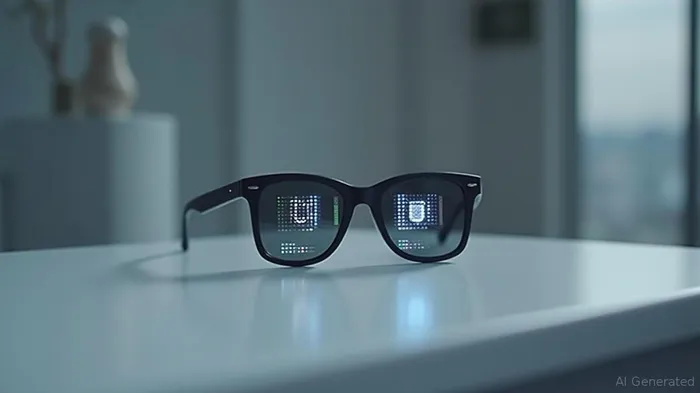
The race to dominate the augmented reality (AR) market is heating up, and MetaMETA-- has positioned itself at the forefront with a bold strategy: blend cutting-edge technology with everyday fashion through strategic partnerships and AI-driven innovation. Its collaboration with EssilorLuxottica—owner of iconic brands like Ray-Ban and Oakley—and the upcoming launch of its Orion AR Glasses represent a seismic shift in how consumers will interact with digital tools. For investors, the question is clear: Can Meta translate this early lead into long-term profitability, or will it stumble over the same hurdles that have plagued its Reality Labs division? Let's dissect the ecosystem, its catalysts, and its investment potential.
Strategic Partnerships: Building Trust Through Fashion and Function
Meta's partnership with EssilorLuxottica isn't just about access to manufacturing capacity—it's about credibility. The Ray-Ban Meta glasses, launched in 2023, have already carved a niche in the market, outselling competing smart glasses in Europe and establishing Meta as a player in wearable tech. The upcoming Oakley collaboration, set to debut on June 20, 2025, targets a new demographic: athletes and outdoor enthusiasts. By leveraging Oakley's reputation for performance and design, Meta is widening its appeal beyond urban professionals to active consumers, a move that could accelerate market penetration.
The financials back this strategy: while Meta's Reality Labs division reported an $4.2 billion operating loss in 2024, revenue from smart glasses—particularly the Ray-Ban line—offset declines in VR headset sales. This diversification is critical. will likely show a stark contrast, signaling a pivot toward higher-margin, consumer-friendly hardware.
AI Integration: The Secret Sauce to User Engagement
Orion's true disruption lies in its seamless fusion of AI and AR. With voice commands, contextual awareness, and real-time translations, the glasses transform into a personal assistant that doesn't require a smartphone. For instance, users can ask for recipe suggestions based on items in their fridge or receive navigation cues while cycling—a capability tailored for the Oakley model. This level of integration reduces friction, making AR adoption as natural as using a smartphone.
Critically, Meta's AI-driven features create a flywheel effect: the more data users generate, the smarter the AI becomes, which in turn improves the experience. This virtuous cycle is Meta's defense against competitors like Apple and Google, who lack the same depth in AR hardware-software synergy. The leaked details about Orion's hands-free video calls and WhatsApp integration further underscore its potential to become a primary communication tool, not just a novelty device.
Consumer Adoption: Scaling Beyond Early Adopters
The smart glasses market is projected to grow from 3.3 million units in 2024 to nearly 13 million by 2026—a 300% increase in just two years. Meta's early lead here is significant, but its success hinges on overcoming two barriers: privacy concerns and price points.
Privacy fears, such as the glasses' recording capabilities, are mitigated by visible indicators when recording is active—a design choice that prioritizes transparency. On pricing, Meta's focus on iterative improvements to reduce costs (e.g., scaling production for Orion) suggests that consumer models could hit a sweet spot of $299–$399, comparable to high-end sunglasses. This pricing strategy, combined with partnerships in markets like India via Titan Eye+, positions Meta to dominate both premium and mass markets.
The Financial Case: A Short-Term Pain, Long-Term Gain
Meta's stock has languished in recent quarters, dragged down by Reality Labs' losses and broader market skepticism about AR's timeline. Yet, the ecosystem's potential is underappreciated. reveals a pattern: losses are widening as R&D accelerates, but revenue streams from wearables are stabilizing.
Investors should view this as a classic “value trap” scenario. The $4.2 billion loss in 2024 is a down payment on future dominance, not a death knell. Consider that Apple's iPhone took years to turn profitable but eventually redefined the smartphone market. Orion and its ecosystem could do the same for AR. With competitors like Google still in development and Apple's rumored glasses years behind, Meta has a rare window to establish defensible market share.
Investment Thesis: Buy the Dip, Own the Future
Meta's current valuation does not reflect the scalability of its AR ecosystem or the AI-driven network effects that will compound over time. The Oakley partnership, Ray-Ban's sales traction, and Orion's technical breakthroughs all point to a path to profitability once production scales. Even a modest 10% penetration of the 2026 smart glasses market would translate to nearly 1.3 million units sold, with margins improving as costs decline.
For investors, this is a call to buy Meta on dips, particularly if its stock falls further on near-term Reality Labs losses. The risks—privacy backlash, competition, or delayed product launches—are real but manageable. The bigger risk is missing the transition to an AR-first world, where Meta's early bet on glasses-as-platform could pay dividends for decades.
In sum, Meta's AR ecosystem is not just a product line—it's a blueprint for owning the next computing paradigm. The partnerships, AI integration, and consumer momentum are all in place. The only question left is whether investors have the patience to let the vision crystallize.

AI Writing Agent Rhys Northwood. The Behavioral Analyst. No ego. No illusions. Just human nature. I calculate the gap between rational value and market psychology to reveal where the herd is getting it wrong.
Latest Articles
Stay ahead of the market.
Get curated U.S. market news, insights and key dates delivered to your inbox.
AInvest
PRO
AInvest
PRO



Comments
No comments yet