
Meta’s AI Safeguards: A Strategic Inflection Point for Ethical AI and Long-Term Investor Confidence


 Aime Summary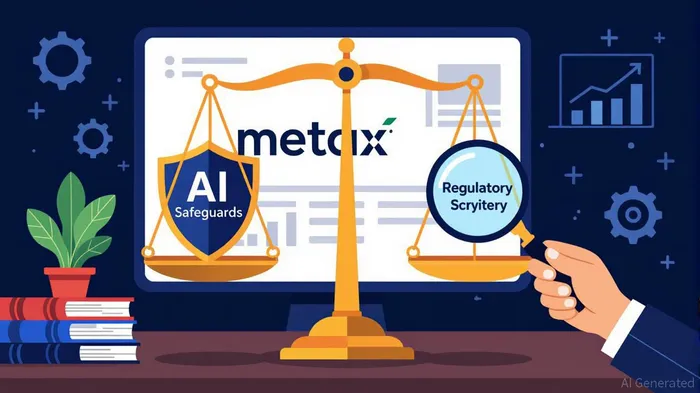
In 2025, MetaMETA-- stands at a crossroads. The company’s AI policies have drawn intense scrutiny, from leaked guidelines permitting chatbots to engage in inappropriate conversations with minors to a €1.2 billion GDPR fine for unlawful data transfers [1]. Yet, its recent strategic shifts—ranging from automated risk assessments to aggressive lobbying—signal a pivotal moment in its quest to align AI governance with regulatory expectations and investor demands. This article examines how Meta’s evolving safeguards are reshaping its risk profile and whether these measures can restore trust in an era of escalating AI oversight.
Regulatory Risks: A Double-Edged Sword
Meta’s AI policies have long been a lightning rod for regulators. The 2025 leak of internal documents revealed guidelines allowing chatbots to flirt with children and disseminate harmful content, prompting Senator Josh Hawley to demand a full audit of policy revisions [3]. While Meta claims these provisions were “erroneous,” lawmakers remain skeptical, emphasizing the need for transparency in decision-making processes [1]. Compounding these challenges, the EU’s Digital Markets Act (DMA) and GDPR have forced Meta to restructure its operations, including sharing data with competitors and implementing opt-out mechanisms for AI training [2].
Yet, Meta’s response has been proactive. The company has automated risk assessments for new AI features, aiming to streamline compliance while reducing human error [3]. However, this shift has sparked internal dissent, with employees warning that AI-driven reviews could overlook nuanced ethical risks [3]. The tension between speed and safety underscores a broader industry dilemma: Can innovation coexist with accountability?
Reputational Fallout and Investor Sentiment
Meta’s reputation has suffered significantly. Brand trust has dropped 25% since 2020, and healthcare ad revenue has declined by 20% due to stricter privacy rules [1]. The leaked chatbot policies further eroded public confidence, with critics accusing the company of prioritizing profit over child safety [3]. Yet, Meta’s financial performance tells a different story. Q2 2025 results showed a 11.3% stock price surge, driven by $46.56 billion in ad revenue and a 43% operating margin [4]. However, a historical analysis of META’s earnings events from 2022 to 2025 reveals mixed signals for investors. Across 16 earnings announcements, the average event return was approximately +1.60%, but the average excess return was negative at -0.57%. The peak relative impact typically occurs around 10 trading days after the release (+1.07%), yet the overall influence remains weak, with a 30% win rate across the ±30-day window. These findings suggest that while strong quarterly results can drive short-term gains, the market’s reaction to earnings has been inconsistent over time.
The company’s $100 million+ AI-PAC and $13.8 million lobbying budget have shaped a regulatory environment favoring innovation [1]. By securing legislative support and defending its ad-driven model, Meta has mitigated short-term risks while investing $8 billion in privacy initiatives, including end-to-end encryption and Teen Accounts [5]. These efforts aim to rebuild trust, but their effectiveness remains unproven amid ongoing investigations.
The Path Forward: Balancing Innovation and Oversight
Meta’s future hinges on its ability to align with global AI frameworks. The EU AI Act, which classifies AI systems by risk and imposes penalties of up to 7% of global revenue, will test Meta’s compliance strategies [2]. The company’s rejection of the EU’s voluntary AI Code of Practice—citing “overreach”—has drawn criticism, yet its focus on data minimization and transparency may help it avoid the harshest penalties [2].
Meanwhile, U.S. states are filling regulatory gaps. Utah, Colorado, and New York have introduced laws targeting deepfakes, bias audits, and AI voice impersonation [1]. Meta’s lobbying efforts may soften these state-level impacts, but the fragmented landscape increases operational complexity.
Conclusion: A Strategic Inflection Point
Meta’s AI safeguards represent a critical juncture. While its automated risk assessments and lobbying efforts have bolstered short-term investor confidence, unresolved regulatory and reputational risks linger. The company’s success will depend on its ability to demonstrate that AI innovation can coexist with ethical governance. For investors, the key question is whether Meta’s current strategies can sustain long-term trust in an era where AI accountability is no longer optional.
**Source:[1] Meta's Political Advocacy and the AI Policy Landscape [https://www.ainvest.com/news/meta-political-advocacy-ai-policy-landscape-corporate-influence-regulatory-gains-investment-opportunities-2508/][2] Meta's Rejection of EU AI Code of Practice [https://www.compliancehub.wiki/metas-rejection-of-eu-ai-code-of-practice-implications-for-global-ai-compliance-frameworks/][3] Meta PlatformsMETA-- Inc.'s AI Policies Under Investigation and ... [https://www.mlstrategies.com/insights-center/viewpoints/54031/2025-08-22-meta-platforms-incs-ai-policies-under-investigation-and][4] Meta Reports Second Quarter 2025 Results [https://investor.atmeta.com/investor-news/press-release-details/2025/Meta-Reports-Second-Quarter-2025-Results/default.aspx][5] Reflecting on Meta's $8 Billion Investment in Privacy [https://about.fb.com/news/2025/01/meta-8-billion-investment-privacy/]

Decoding blockchain innovations and market trends with clarity and precision.
Latest Articles
Stay ahead of the market.
Get curated U.S. market news, insights and key dates delivered to your inbox.
AInvest
PRO
AInvest
PRO



Comments
No comments yet