
Meta is About to Advance on "Avocada"? Zuckerberg Betting Big on the Closed-Model Future
 Aime Summary
Mark Zuckerberg is rolling up his sleeves like never before.
At Meta Platforms Inc.META--, the CEO who once built an empire on social connections is now diving deep into the trenches of artificial intelligence, steering a massive pivot toward a revenue-generating model that could redefine the company's trajectory. Codenamed Avocado, this forthcoming AI system—slated for a spring debut—represents Meta's boldest departure from its cherished open-source ethos, opting instead for a tightly controlled, pay-to-play structure. It's a move that echoes the strategies of rivals like Google and OpenAI, and it's being championed by Meta's new Chief AI Officer, Alexandr Wang, a 28-year-old prodigy fresh from a $14.3 billion deal involving his startup, Scale AI.
This shift didn't happen in a vacuum. Earlier this year, the release of Llama 4, Meta's latest open-source model, fell flat in Silicon Valley circles, leaving Zuckerberg disillusioned. He swiftly sidelined key contributors from that project and embarked on a recruiting spree, luring top AI talent with eye-watering compensation packages worth hundreds of millions. Today, Zuckerberg dedicates much of his energy to collaborating with these hires in a secretive group dubbed TBD Lab, where the focus is laser-sharp on Avocado.
The Pivot to Proprietary Power
_878740641765413365825.jpg?format=webp&width=700)
Avocado isn't just another iteration—it's a fundamental reorientation. Unlike Meta's open-source Llama series, which invited developers and researchers to tinker and innovate, Avocado is poised to launch as a "closed" model. This means MetaMETA-- can gatekeep access, monetizing it through subscriptions or licensing fees. The decision aligns with Wang's preferences; as an industry insider with deep ties from Scale AI, he's a vocal proponent of closed systems that prioritize control and commercialization over transparency.
In training Avocado, the TBD team is drawing from a eclectic mix of third-party models, including Google's Gemma, OpenAI's gpt-oss, and notably, Alibaba's Qwen—a product from the Chinese tech behemoth. This incorporation of Chinese technology marks a tonal reversal for Zuckerberg, who as recently as January voiced alarms on Joe Rogan's podcast about state-influenced censorship in such models. He's since doubled down on rallying U.S. government support for American AI dominance, framing open-source as a patriotic tool in the global race. Yet, as Nvidia CEO Jensen Huang bluntly noted this month, China has surged ahead in open-source advancements, leaving U.S. efforts scrambling to catch up.
Zuckerberg has historically analogized Meta's AI strategy to Google's Android: an open platform that fosters ecosystem growth and bolsters Meta's core products. While the company maintains some internal closed models and Zuckerberg hinted at dual approaches during July's earnings call, Avocado signals a decisive tilt toward proprietary tech. It's a pragmatic response to competitive pressures, where open-source alone hasn't delivered the edge Meta craves.
Building the Elite Arsenal
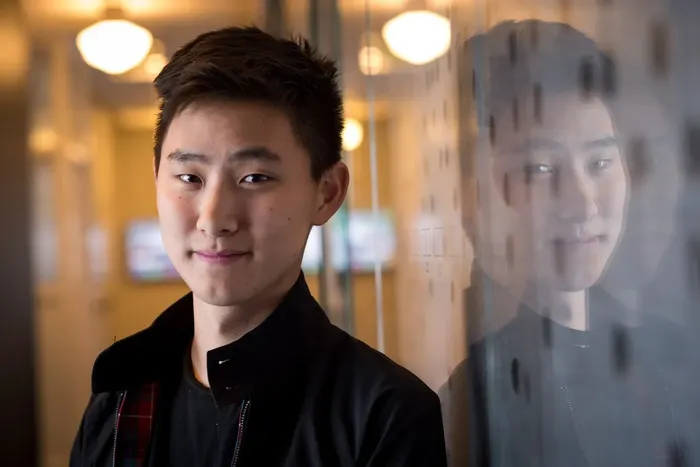
(Alexandr Wang)
AI now reigns supreme at Meta, eclipsing other initiatives and commanding the lion's share of executive bandwidth. Zuckerberg has committed a staggering $600 billion to U.S. infrastructure over the next three years, with the bulk earmarked for AI. This includes reallocating funds from virtual reality and metaverse projects—once the company's futuristic darlings—toward AI-infused hardware like smart glasses. Insiders describe these cuts as meaningful, aimed at fueling the AI surge.
The star of this buildup is Wang, whom Zuckerberg has taken under his wing in a mentorship dynamic. Wang's non-technical background hasn't hindered his impact; colleagues praise his execution speed and strategic vision, honed through Scale AI's industry networks. Yet, tensions simmer: Wang has chafed at what he perceives as Zuckerberg's micromanagement, a hallmark of the CEO's hands-on style with flagship products. To facilitate oversight, TBD Lab members are clustered around Zuckerberg's desk at Meta's Menlo Park headquarters, enabling frequent check-ins.
This talent-dense environment comes at a premium. Meta's AI investments have ballooned, positioning it as one of tech's costliest endeavors. Roughly six months in, the team operates in relative secrecy, with public outputs sparse. The pressure is palpable, amplified by Zuckerberg's ambition to forge "the most elite and talent-dense team in the industry."
Setbacks in the Shadows

Not everything has gone smoothly. Following Llama 4's underwhelming reception, an interim project codenamed Behemoth was scrapped when it failed to impress Zuckerberg. Open-source efforts have been de-emphasized; leadership instructed staff to cease public discussions on Llama and related products, prompting a strategic reevaluation.
High-profile exits underscore the turbulence. Yann LeCun, an AI pioneer and longtime advocate for open-source, departed after years leading Meta's research arm, frustrated by resource constraints. Prior to his exit, he was deliberately sidelined from public events, as Meta viewed him as misaligned with its evolving direction. In October, Meta axed 600 roles in its AI unit, hitting the academically oriented FAIR group hardest. Some fresh recruits from the Meta Superintelligence Labs (MSL) bolted within weeks.
Even product launches have stumbled. Meta fast-tracked Vibes, a video-generation tool licensed from Midjourney, to preempt OpenAI's Sora 2. While internals claim strong user engagement, Sora's debut a week later stole the spotlight, relegating Vibes to the sidelines in media coverage.
Investor Eyes on the Prize
Wall Street is watching closely. Meta's lavish AI outlays—extending into 2026—have sparked investor unease, with concerns that data centers and infrastructure bets might not yield profits for years. Zuckerberg counters that these investments already enhance advertising revenue and necessitate front-loading for competitive advantage. A Bloomberg report on metaverse cutbacks sparked a stock rally, signaling approval for fiscal discipline amid the AI frenzy.
Avocado's success hinges on more than tech—it's about persuasion. The team's north star is "superintelligence," AI surpassing human capabilities across tasks. But the term has backfired. Internal market research, conducted with consultants, revealed it evokes fears of unchecked AI power, especially in Europe, where regulators have already scrutinized Meta's offerings. In the U.S., figures like Apple co-founder Steve Wozniak and entrepreneur Richard Branson have called for halting superintelligence development until safety is assured.
The Road to Superintelligence
As Meta hurtles toward Avocado's launch, the stakes couldn't be higher. Zuckerberg's personal immersion and Wang's operational prowess offer promise, but the path is fraught with execution risks, talent churn, and regulatory headwinds. If Avocado delivers, it could catapult Meta into AI profitability, validating the pivot from open-source idealism to closed-model pragmatism. Failure, however, might amplify doubts about the company's $600 billion gamble.
In this high-wire act, Meta isn't just building a model—it's reshaping its identity in the AI arms race. Investors, rivals, and regulators will be watching every step, as Zuckerberg bets the farm on turning Avocado into the ripe fruit of Meta's ambitions.

Rodder Shi is a market analyst covering U.S. stocks and prediction markets. He holds a Master’s degree in Financial Engineering from UCLA and dual degrees from UC San Diego, with research experience at CICC and Rayliant. An IAQF quantitative research award winner, he has over six years of equity and options investing experience focused on data-driven and risk-aware market analysis.
Latest Articles
Stay ahead of the market.
Get curated U.S. market news, insights and key dates delivered to your inbox.
AInvest
PRO
AInvest
PRO



Comments
No comments yet