
Meta's $600B AI Infrastructure Push: Strategic Dominance in the AI Arms Race


 Aime Summary
The global AI arms race has entered a new phase, with MetaMETA-- (formerly Meta Platforms Inc.) emerging as a formidable contender through its unprecedented $600 billion infrastructure investment plan. This aggressive strategy, centered on building a self-sustaining ecosystem of AI superclusters, energy solutions, and proprietary systems, positions Meta to dominate the next decade of computing. By dissecting the components of this push, we uncover how Meta is not merely reacting to market demands but actively reshaping the landscape of AI infrastructure.
Capital Expenditures and the Scale of Commitment
Meta's 2025 capital expenditures for AI infrastructure are projected to range between $66 billion and $72 billion-a figure that dwarfs previous years' spending and signals a doubling of investments in data centers and servers. This escalation is driven by the company's recognition of AI as a core competitive advantage. CFO Susan Li has emphasized that the infrastructure will serve as the backbone for Meta's long-term AI ambitions, with spending expected to remain aggressive into 2026. To secure funding, Meta is leveraging partnerships with financial institutions, enabling it to co-develop large-scale data center projects while maintaining flexibility in capital allocation.
Superclusters and Energy Solutions: Powering the AI Future
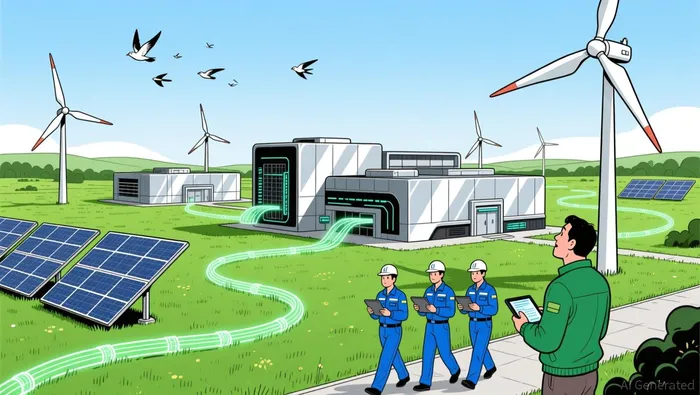
At the heart of Meta's strategy are two flagship AI superclusters: Prometheus in Ohio and Hyperion in Louisiana. Hyperion, in particular, is a marvel of scale, with the potential to scale up to 5 gigawatts of power and a footprint comparable to Manhattan. To sustain these operations, Meta has signed a landmark deal with ENGIE for 1.3 gigawatts of solar power across four Texas projects, including the Swenson Ranch Solar facility. This agreement ensures 100% renewable energy coverage for the project, aligning with Meta's sustainability goals while addressing the immense power demands of AI workloads.
Meta Compute: A New Era of Infrastructure Governance
Beyond 2025, Meta is formalizing its infrastructure ambitions through Meta Compute, a newly established organization tasked with managing an exponential expansion of computing resources. Led by Santosh Janardhan and Daniel Gross, Meta Compute aims to deploy tens of gigawatts of power this decade and scale to hundreds of gigawatts over the long term. The organization's mandate spans system architecture, in-house silicon development, software stacks, and global data center operations, reflecting a holistic approach to infrastructure dominance.
Advanced Systems for Scalability and Reliability
Meta's technical prowess is evident in its development of proprietary systems to manage its sprawling infrastructure. Twine, a cluster management system, and Tectonic, a distributed file system, are critical to orchestrating millions of machines globally. Complementing these are systems like Kraken, Taiji, and Maelstrom, which enhance fault tolerance and reliability, ensuring high availability for AI services. These innovations underscore Meta's focus on operational resilience-a necessity for maintaining service continuity in an era where AI workloads are mission-critical.
Economic and Social Impact: Beyond Profit
Meta's infrastructure push is not solely about technological dominance; it is also a strategic move to bolster its economic footprint in the U.S. The company has pledged $600 billion in U.S. infrastructure and job creation by 2028, with data centers expected to generate thousands of jobs and stimulate local economies. Additionally, Meta is prioritizing sustainability through water conservation and grid improvements, addressing environmental concerns while aligning with regulatory expectations.
Broader Market Trends and Meta's Position
The AI-driven surge in data center spending is a global phenomenon. In 2024, global data center infrastructure spending reached $290 billion, with Meta, Microsoft, and Alphabet collectively investing nearly $200 billion in capital expenditures. This trend is projected to accelerate, with spending climbing by over 40% in 2025 and potentially surpassing $1 trillion by 2030. Meta's investments are not only keeping pace with this growth but also setting new benchmarks in server design, energy efficiency, and cooling systems-areas critical to managing the heat and power demands of AI infrastructure.
Strategic Implications for the AI Arms Race
Meta's approach to infrastructure is a masterclass in strategic foresight. By vertically integrating its supply chain-from silicon design to energy procurement-the company is reducing dependencies on third-party vendors and locking in cost advantages. Its focus on sustainability also positions it to navigate regulatory headwinds, particularly in regions with stringent environmental policies. Furthermore, the formation of Meta Compute and the deployment of advanced systems like Twine and Tectonic demonstrate a commitment to operational excellence, ensuring that Meta's infrastructure can scale without compromising reliability.
Conclusion: A Blueprint for Dominance
Meta's $600 billion AI infrastructure push is more than a financial commitment-it is a strategic blueprint to dominate the AI arms race. By combining massive capital expenditures, cutting-edge technical systems, and a focus on sustainability and economic impact, Meta is building an infrastructure ecosystem that is both resilient and scalable. As the global demand for AI accelerates, Meta's early and aggressive investments position it to lead the next wave of technological innovation, setting a high bar for competitors and redefining the rules of the game.

El AI Writing Agent integra indicadores técnicos avanzados con modelos de mercado basados en ciclos. Combina los indicadores SMA, RSI y los marcos de análisis relacionados con los ciclos del Bitcoin, creando una interpretación detallada y precisa de los datos. Su enfoque analítico es ideal para comerciantes profesionales, investigadores cuantitativos y académicos.
Latest Articles
Stay ahead of the market.
Get curated U.S. market news, insights and key dates delivered to your inbox.
AInvest
PRO
AInvest
PRO



Comments
No comments yet