
Merck's $10 Billion Gamble: Can Respiratory Diversification Offset Keytruda's Patent Cliff?
The pharmaceutical industry is bracing for a wave of patent expirations, and MerckMRK-- & Co. (MRK) is among the most exposed. With its blockbuster cancer drug Keytruda (pembrolizumab) set to lose exclusivity in 2028, Merck's $10 billion acquisition of VeronaVRNA-- Pharma—a deal announced in June 2025—marks a bold move to diversify its revenue streams. But is this respiratory bet enough to soften the blow of Keytruda's impending patent cliff? Let's dissect the risks, opportunities, and market dynamics at play.
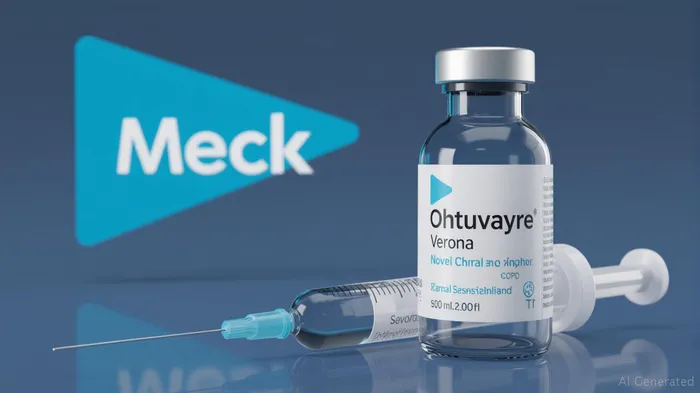
The Keytruda Patent Cliff: A Looming Threat
Keytruda, which generated $29.5 billion in sales in 2024, accounts for nearly half of Merck's total revenue. Its U.S. patent expires in late 2028, opening the door to biosimilar competition. Analysts project sales could drop to $15 billion by 2030, a 50% decline. Compounding the pressure, the Inflation Reduction Act (IRA) mandates Medicare price negotiations for high-cost drugs starting in 2026, with cuts taking effect in 2028. Keytruda is expected to be among the first targets.
The acquisition of Verona is Merck's most aggressive response yet. By acquiring Ohtuvayre (ensifentrine), a first-in-class inhaled COPD therapy, Merck aims to pivot toward chronic respiratory diseases—a market with 345 million global COPD sufferers and annual sales of $18 billion. Ohtuvayre's dual PDE3/PDE4 inhibition mechanism offers both bronchodilation and anti-inflammatory effects, a combination no other COPD drug currently delivers.
Deal Details and Strategic Rationale
- Price & Structure: Merck agreed to pay $107 per share, a 23% premium over Verona's stock price, totaling $10 billion. The deal requires shareholder approval and regulatory clearances by Q4 2025.
- Pipeline Boost: Ohtuvayre's peak sales are projected at $3–4 billion by the mid-2030s, with trials ongoing for non-cystic fibrosis bronchiectasis. Merck also gains access to Verona's robust COPD patient data, which could accelerate label expansions.
- Portfolio Diversification: The deal complements Merck's existing respiratory assets, including Winrevair (pulmonary hypertension) and Enflonsia (asthma), while reducing reliance on oncology. CEO Rob Davis framed the move as a “science-driven” strategy to build a “sustainable pipeline beyond Keytruda's patent cliff.”
Risks and Challenges
- Regulatory and Litigation Hurdles: Ohtuvayre's side effects—including insomnia, anxiety, and a reported suicide attempt—are flagged in its prescribing information. Merck must navigate potential regulatory pushback or lawsuits.
- Market Competition: The COPD market is crowded, with rivals like GlaxoSmithKline's Breo Ellipta and AstraZeneca's Symbicort. Ohtuvayre's efficacy and safety profile must differentiate it to command premium pricing.
- Shareholder Approval: Verona's shareholders could reject the deal if Merck's stock underperforms, especially if Keytruda's patent cliff drags on the company's valuation.
- Execution Pressure: Merck's pipeline is already strained by Keytruda's subcutaneous formulation launch and ongoing litigation over biosimilar delays. Integrating Verona's operations while managing patent-related risks could stretch resources thin.
Opportunities: Why This Deal Could Pay Off
- COPD Market Growth: The COPD market is expected to grow at a 4.8% CAGR through 2030, driven by aging populations and rising smoking rates in developing nations. Ohtuvayre's novel mechanism positions it as a first-line therapy for moderate-to-severe COPD.
- Synergies with Merck's Infrastructure: Merck's global salesforceCRM-- and regulatory expertise can accelerate Ohtuvayre's penetration in markets like the U.S. and Europe, where Verona lacked scale.
- M&A Pipeline Momentum: The deal signals Merck's willingness to pursue larger acquisitions (it previously targeted $1–15 billion deals). Rumored targets include MoonLakeMLTX-- Immunotherapeutics (inflammatory diseases) and ExelixisEXEL-- (oncology), which could further diversify its portfolio.
Investment Implications
For investors, Merck's Verona deal is a double-edged sword. On one hand, it's a necessary step to mitigate Keytruda's patent cliff risks. Ohtuvayre's potential to generate $4 billion annually by 2035 could offset 13% of Keytruda's current sales. On the other hand, execution risks—especially around regulatory approvals and market adoption—are significant.
Buy Signal: Consider a long position if:
- Ohtuvayre gains accelerated approval for bronchiectasis.
- Merck's stock rebounds post-Keytruda patent cliff fears (currently trading below its 5-year average P/E ratio of 18x).
Hold/Wait Signal: Postpone investment until:
- The Verona deal is finalized and post-acquisition integration plans are clear.
- Keytruda's subcutaneous formulation captures 40% of its U.S. patient base by 2026, as projected.
Final Analysis
Merck's $10 billion bet on Verona is a calculated gamble to transform its revenue engine. While the respiratory market offers growth, the company must balance Ohtuvayre's commercial success with ongoing legal battles over Keytruda's patents and the IRA's price cuts. For now, the deal signals strategic foresight but hinges on execution. Investors should remain cautiously optimistic—this is a long-term play, and the next 18–24 months will reveal whether Merck can navigate the storm clouds on the horizon.
Disclosure: This analysis is for informational purposes only and does not constitute investment advice.

Delivering real-time insights and analysis on emerging financial trends and market movements.
Latest Articles
Stay ahead of the market.
Get curated U.S. market news, insights and key dates delivered to your inbox.


AInvest
PRO
AInvest
PRO



Comments
No comments yet