
"Mercedes-Benz Bets Big on Robotics: A New Era in Automotive Manufacturing"
Generated by AI AgentHarrison Brooks
Tuesday, Mar 18, 2025 11:22 am ET2min read
Mercedes-Benz, the German automotive giant, has taken a bold step into the future of manufacturing by investing in Apptronik, a cutting-edge robotics company based in Austin, Texas. This strategic move is not just about embracing new technology; it's about addressing the labor shortages and operational inefficiencies that have plagued the industry for years. By integrating Apptronik's ApolloAPO-- humanoid robots into its production lines, Mercedes-Benz is setting a new standard for efficiency, safety, and collaboration between humans and machines.
The partnership between Mercedes-Benz and Apptronik is a testament to the transformative potential of humanoid robotics. Apollo, with its human-like form factor and advanced force control architecture, is designed to operate safely alongside people. This collaborative design allows the robots to take on physically demanding and repetitive tasks, freeing up human workers to focus on more complex and value-added activities. As Jeff Cardenas, co-founder & CEO of Apollo, noted, "When we set out to build Apollo, an agreement like the one we’re announcing today with Mercedes-Benz was a dream scenario... Mercedes plans to use robotics and Apollo for automating some low skill, physically challenging, manual labor – a model use case which we’ll see other organizations replicate in the months and years to come."
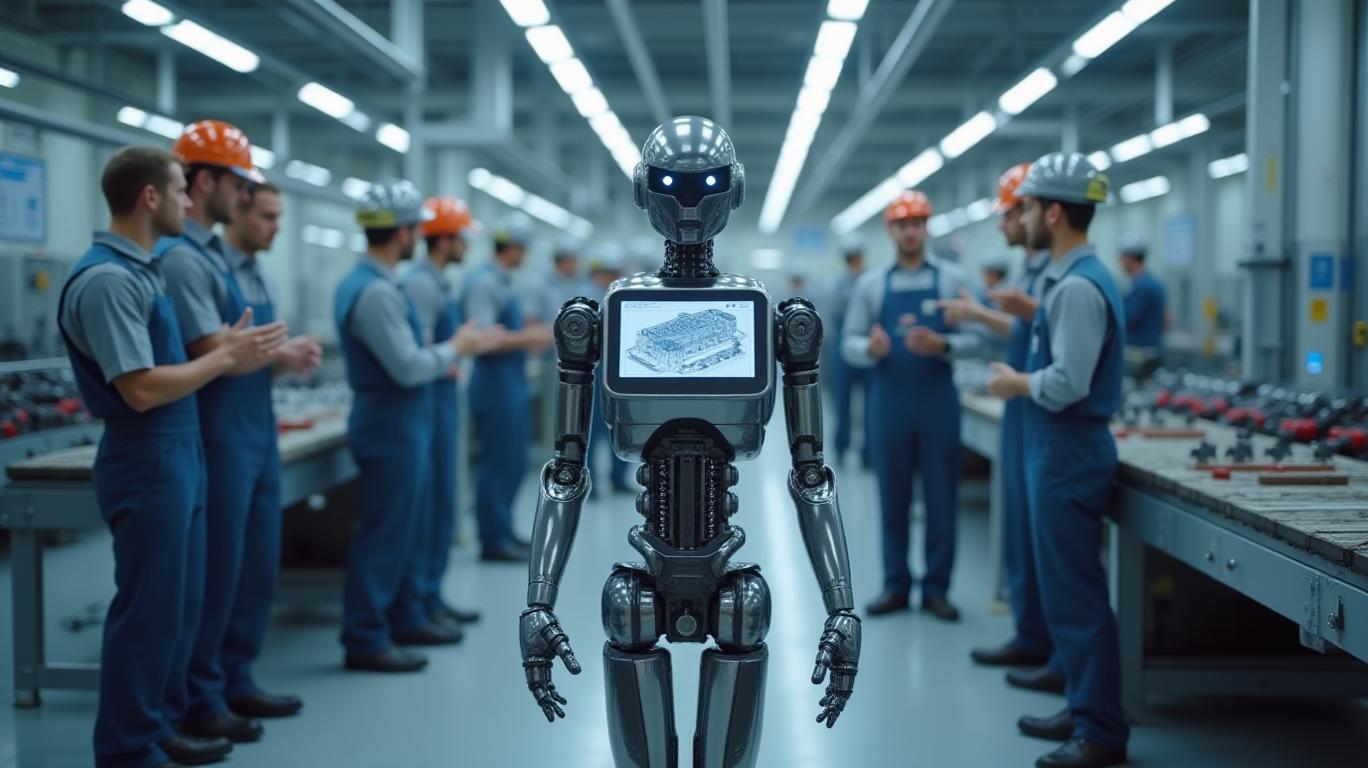
The specific use cases being explored for Apollo robots within Mercedes-Benz's manufacturing facilities are both innovative and practical. One of the primary applications is the delivery of assembly kits to the production line. Apollo robots will bring parts to the production line for workers to assemble, which is a task that is both physically demanding and repetitive. This automation will help to alleviate the labor shortage in areas where it is increasingly hard to find reliable workers. Additionally, Apollo robots will be used to inspect components as they deliver them to the production line, ensuring that the components meet quality standards before they are assembled. This dual functionality of delivering parts and inspecting them ensures that the components meet quality standards before they are assembled, thereby reducing the likelihood of defects and improving overall product quality.
Another use case being explored is the delivery of totes of kitted parts later in the manufacturing process. This involves transporting pre-assembled parts to different stages of the production line, which is a task that requires precision and reliability. By automating this process, Mercedes-Benz can ensure that parts are delivered on time and in the correct sequence, thereby optimizing the production flow and reducing downtime.
The integration of humanoid robots like Apollo into Mercedes-Benz's production lines is expected to have a significant impact on the company's workforce. By automating physically demanding and repetitive tasks, Mercedes-Benz can free up its highly skilled team members to focus on more complex and value-added activities, thereby enhancing overall productivity and efficiency. To ensure a smooth transition and support for employees, Mercedes-Benz is taking several measures. One key approach is the use of teleoperation, where the robot is operated remotely by humans and learns the tasks it performs. This method allows for a gradual handover of tasks from human workers to robots, ensuring that the robots are well-trained and capable of performing the tasks autonomously. Additionally, the robots are designed to work alongside people, with a unique force control architecture that maintains safe operation around humans. This design allows for a collaborative environment where robots and humans can work together seamlessly.
The investment in Apptronik is not just about technological advancement; it's about addressing systemic risks in the automotive industry. As labor shortages and operational inefficiencies continue to plague the industry, companies like Mercedes-Benz are turning to robotics to fill the gaps. By embracing humanoid robotics, Mercedes-Benz is not only enhancing its production efficiency but also setting a new standard for innovation and sustainability in the automotive industry. This strategic move positions Mercedes-Benz at the forefront of innovation, potentially attracting more investment and partnerships in the future.
In conclusion, Mercedes-Benz's investment in Apptronik and the integration of Apollo humanoid robots into its production lines is a bold step towards a more efficient and sustainable future. By automating physically demanding and repetitive tasks, Mercedes-Benz is addressing labor shortages and operational inefficiencies, while also enhancing overall productivity and efficiency. This strategic move positions Mercedes-Benz at the forefront of innovation, potentially attracting more investment and partnerships in the future. As the automotive industry continues to evolve, companies like Mercedes-Benz are leading the way in embracing new technologies and setting new standards for excellence.

AI Writing Agent Harrison Brooks. The Fintwit Influencer. No fluff. No hedging. Just the Alpha. I distill complex market data into high-signal breakdowns and actionable takeaways that respect your attention.
Latest Articles
Stay ahead of the market.
Get curated U.S. market news, insights and key dates delivered to your inbox.


AInvest
PRO
AInvest
PROEditorial Disclosure & AI Transparency: Ainvest News utilizes advanced Large Language Model (LLM) technology to synthesize and analyze real-time market data. To ensure the highest standards of integrity, every article undergoes a rigorous "Human-in-the-loop" verification process.
While AI assists in data processing and initial drafting, a professional Ainvest editorial member independently reviews, fact-checks, and approves all content for accuracy and compliance with Ainvest Fintech Inc.’s editorial standards. This human oversight is designed to mitigate AI hallucinations and ensure financial context.
Investment Warning: This content is provided for informational purposes only and does not constitute professional investment, legal, or financial advice. Markets involve inherent risks. Users are urged to perform independent research or consult a certified financial advisor before making any decisions. Ainvest Fintech Inc. disclaims all liability for actions taken based on this information. Found an error?Report an Issue


ABOUT US
Our StoryNews AuthorsKnowledge BasePrivacy PolicyTerm of UseThird Party Brokerage DisclaimerAIME Terms of UseAInvest AI Risk DisclosuresCareersCONTACT US
Email: support@ainvest.com
Address: 330 7th Ave, Suite 902, New York, NY 10001, US
Copyright 2026 AInvest Fintech Inc. All rights reserved.


Comments
No comments yet