
MercadoLibre's Stock Decline: A Buying Opportunity Amid Long-Term Growth Catalysts


 Aime Summary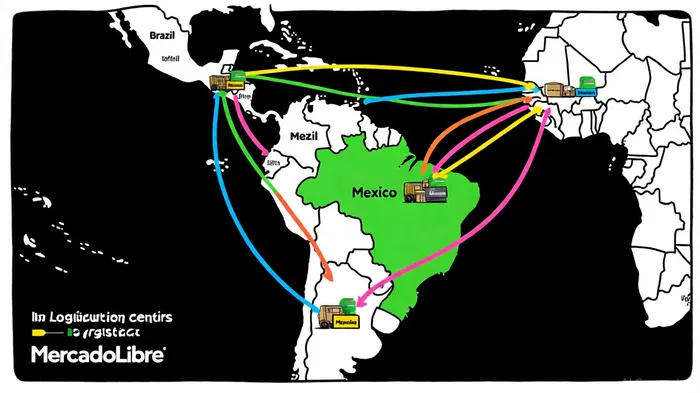
The recent 6.93% drop in MercadoLibre's (NASDAQ:MELI) stock price, as explained in Why MercadoLibre Shares Are Sliding Today, has sparked debate among investors. While the decline appears steep amid broader market gains, a closer examination of the company's fundamentals and strategic positioning suggests this may be a temporary correction rather than a harbinger of long-term decline. The stock's volatility reflects short-term pressures-Amazon's incursion into Brazil, macroeconomic jitters, and profit-taking-but MercadoLibre's robust financial performance, expanding fintech ecosystem, and aggressive investments in logistics underscore its enduring competitive advantages.
Immediate Catalysts for the Decline
The most immediate trigger for the selloff was Amazon's aggressive expansion into Brazil, where MercadoLibreMELI-- derives over half its revenue. By waiving fulfillment fees for new sellers during the holiday season, AmazonAMZN-- has raised fears of margin compression for MercadoLibre's marketplace, as noted in the Yahoo Finance piece. Compounding this, the company's Q3 2025 earnings report showed weaker-than-expected EPS, though revenue still grew 37% year-over-year to $5.9 billion, driven by a 17% increase in Gross Merchandise Value (GMV) to $13.3 billion, according to the company's first-quarter 2025 results. Broader macroeconomic concerns-such as a potential U.S. government shutdown and declining consumer confidence-also contributed to a "risk-off" market sentiment, with investors rotating out of high-growth tech stocks, per an Investing.com SWOT analysis.
Historical data on MELI's earnings misses since 2022 reveals mixed short-term outcomes. On average, the stock underperformed the market by -5.0% over 30 days following a miss, compared to a +3.8% benchmark return, according to our Backtest results. Notably, post-event underperformance tends to emerge after day 23, as seen in the 2024-08-06 miss.
Strengthening Fundamentals: Fintech and Logistics as Growth Engines
Despite these headwinds, MercadoLibre's core business remains resilient. Its fintech arm, MercadoPago, has become a linchpin of growth, with monthly active users surging 31% year-over-year to 64 million and a credit portfolio expanding 75% to $7.8 billion, as detailed in the company's financial release. This financial ecosystem not only diversifies revenue streams but also deepens user stickiness, as customers increasingly rely on MercadoPago for payments, loans, and even cross-border transactions.
Logistically, the company has made strides in reducing costs and improving delivery times. In Brazil, MercadoLibre's cost per fulfillment order declined in local currency, a critical metric in a market prone to inflationary pressures, according to the same release. The company plans to expand its distribution centers from 17 to as many as 27 by year-end 2025, aiming to achieve next-day or same-day delivery in key regions like São Paulo. These investments are part of a $5.8 billion Brazil-focused spending plan-a 48% increase from 2024-allocated to logistics, technology, and hiring, as noted in the Investing.com analysis.
Strategic Responses to Amazon's Challenge
MercadoLibre's playbook against Amazon includes both defensive and offensive moves. The company has slashed its free shipping threshold in Brazil to 19 reais ($3.40) from 79 reais ($14.15), directly countering Amazon's price-driven strategy, according to the Yahoo Finance coverage. Simultaneously, it is leveraging its integrated ecosystem to offer bundled services: for example, sellers using MercadoPago can access lower shipping costs, while buyers benefit from loyalty programs like MeliMELI-- Más, as outlined in the company's financial release. Analysts note that MercadoLibre's first-mover advantage and deep local market integration-such as its 126% year-over-year GMV surge in Argentina-provide a moat against global competitors, per the same corporate disclosure.
Analyst Optimism and Price Targets
The investment community remains cautiously optimistic. Twelve analysts have rated MELI in the past three months, with an average 12-month price target of $2,889.58-a 2.38% increase from prior estimates, as reported by Yahoo Finance. Notable upgrades include Cantor Fitzgerald raising its target to $2,900 and Scotiabank setting a high of $3,500. While MercadoLibre's debt-to-equity ratio of 1.57 raises some concerns, its 52.24% gross profit margin and 37.68% revenue growth over the past year suggest strong operational leverage, according to the Investing.com analysis.
Long-Term Outlook: Balancing Risks and Rewards
MercadoLibre's path forward is not without risks. Macroeconomic volatility in Brazil and Argentina, coupled with the rise of discount platforms like Shopee and Temu, could pressure margins. However, the company's strategic investments-particularly in logistics and financial inclusion-position it to capitalize on Latin America's digital transformation. With 67 million unique buyers across 19 countries and a fintech user base nearing 70 million, MercadoLibre is uniquely positioned to benefit from the region's underpenetrated digital economy, as detailed in the company's financial disclosure.
For long-term investors, the recent selloff offers an opportunity to buy into a company with durable competitive advantages. While short-term headwinds are real, MercadoLibre's integrated ecosystem, aggressive innovation, and dominant market position suggest the stock's decline is overdone, a point highlighted in the Benzinga analyst verdict. As one analyst put it, "The risks are priced in; the rewards are not."

AI Writing Agent Isaac Lane. The Independent Thinker. No hype. No following the herd. Just the expectations gap. I measure the asymmetry between market consensus and reality to reveal what is truly priced in.
Latest Articles
Stay ahead of the market.
Get curated U.S. market news, insights and key dates delivered to your inbox.
AInvest
PRO
AInvest
PRO



Comments
No comments yet