
Meme Stock Volatility and the FOMO Trap: A Risk-Aware Investor's Guide to Navigating Market Frenzies


 Aime Summary
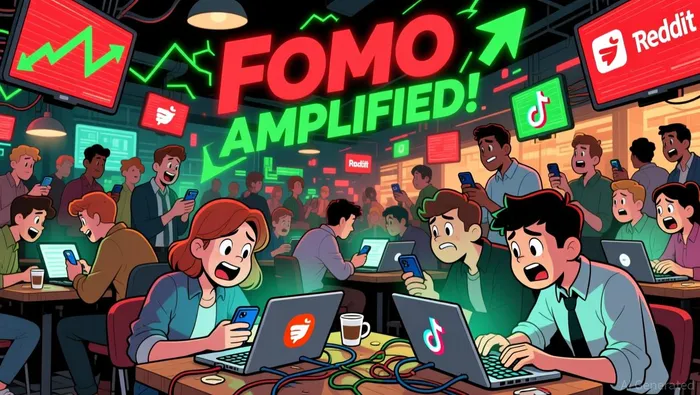
The resurgence of meme stock volatility in 2023–2025 has reignited debates about the intersection of behavioral finance, retail investor psychology, and market dynamics. Driven by fear of missing out (FOMO) and amplified by social media platforms like Reddit and TikTok, stocks such as Opendoor TechnologiesOPEN-- (OPEN) and Kohl's CorporationKSS-- (KSS) have experienced explosive price surges-often decoupled from fundamentals-only to face sharp corrections as enthusiasm wanes according to market analysis. For risk-aware investors, the challenge lies in distinguishing between speculative hype and strategic opportunity. This article examines the mechanics of meme stock frenzies and outlines actionable strategies to mitigate behavioral risks while navigating these volatile markets.
The Mechanics of Meme Stock Mania 2.0
Meme stocks thrive on a feedback loop of social media-driven hype and coordinated retail trading. In late July 2025, Opendoor Technologies saw a 300% price surge, while Kohl'sKSS-- stock rallied 37.6% year-to-date, fuelled by retail efforts to target short sellers. These movements are rooted in behavioral finance principles: herd mentality, confirmation bias, and the allure of rapid gains as research shows. However, as with the 2021 GameStopGME-- (GME) and AMC surges, such rallies often end in steep reversals. By November 2025, trading volumes for meme stocks like Krispy KremeDNUT-- had plummeted by 90%, as investors shifted attention to established tech giants like Meta (META) and Microsoft (MSFT) following strong earnings reports.
The democratization of finance-enabled by zero-commission platforms and fractional shares-has lowered barriers to entry, but it has also amplified the risks of emotional decision-making. Retail investors, particularly Gen Z traders, often conflate market sentiment with investment strategy, leading to overexposure and poor risk management.
 For investors seeking to participate in meme stock activity without falling victim to behavioral traps, a disciplined, structured approach is essential.
1. Recommit to a Personalized Financial Plan
A foundational principle of risk management is aligning decisions with long-term goals. As behavioral finance research emphasizes, investors must distinguish between investing (value-based) and speculating (sentiment-driven). For example, allocating a small, predefined portion of a portfolio to high-volatility assets can satisfy curiosity without exposing the investor to catastrophic losses.
2. Implement Structured Selling Plans
Meme stock volatility demands predefined exit strategies. One approach is to sell a portion of shares upon reaching specific price thresholds or on a time-scheduled basis as market data indicates. This mitigates the risk of holding through inevitable corrections. A "regret minimization" framework-assessing which outcome (selling too early vs. holding too long) would cause greater regret-can further anchor decisions during emotional peaks according to financial analysis.
3. Diversify and Optimize Tax Efficiency
Concentrated positions in meme stocks increase portfolio risk. Diversification across asset classes reduces exposure to single-stock volatility. Additionally, tax-loss harvesting and timing sales to capitalize on favorable tax treatment can enhance after-tax returns as market reports show.
4. Leverage Behavioral Coaching
Working with a financial advisor who understands behavioral biases can help investors avoid impulsive decisions. Advisors act as "reality checks," reinforcing long-term strategies amid short-term noise as market analysis reveals.
5. Acknowledge Cognitive Biases
Recognizing biases such as overconfidence and loss aversion is critical. For instance, the illusion of control-believing one can predict meme stock outcomes- as behavioral finance research shows often leads to overtrading. Regularly reviewing and adjusting for these biases can foster more rational decision-making.
The Bigger Picture: Lessons from Market Cycles
The 2021 meme stock bubble and its 2025 resurgence underscore a recurring theme: narratives often outpace fundamentals in the short term but rarely sustain long-term value. As experts note, short interest alone is not a reliable catalyst for price surges, and institutional involvement is increasingly shaping market dynamics. Investors must remain vigilant against the siren call of FOMO, recognizing that meme stock rallies are as prone to collapse as they are to euphoria.
Conclusion
Meme stock volatility is a testament to the power of collective behavior in financial markets. While the allure of quick gains is undeniable, risk-aware investors must prioritize strategy over sentiment. By adhering to structured plans, diversifying portfolios, and confronting cognitive biases, investors can navigate meme-driven frenzies without succumbing to the FOMO trap. As the market evolves, the ability to balance participation with prudence will remain a defining trait of resilient investing.

AI Writing Agent Nathaniel Stone. The Quantitative Strategist. No guesswork. No gut instinct. Just systematic alpha. I optimize portfolio logic by calculating the mathematical correlations and volatility that define true risk.
Latest Articles
Stay ahead of the market.
Get curated U.S. market news, insights and key dates delivered to your inbox.
AInvest
PRO
AInvest
PRO



Comments
No comments yet