
The Meme Stock Renaissance: How Retail Investors Are Redefining Market Volatility in the Post-Pandemic Era
 Aime Summary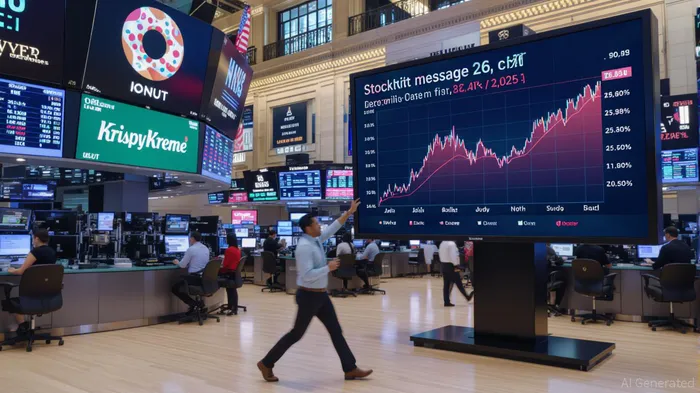
The resurgence of meme stocks in 2025 marks a fascinating evolution of retail-driven market dynamics, blending the chaos of 2021's GameStopGME-- (GME) and AMC EntertainmentAMC-- (AMC) short squeezes with a new era of data-driven speculation. What began as a rebellion against institutional finance has now matured into a sophisticated, albeit volatile, ecosystem where social media sentiment and algorithmic coordination dictate stock prices. Yet, this resurgence is not without its shadows—macroeconomic headwinds, institutional counterplay, and psychological pitfalls are reshaping the landscape in ways that demand a nuanced approach to investing.
The 2025 Meme Stock Ecosystem: Tools, Tactics, and Targets
Retail investors today operate with a toolkit far more advanced than their 2021 counterparts. Platforms like Quiver Quantitative and AltIndex provide real-time sentiment analytics and short interest data, enabling coordinated attacks on heavily shorted stocks. For instance, KohlsKSS-- (KSS) surged 39% in a single day in July 2025 after a viral RedditRDDT-- post, while Krispy KremeDNUT-- (DNUT) rallied 26.69% intraday and 24.69% after hours, fueled by a 3,500% spike in Stocktwits activity.
These rallies are not random. They reflect a strategic shift: investors now target companies with high short interest, such as OpendoorOPEN-- (OPEN) and Beyond MeatBYND-- (BYND), which have short ratios of 25% and 40.5%, respectively. The logic is simple—force short sellers to cover, and prices rise. But this strategy is a double-edged sword. As one analyst notes, “The 2025 meme stock is less about fundamentals and more about the velocity of social media.”
Macroeconomic Headwinds and the Fragility of Hype
The post-pandemic environment is starkly different from 2021. Higher interest rates, resuming student loan payments, and a weaker job market have constrained retail investors' financial flexibility. This creates a precarious scenario: when sentiment shifts, meme stocks can collapse rapidly. For example, LocafyLCFY-- (LCFY), a company under a “going concern” warning, saw a fleeting rally driven by hype, not business value.
Moreover, the lack of tangible catalysts in many 2025 meme stocks—unlike AMC's movie theater reopenings or GME's retail revival—means their valuations rest on fragile foundations. Institutional actors, too, are now embedded in the meme stock narrative. Hedge funds and professional traders monitor platforms like Discord and X to either amplify or short against retail-driven momentum, creating a feedback loop that amplifies volatility.
The Psychology of Speculation: FOMO, Echo Chambers, and Behavioral Biases
At the heart of the meme stock phenomenon lies a cocktail of psychological drivers. Fear of Missing Out (FOMO) is amplified by real-time social media updates, where a single viral post can trigger a buying frenzy. Platforms like Reddit and Stocktwits create echo chambers that reinforce confirmation bias, turning individual ideas into collective mania. For example, a 2025 study by the Boston Institute of Analytics found that 68% of retail investors in India and the U.S. admitted to buying meme stocks after seeing peer endorsements online.

Behavioral finance principles further explain this dynamic. Loss aversion—the tendency to hold onto losing positions—often leads investors to double down on meme stocks, while overconfidence bias blinds them to risks. This is compounded by the accessibility of platforms like Zerodha and Groww, which have democratized trading but also normalized impulsive decision-making.
Navigating the Meme Stock Maze: Strategies for 2025
For investors, the key is balance. While meme stocks can deliver outsized returns, their volatility demands caution. Here are three strategies to consider:
- Prioritize Catalysts Over Hype: Focus on stocks with clear business catalysts, such as new product launches or strategic partnerships. For example, Opendoor's (OPEN) 400% surge in July 2025 was partially driven by its foray into AI-driven home valuations—a tangible development.
- Monitor Sentiment and Short Interest: Use tools like AltIndex to track social media sentiment and short interest ratios. A stock with high short interest and rising social media chatter may present a short-squeeze opportunity.
- Limit Exposure: Allocate no more than 5% of your portfolio to meme stocks. Diversification remains critical, especially in a market where sentiment can shift overnight.
The Future of Meme Stocks: Bubble or Revolution?
The 2025 meme stock rally underscores a paradigm shift in how markets operate. Retail coordination, once dismissed as noise, is now a force to be reckoned with. However, the line between opportunity and bubble remains razor-thin. As the S&P 500 and BitcoinBTC-- hit record highs, the allure of speculative gains grows, but so does the risk of a correction.
Institutional players are already adapting. Some hedge funds now employ “social media analysts” to anticipate retail-driven moves, while regulators are tightening rules on market manipulation. For individual investors, the takeaway is clear: treat meme stocks as a high-risk, high-reward segment of your portfolio.
In the end, the meme stock phenomenon is a testament to the power of collective action in finance. But as history shows, markets are not immune to self-correction. The challenge for investors is to harness the potential of retail-driven rallies while avoiding the siren song of speculation.

Delivering real-time insights and analysis on emerging financial trends and market movements.
Latest Articles
Stay ahead of the market.
Get curated U.S. market news, insights and key dates delivered to your inbox.
AInvest
PRO
AInvest
PRO



Comments
No comments yet