
The Meme Stock Mirage: Celebrity Hype vs. Retail Reality in Fashion Retail


 Aime Summary
In the ever-shifting landscape of retail investing, the line between cultural influence and financial fundamentals has grown increasingly blurred. From 2023 to 2025, fashion retail stocks have become battlegrounds for narratives driven by celebrity endorsements, political alignments, and social media fervor. While these forces can ignite explosive short-term gains, they also expose investors to volatile corrections when the hype outpaces the reality. This article dissects the risks and rewards of investing in fashion retail amid the collision of culture and capital.
The Double-Edged Sword of Celebrity Endorsements
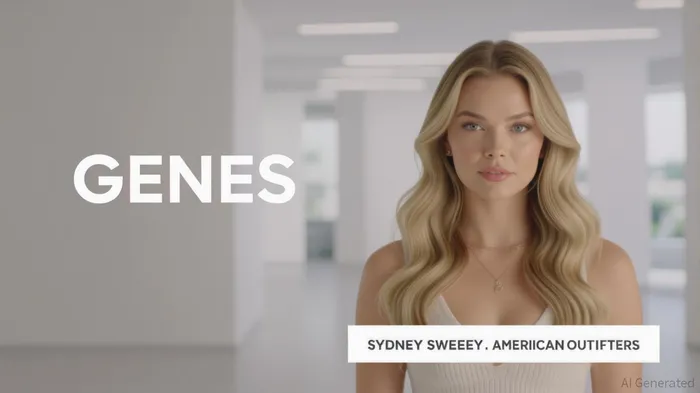
Take American Eagle Outfitters (AEO) as a case study. In July 2025, a controversial ad campaign starring Sydney Sweeney triggered a 10% intraday rally and a 17% after-hours surge, fueled by meme stock enthusiasm and a 13% short interest. The ad's polarizing imagery—framed as a "meme stock play"—attracted WallStreetBets users and retail investors, driving a $513 million trading volume spike in a single day. However, the euphoria collapsed as analysts highlighted AEO's 35% year-to-date price decline and 5% revenue drop, leading to downgrades from JefferiesJEF-- and Morgan StanleyMS--.
This pattern underscores a critical lesson: celebrity-driven narratives can create short-term liquidity booms, but they often lack the durability to sustain long-term value. Sweeney's public Republican leanings further politicized the brand, drawing praise from figures like Donald Trump and J.D. Vance while alienating others. The resulting ideological divide in consumer behavior highlights the fragility of brands hitching their fortunes to cultural or political trends.
Political Alignments: A High-Stakes Gamble
The risks of politically charged retail stocks are starkly illustrated by GrabAGun Digital Holdings (PEW), a firearms retailer backed by Donald Trump Jr. Despite a high-profile SPAC merger with Colombier Acquisition Corp. II, the stock collapsed by 20% on its opening day. This collapse reflects investor skepticism toward narratives lacking financial substance. PEW's 91% leveraged capital structure and weak fundamentals exposed the dangers of conflating political endorsements with business viability.
Similarly, Target and Bud Light faced reputational and financial crises after missteps in political alignment. Target's decision to dismantle its Racial Equity Action and Change (REACH) program led to a 12% drop in African American spending and a 11-point approval rating decline. Bud Light's partnership with trans influencer Dylan Mulvaney triggered a $1.4 billion revenue drop and 28% sales decline in three months. These cases demonstrate that political missteps can erode trust and loyalty far faster than they can be repaired.
The Meme Stock Playbook: Momentum and Mayhem
Low-price, high-short-interest stocks like GoPro and Kohl's have also seen surges of 25% and 12%, respectively, driven by celebrity endorsements and social media hype. However, these rallies often lack the fundamental support to justify their valuations. Analysts warn that meme stock dynamics—powered by viral content and retail coordination—can create "echo chambers" where sentiment overshadows reality.
For investors, the key is to differentiate between momentum and substance. While social media engagement can amplify short-term gains, it cannot compensate for declining margins, weak revenue growth, or brand erosion. Diversification across narratives and sectors, coupled with stop-loss orders, becomes essential to mitigate risks.
Navigating the Cultural-Capital Crossroads
The fashion retail sector's susceptibility to cultural and political tailwinds presents both opportunities and pitfalls. For risk-tolerant investors, short-term trades in meme stocks may offer high-reward potential, but they require rigorous due diligence and a clear exit strategy. Conversely, long-term investors should prioritize brands with strong ESG frameworks, consistent revenue growth, and authentic brand storytelling that transcends fleeting trends.
In an era where a single ad or tweet can move markets, the lesson is clear: celebrity endorsements and political alignments are amplifiers, not foundations. The most resilient investments are those grounded in operational excellence, not just cultural resonance.
Final Takeaways
- Short-term hype ≠ long-term value: Retail investors must scrutinize fundamentals before chasing meme stock narratives.
- Diversify across narratives: Avoid overexposure to politically or culturally charged stocks by balancing portfolios with stable, fundamentals-driven equities.
- Use risk management tools: Stop-loss orders and position sizing can protect against sudden corrections.
- Monitor cultural trends: Stay informed about social media sentiment and political shifts that could impact brand perception.
In the end, the fashion retail sector's volatility is a mirror of our polarized world. For investors, the challenge lies in separating the signal from the noise—and ensuring that cultural capital doesn't overshadow financial capital.

Stay ahead of the market.
Get curated U.S. market news, insights and key dates delivered to your inbox.
AInvest
PRO
AInvest
PRO



Comments
No comments yet